If you’re learning Spanish, one of the first things that can feel tricky is verb conjugation. Many learners understand vocabulary quickly, but verbs often feel harder because they change depending on the subject and tense.
The good news is that AR past tense conjugation follows clear patterns. Once you learn those patterns, it becomes much easier to speak about yesterday, last week, or anything that happened in the past.
For example:
- I talked → hablé
- You studied → estudiaste
- They worked → trabajaron
Spanish uses ar verbs very often, so learning their past tense forms gives you a strong foundation for real conversations.
In this guide, you’ll learn what AR past tense conjugation means, how to form it, how to use it correctly, common mistakes to avoid, and plenty of real life examples for practice.
Quick Answer
AR past tense conjugation usually refers to changing Spanish ar verbs into the past tense, most commonly the preterite tense, to describe completed actions in the past.
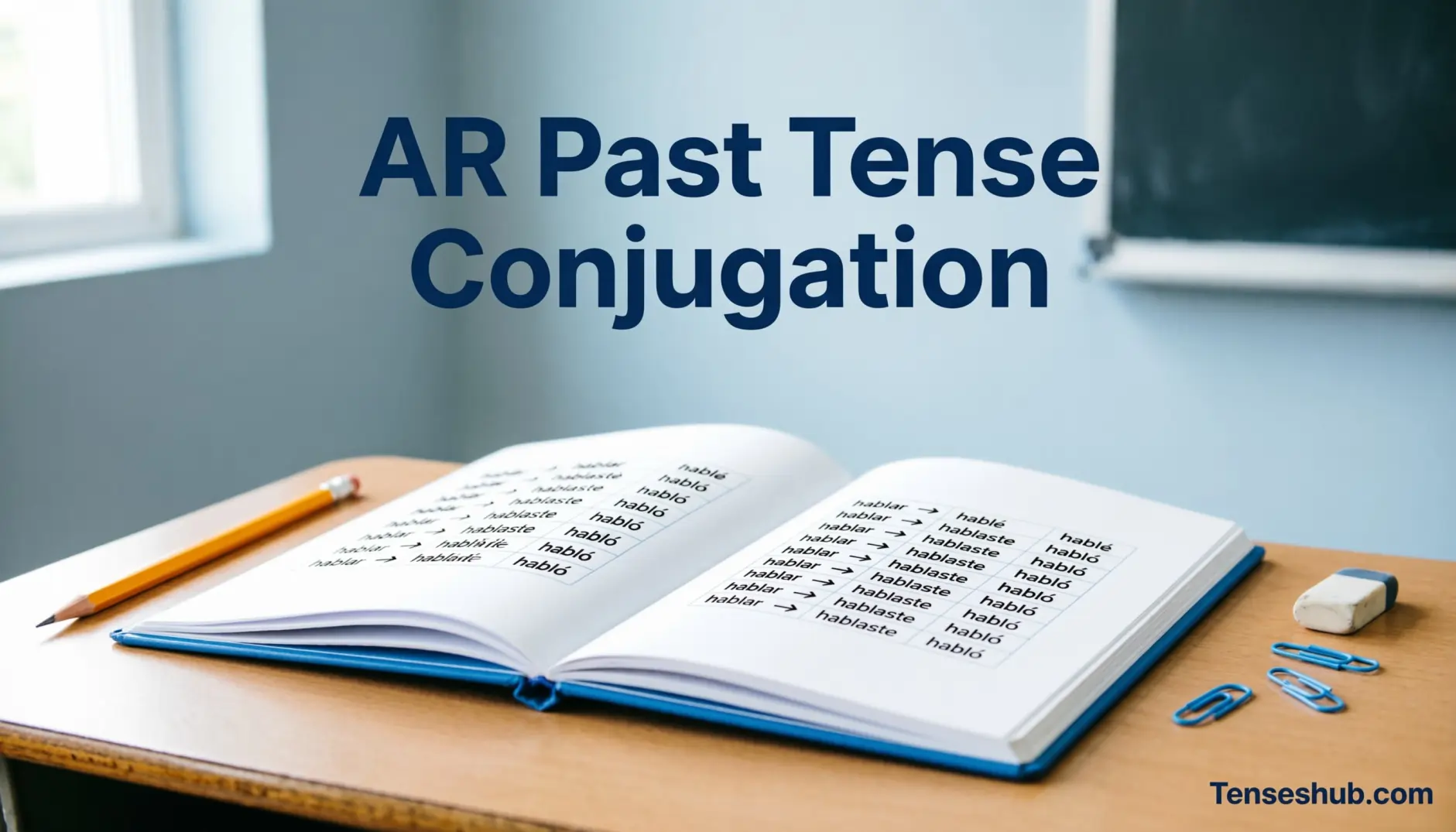
Example with hablar (to speak):
| Subject | Past Tense |
|---|---|
| Yo | hablé |
| Tú | hablaste |
| Él / Ella / Usted | habló |
| Nosotros / Nosotras | hablamos |
| Vosotros / Vosotras | hablasteis |
| Ellos / Ellas / Ustedes | hablaron |
What Is AR Past Tense Conjugation?
AR past tense conjugation means changing Spanish verbs that end in ar so they show an action happened in the past.
Common ar verbs include:
- hablar → to speak
- trabajar → to work
- estudiar → to study
- caminar → to walk
- bailar → to dance
In English we often add ed:
- talk → talked
- walk → walked
Spanish does something similar, but the ending changes depending on who did the action.
Example:
- Yo hablé = I spoke
- Tú hablaste = You spoke
- Nosotros hablamos = We spoke
This helps Spanish speakers know both:
- who did the action
- when it happened
Structure of Sentences of AR Past Tense Conjugation
Spanish sentence order is flexible, but beginners often use this pattern.
Affirmative
Subject + AR past tense verb + object
Examples:
- Yo hablé con mi amigo.
- Ella estudió español.
- Nosotros caminamos al parque.
Negative
Subject + no + AR past tense verb + object
Examples:
- Yo no hablé con él.
- Ella no trabajó ayer.
- Nosotros no bailamos.
Interrogative
Question word + AR past tense verb + object
Examples:
- ¿Hablaste con María?
- ¿Estudiaron para el examen?
- ¿Trabajó ayer?
Spanish also allows inversion:
- ¿Tú hablaste con ella?
Formation of AR Past Tense Conjugation
To form the past tense of regular ar verbs in the preterite:
Step 1: Remove ar
Example:
hablar → habl
Step 2: Add preterite endings
Add:
- é
- aste
- ó
- amos
- asteis
- aron
Example with hablar:
| Subject | Ending | Result |
|---|---|---|
| Yo | é | hablé |
| Tú | aste | hablaste |
| Él / Ella / Usted | ó | habló |
| Nosotros / Nosotras | amos | hablamos |
| Vosotros / Vosotras | asteis | hablasteis |
| Ellos / Ellas / Ustedes | aron | hablaron |
Accent marks matter
Notice these:
- hablé
- habló
These accents are important because they change pronunciation and meaning.
Wrong:
- hable
Correct:
- hablé
How to Use AR Past Tense
The AR past tense is usually used when an action:
- started in the past
- ended in the past
- is fully completed
Completed action
- Ayer hablé con mi profesora.
- Yesterday I spoke with my teacher.
Finished event
- Bailamos toda la noche.
- We danced all night.
Specific time in the past
- Estudié ayer.
- Trabajaron el lunes.
- Caminamos la semana pasada.
Common time markers:
- ayer → yesterday
- anoche → last night
- la semana pasada → last week
- el año pasado → last year
Structure or Verb Pattern Table Regular AR Verbs
| Verb | Meaning | Yo | Tú | Él / Ella | Nosotros | Ellos |
|---|---|---|---|---|---|---|
| hablar | to speak | hablé | hablaste | habló | hablamos | hablaron |
| estudiar | to study | estudié | estudiaste | estudió | estudiamos | estudiaron |
| caminar | to walk | caminé | caminaste | caminó | caminamos | caminaron |
| bailar | to dance | bailé | bailaste | bailó | bailamos | bailaron |
Real Life Examples
Here are natural examples you may hear or use.
Affirmative
- Yo estudié toda la tarde.
- Ella trabajó desde casa.
- Nosotros bailamos en la fiesta.
- Ellos caminaron al mercado.
Negative
- Yo no hablé con Pedro.
- Ella no estudió ayer.
- Nosotros no trabajamos el domingo.
Questions
- ¿Hablaste con tu madre?
- ¿Bailaron anoche?
- ¿Trabajaste el viernes?
Informal speech
- Ayer cociné pasta.
- Mi hermano descansó todo el día.
More formal
- El profesor explicó la lección.
- Los estudiantes completaron la tarea.
Common Mistakes
Forgetting accent marks
Wrong:
- Yo hable
Correct:
- Yo hablé
Why: the accent is required in the past tense.
Using the infinitive instead of conjugating
Wrong:
- Yo hablar con ella ayer.
Correct:
- Yo hablé con ella ayer.
Mixing verb endings
Wrong:
- Yo hablaste
Correct:
- Yo hablé
Confusing present and past
Wrong:
- Yo hablo ayer
Correct:
- Yo hablé ayer
Key Grammar Rules
Remove ar before adding endings
hablar → habl + é
Use accents correctly
- hablé
- habló
Both need accents.
Match the ending to the subject
- yo → é
- tú → aste
- él/ella → ó
- ellos → aron
Use it for completed actions
Correct:
- Ayer estudié.
Not usually:
- Estudio ayer.
Time words often help
Examples:
- ayer
- anoche
- la semana pasada
- el mes pasado
Comparisons with Similar Grammar Forms
AR Past Tense vs Present Tense
Present:
- Hablo español. → I speak Spanish.
Past:
- Hablé español ayer. → I spoke Spanish yesterday.
Preterite vs Imperfect
Spanish has two common past tenses.
Preterite
Used for completed actions.
- Ayer hablé con Ana.
Imperfect
Used for repeated or ongoing past actions.
- Cuando era niño, hablaba mucho.
Comparison:
- hablé = spoke once / completed
- hablaba = used to speak / was speaking
This is one of the biggest learner challenges in Spanish.
Exercises
Fill in the blanks
- Yo ______ con mi amigo ayer. (hablar)
- Nosotros ______ en el parque. (caminar)
- Ella ______ toda la noche. (bailar)
Correct the sentence
- Yo hable con ella ayer.
- Tú hablar con Pedro anoche.
Rewrite into past tense
- Yo trabajo en casa.
- Nosotros estudiamos español.
Multiple Choice
- Which is correct?
A) hablaste
B) hablóste
C) habléste
- Which means “they studied”?
A) estudiaron
B) estudiamos
C) estudió
Answer Key
- hablé
- caminamos
- bailó
- Yo hablé con ella ayer.
- Tú hablaste con Pedro anoche.
- Yo trabajé en casa.
- Nosotros estudiamos español.
- A
- A
FAQs
What is AR past tense conjugation in Spanish?
It means changing verbs ending in ar into past tense forms to show completed actions.
What are the endings for AR verbs in past tense?
The endings are:
- é
- aste
- ó
- amos
- asteis
- aron
Is hablar regular in the past tense?
Yes. Hablar is a regular ar verb.
Why does hablé have an accent?
The accent shows correct pronunciation and grammar form. It is required.
Is hablamos present or past?
It can be both.
Examples:
- Present: Nosotros hablamos español.
- Past: Nosotros hablamos ayer.
Context tells you which meaning is intended.
Conclusion
Learning AR past tense conjugation may feel difficult at first, but it becomes much easier once you learn the endings and practice with common verbs. Most regular ar verbs follow the same pattern, which makes them easier to remember than many irregular verbs.
Start with verbs like hablar, estudiar, caminar, and trabajar. Practice saying what you did yesterday, last week, or last night.
For example:
- hablé
- estudié
- caminé
- trabajé
The more you use them in real sentences, the faster they will feel natural.
Keep practicing with short daily examples, and soon speaking about the past in Spanish will feel much easier and more confident.
Hi, I’m Robert Lowth, a passionate expert in English tenses and grammar. I specialize in simplifying complex tense rules to help learners understand and use English with confidence. My goal is to make grammar clear, practical, and easy for everyday communication. tenseshub.com