Have you ever tried to speak Spanish in the past tense and suddenly felt confused by all the different verb endings?
Many English learners struggle with past tense endings Spanish because Spanish verbs change depending on the subject, verb type, and tense.
For example, why does hablar become hablé, while comer changes to comí? And why are there so many endings to remember?
The good news is that Spanish past tense patterns are much easier once you learn the basic rules. Understanding past tense endings Spanish helps you talk about yesterday, childhood memories, vacations, completed actions, and daily conversations more naturally.
In this beginner friendly guide, you will learn the meaning of Spanish past tense endings, how they are formed, sentence structures, common mistakes, useful examples, and practice exercises. By the end, you will feel much more confident using Spanish verbs in real life situations.
Quick Answer (Featured Snippet)
Past tense endings Spanish are verb endings used to show actions that already happened in the past. In Spanish, verbs change depending on the subject and verb type ( ar, er, or ir verbs).
| Verb Type | Example Ending | Example Verb |
| AR | é, aste, ó | hablé |
| ER | í, iste, ió | comí |
| IR | í, iste, ió | viví |
What Is Past Tense Endings Spanish?
The term past tense endings Spanish refers to the changes added to Spanish verbs to show that an action happened in the past.
In Spanish grammar, verbs do not stay the same. Instead, their endings change based on:
- The subject
- The verb type
- The tense being used
Spanish has several past tenses, but beginners usually start with the preterite tense, which describes completed past actions.
Examples
- Yo hablé con mi amigo.
(I talked with my friend.) - Ella comió pizza.
(She ate pizza.) - Nosotros vivimos en Madrid.
(We lived in Madrid.)
In these examples, the endings é, ió, and imos show that the actions happened in the past.
Why Are Past Tense Endings Important?
Learning Spanish past tense endings helps you:
- Talk about yesterday or last week
- Describe finished actions
- Share memories and stories
- Speak more naturally
- Understand Spanish conversations and movies
Without correct verb endings, sentences may sound incomplete or confusing.
Structure of Sentences of Past Tense Endings Spanish
Spanish past tense sentences follow clear sentence patterns. Here are the most common structures.
Positive Sentences
Formula:
Subject + past tense verb + object
Examples
- Yo estudié español.
- Ella visitó México.
- Nosotros comimos tacos.
Negative Sentences
Formula:
Subject + no + past tense verb + object
Examples
- Yo no hablé con él.
- Ella no comió arroz.
- Nosotros no vivimos allí.
Question Sentences
Formula:
Question word + past tense verb + subject
Examples
- ¿Qué estudiaste ayer?
- ¿Dónde comieron ustedes?
- ¿Cuándo llegó ella?
Short Answers
- Sí, estudié.
- No, no comí.
Spanish sentence structure is usually flexible, but the verb ending must match the subject correctly.
Formation of Past Tense Endings Spanish
To form the Spanish past tense, you remove the infinitive ending and add the correct past tense ending.
Step 1: Identify the Verb Type
Spanish verbs usually end in:
- ar
- er
- ir
Step 2: Remove the Ending
Example:
- hablar → habl
- comer → com
- vivir → viv
Step 3: Add the Correct Past Tense Ending
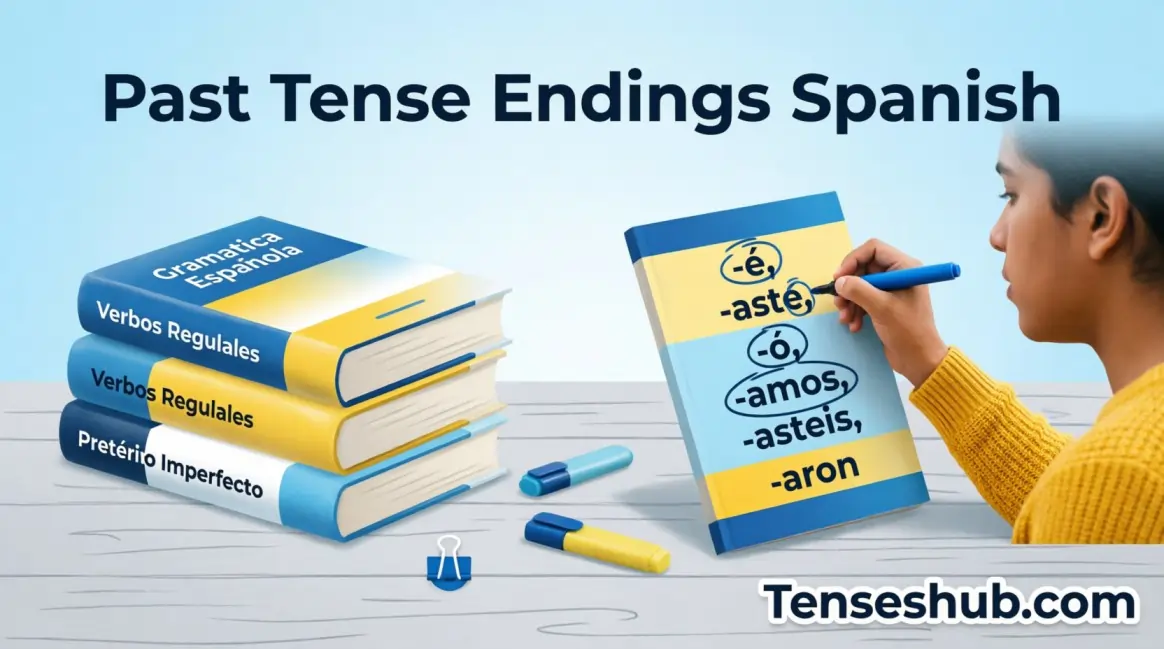
Regular AR Verb Endings
| Subject | Ending | Example |
| Yo | é | hablé |
| Tú | aste | hablaste |
| Él/Ella | ó | habló |
| Nosotros | amos | hablamos |
| Vosotros | asteis | hablasteis |
| Ellos | aron | hablaron |
Regular ER and IR Verb Endings
| Subject | Ending | Example |
| Yo | í | comí |
| Tú | iste | comiste |
| Él/Ella | ió | comió |
| Nosotros | imos | comimos |
| Vosotros | isteis | comisteis |
| Ellos | ieron | comieron |
Irregular Verbs
Some common verbs are irregular in the past tense.
Examples:
- ir → fui
- tener → tuve
- hacer → hice
- estar → estuve
These verbs must be memorized because they do not follow regular patterns.
How to Use Past Tense Endings Spanish
Spanish past tense endings are used in many daily situations.
1. Talking About Completed Actions
Use the preterite tense for actions that finished in the past.
Examples:
- Ayer estudié mucho.
- Ella compró un coche.
2. Describing Specific Events
Use it for events with a clear beginning or ending.
Examples:
- El partido terminó tarde.
- Llegamos a las ocho.
3. Talking About Past Experiences
Examples:
- Visité España el año pasado.
- Comimos en un restaurante famoso.
4. Using Time Expressions
Common time expressions include:
- ayer — yesterday
- anoche — last night
- la semana pasada — last week
- hace dos días — two days ago
Examples:
- Ayer hablé con mi profesor.
- La semana pasada viajamos a Miami.
5. Pronunciation Rules
Accent marks are important in Spanish past tense endings.
Compare:
- hablo = I speak
- habló = he/she spoke
A missing accent can completely change the meaning.
Conjugation or Structure Table
| Subject | Hablar | Comer | Vivir |
| Yo | hablé | comí | viví |
| Tú | hablaste | comiste | viviste |
| Él/Ella | habló | comió | vivió |
| Nosotros | hablamos | comimos | vivimos |
| Ellos | hablaron | comieron | vivieron |
Real Life Examples
- Yo estudié toda la noche.
- Ella compró un vestido nuevo.
- Nosotros viajamos a Nueva York.
- ¿Comiste pizza ayer?
- No terminé mi tarea.
- Mi madre cocinó sopa deliciosa.
- Ellos vivieron en España por un año.
- ¿Dónde trabajaste el verano pasado?
- Mi amigo no llegó temprano.
- Bebimos café esta mañana.
- ¿Visitaron ustedes el museo?
- Aprendí muchas palabras nuevas.
- Ella escribió una carta.
- No entendimos la pregunta.
- ¿Qué miraste en la televisión?
Common Mistakes
1. Forgetting Accent Marks
❌ hablo ayer
✅ habló ayer
Accent marks are necessary for correct meaning.
2. Mixing Present and Past Tense
❌ Yo como pizza ayer.
✅ Yo comí pizza ayer.
Use past tense endings for past actions.
3. Using Wrong Verb Endings
❌ Ella hablaste conmigo.
✅ Ella habló conmigo.
Verb endings must match the subject.
4. Confusing ER and IR Endings
❌ comaste
✅ comiste
ER and IR verbs use different endings from AR verbs.
5. Forgetting Irregular Forms
❌ yo tení
✅ yo tuve
Some verbs are irregular and need memorization.
Key Grammar Rules
1. Remove the Infinitive Ending First
Before adding endings, remove:
- ar
- er
- ir
Example:
- hablar → habl + é
2. Match the Subject Correctly
The verb ending changes with the subject.
- yo hablé
- ellos hablaron
3. Accent Marks Matter
Accent marks change pronunciation and meaning.
- hablo ≠ habló
4. Use Preterite for Finished Actions
Examples:
- Ayer estudié.
- Ella llegó tarde.
5. Learn Irregular Verbs Separately
Important irregular verbs include:
- ser
- ir
- tener
- hacer
- estar
6. ER and IR Verbs Share Endings
Examples:
- comí
- viví
Both follow similar patterns.
Comparisons with Similar Grammar Forms
Preterite vs Imperfect
The preterite describes completed actions. The imperfect describes ongoing or repeated actions.
Preterite
- Comí pizza ayer.
(Finished action)
Imperfect
- Comía pizza todos los días.
(Repeated action)
Present Tense vs Past Tense
Present
- Yo hablo español.
(I speak Spanish.)
Past
- Yo hablé español ayer.
(I spoke Spanish yesterday.)
Regular vs Irregular Verbs
Regular
- hablé
- comí
Irregular
- fui
- tuve
Regular verbs follow patterns, while irregular verbs change differently.
Exercises
Fill in the Blanks
- Yo _______ (hablar) con mi amiga ayer.
- Nosotros _______ (comer) tacos anoche.
- Ella _______ (vivir) en México.
- Tú _______ (estudiar) mucho.
- Ellos _______ (beber) café.
Answers
- hablé
- comimos
- vivió
- estudiaste
- bebieron
Sentence Correction Exercises
- Yo comé pizza ayer.
- Ella hablaste conmigo.
- Nosotros vivimos allí ayer.
- Tú comió arroz.
- Ellos habló español.
Answers
- Yo comí pizza ayer.
- Ella habló conmigo.
- Nosotros vivimos allí ayer.
- Tú comiste arroz.
- Ellos hablaron español.
Rewrite Tasks
Rewrite the sentences in past tense.
- Yo hablo con mi profesor.
- Ella come una manzana.
- Nosotros vivimos en Madrid.
- Tú estudias inglés.
- Ellos trabajan mucho.
Answers
- Yo hablé con mi profesor.
- Ella comió una manzana.
- Nosotros vivimos en Madrid.
- Tú estudiaste inglés.
- Ellos trabajaron mucho.
MCQs
- Which ending is used for yo with AR verbs?
a) í
b) é
c) aste
d) aron - What is the past tense of comer for yo?
a) comé
b) comió
c) comí
d) comiste - Which verb is irregular?
a) hablar
b) vivir
c) tener
d) comer - Which sentence is correct?
a) Yo hablé ayer.
b) Yo hablar ayer.
c) Yo hablo ayer.
d) Yo hablaste ayer. - What does vivió mean?
a) I lived
b) He lived
c) They lived
d) We lived - Which ending belongs to ellos for AR verbs?
a) aron
b) aste
c) é
d) imos - Which sentence is negative?
a) Ella comió pizza.
b) ¿Comiste arroz?
c) Nosotros no viajamos.
d) Hablaron español. - Which verb means “to eat”?
a) vivir
b) comer
c) hablar
d) estudiar - Which sentence is a question?
a) Yo estudié mucho.
b) Ella habló ayer.
c) ¿Comiste tacos?
d) Nosotros viajamos. - Which tense talks about completed actions?
a) Future
b) Present
c) Imperfect
d) Preterite
Answer Key
- b
- c
- c
- a
- b
- a
- c
- b
- c
- d
FAQs
What are past tense endings in Spanish?
They are verb endings used to show actions that happened in the past.
What is the easiest Spanish past tense?
The preterite tense is usually the easiest for beginners.
Do all Spanish verbs change in the past tense?
Yes, most verbs change their endings.
What are regular Spanish verbs?
Regular verbs follow normal conjugation patterns.
Why are accent marks important?
Accent marks change pronunciation and meaning.
Are ER and IR endings the same?
Yes, they usually share the same preterite endings.
What is an irregular verb?
An irregular verb does not follow normal conjugation rules.
How can I memorize past tense endings?
Practice daily with speaking, reading, and writing exercises.
Is the preterite used for completed actions?
Yes, it describes finished past actions.
What is the past tense of “hablar”?
The yo form is hablé.
Conclusion
Learning past tense endings Spanish may seem difficult at first, but it becomes much easier with regular practice.
Once you understand the basic verb groups, sentence patterns, and common endings, you can talk about past events more naturally and confidently.
Remember that Spanish verbs change depending on the subject and verb type. Focus first on regular verbs, then slowly practice irregular forms. Pay close attention to accent marks because they are very important in Spanish grammar.
The best way to improve is by reading simple Spanish sentences, practicing daily conversations, and writing short paragraphs about your day. Over time, these verb endings will start to feel natural.
Keep practicing, stay patient, and enjoy your Spanish learning journey. Small daily practice can lead to big improvement.

Hi, I’m Noah Bester, a tenses expert passionate about simplifying English grammar. I create practical, easy-to-understand guides to help learners master tenses with confidence. My goal is to make grammar clear, useful, and applicable in everyday communication. tenseshub.com