Have you ever tried telling a story in Spanish and felt unsure whether to use hablé or hablaba? Many Spanish learners get stuck here. Both forms talk about the past, but they do not mean the same thing.
That’s where the imperfect tense in Spanish becomes important.
The imperfect tense helps you describe past habits, ongoing actions, repeated events, and background details. It is one of the most useful Spanish past tenses, but also one of the most confusing for beginners.
For example:
- Cuando era niño, jugaba al fútbol. → When I was a child, I used to play soccer.
- Hacía frío y llovía. → It was cold and it was raining.
Notice how these actions feel unfinished or ongoing in the past.
If you want to tell stories, describe childhood memories, talk about routines, or paint a picture of the past in Spanish, you need the imperfect tense.
In this guide, you’ll learn exactly what the imperfect tense in Spanish is, how to form it, when to use it, common mistakes to avoid, and how it compares with other Spanish past tenses.
Quick Answer (Featured Snippet)
The imperfect tense in Spanish is used to describe ongoing actions, repeated habits, background details, or situations with no clear ending in the past.
| Spanish | English |
|---|---|
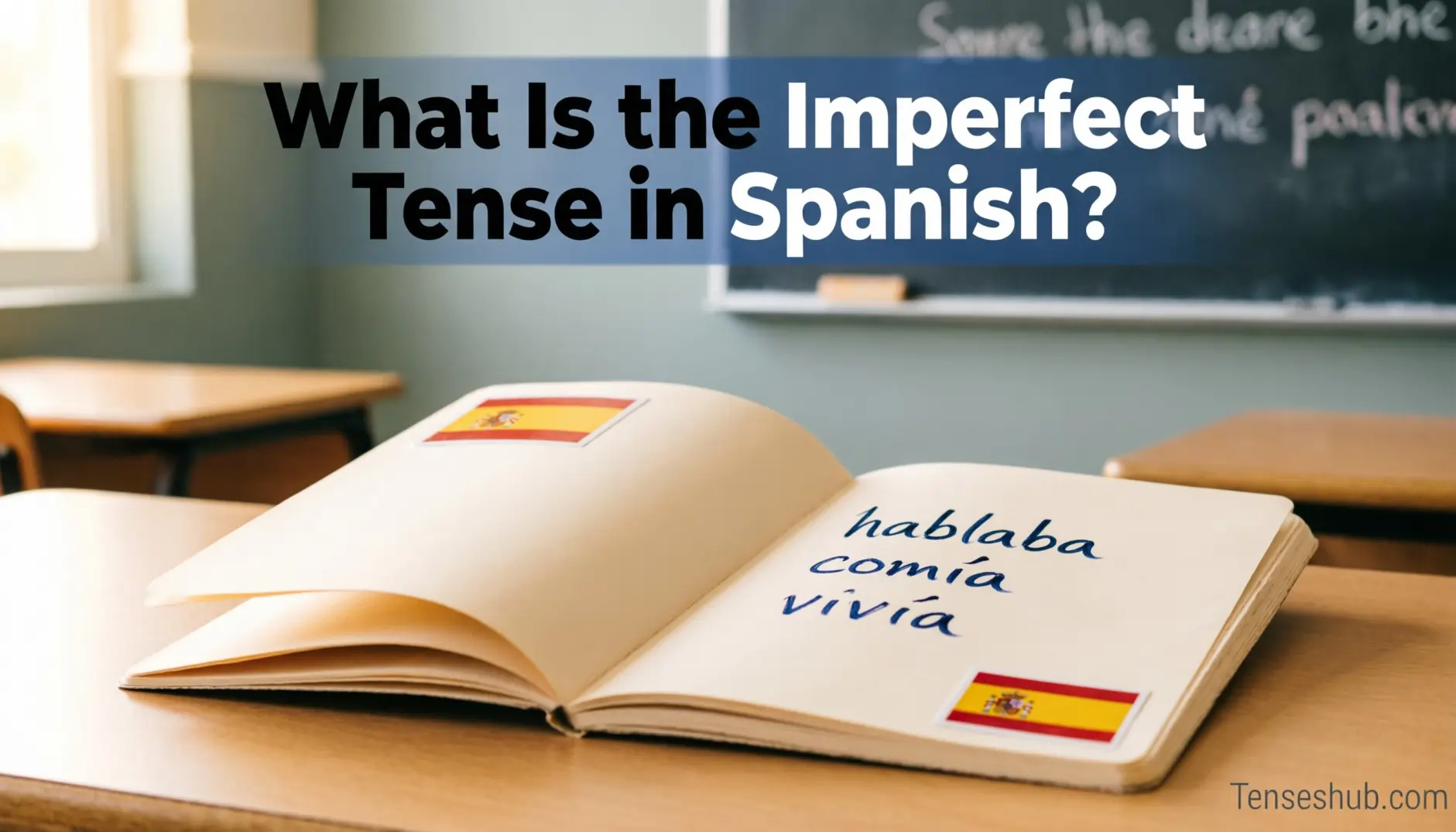
| Yo hablaba | I was speaking / I used to speak |
| Ella comía | She was eating / She used to eat |
| Nosotros vivíamos | We were living / We used to live |
What Is the Imperfect Tense in Spanish?
The imperfect tense (pretérito imperfecto) describes things that happened in the past but were not seen as completed.
It often answers questions like:
- What used to happen?
- What was happening?
- What things were like?
It focuses on the process, not the finish.
Think of it like this:
- Preterite = completed past action
- Imperfect = ongoing or repeated past action
Example:
- Ayer comí pizza. → Yesterday I ate pizza. ✅ Finished
- Cuando era niño, comía pizza todos los viernes. → When I was a child, I used to eat pizza every Friday. ✅ Habit
The imperfect tense is commonly used for:
- childhood memories
- repeated routines
- weather
- time
- age
- emotions
- descriptions
Examples:
- Era feliz. → I was happy.
- Hacía calor. → It was hot.
- Vivíamos en Madrid. → We lived in Madrid.
- Leía cada noche. → I used to read every night.
Structure of Sentences of the Imperfect Tense in Spanish
Affirmative
Subject + imperfect verb
Example:
- Yo hablaba español.
- Ella vivía en Sevilla.
- Nosotros comíamos juntos.
Negative
Subject + no + imperfect verb
Examples:
- Yo no hablaba francés.
- Ellos no estudiaban mucho.
- Nosotros no vivíamos allí.
Interrogative
Question word + imperfect verb + subject
Examples:
- ¿Qué hacías?
- ¿Dónde vivías?
- ¿Por qué lloraba el niño?
Yes/no questions:
- ¿Estudiabas español?
- ¿Vivían ustedes aquí?
Formation of the Imperfect Tense in Spanish
The imperfect tense is easier than many learners expect.
There are only two main endings.
AR Verbs
Remove ar and add:
- aba
- abas
- aba
- ábamos
- abais
- aban
Example with hablar:
| Subject | Form |
|---|---|
| Yo | hablaba |
| Tú | hablabas |
| Él / Ella / Usted | hablaba |
| Nosotros / Nosotras | hablábamos |
| Vosotros / Vosotras | hablabais |
| Ellos / Ellas / Ustedes | hablaban |
ER and IR Verbs
Remove ending and add:
- ía
- ías
- ía
- íamos
- íais
- ían
Example with comer:
- comía
- comías
- comía
- comíamos
- comíais
- comían
Example with vivir:
- vivía
- vivías
- vivía
- vivíamos
- vivíais
- vivían
Irregular Verbs
Only three verbs are irregular.
Ser (to be)
- era
- eras
- era
- éramos
- erais
- eran
Ir (to go)
- iba
- ibas
- iba
- íbamos
- ibais
- iban
Ver (to see)
- veía
- veías
- veía
- veíamos
- veíais
- veían
How to Use the Imperfect Tense in Spanish
1. Past Habits
Use it for things someone used to do regularly.
Examples:
- Jugaba tenis cada sábado.
- Mi abuelo caminaba cada mañana.
English clue words:
- used to
- every day
- always
- often
2. Ongoing Actions in the Past
Use it for actions that were happening.
Examples:
- Yo estudiaba cuando llamaste.
- Ellos dormían.
English translations often use:
- was + verb ing
- were + verb ing
3. Descriptions
Use it to describe scenes or background information.
Examples:
- La casa era grande.
- El cielo estaba azul.
- Había muchas personas.
4. Age in the Past
Example:
- Tenía diez años.
→ I was ten years old.
5. Weather
Examples:
- Hacía frío.
- Nevaba.
- Llovía.
6. Time
Examples:
- Eran las ocho.
- Era tarde.
7. Feelings and Mental States
Examples:
- Estaba cansado.
- Pensaba mucho en ella.
- Quería descansar.
Imperfect Tense Structure
| Use | Structure | Example |
|---|---|---|
| Habit | Subject + imperfect verb | Yo caminaba cada día. |
| Ongoing action | Subject + imperfect verb | Ella leía. |
| Description | Subject + imperfect verb | La ciudad era hermosa. |
| Weather | Weather expression + imperfect | Hacía calor. |
| Age | Tener + imperfect | Tenía cinco años. |
Real Life Examples
Here are practical everyday examples.
Affirmative
- Yo estudiaba español todas las noches.
- Mi madre cocinaba muy bien.
- Nosotros vivíamos cerca del parque.
- El perro dormía en el sofá.
Negative
- No trabajaba los domingos.
- No llovía mucho en verano.
- No tenían coche.
Questions
- ¿Dónde vivías antes?
- ¿Qué hacías después de la escuela?
- ¿Te gustaba leer cuando eras niño?
Informal Conversation
- Antes iba allí mucho.
- Siempre hablábamos por teléfono.
Storytelling
- Era una noche tranquila.
- Hacía viento.
- La gente caminaba por la calle.
Common Mistakes
Mistake 1: Using Preterite Instead of Imperfect
❌ Cuando era niño, jugué fútbol todos los días.
✅ Cuando era niño, jugaba fútbol todos los días.
Reason: repeated habit → imperfect
Mistake 2: Forgetting Accent Marks
❌ comia
✅ comía
❌ vivia
✅ vivía
Accent marks matter.
Mistake 3: Confusing “era” and “fue”
❌ Fue alto de niño.
✅ Era alto de niño.
Use era for descriptions.
Mistake 4: Overusing “was”
English “was” can translate differently depending on meaning.
Example:
- Era feliz → I was happy
- Estaba cansado → I was tired
Spanish depends on context.
Key Grammar Rules
Use imperfect for repeated actions
Example:
- Siempre corría por la mañana.
Use imperfect for descriptions
Example:
- La habitación era pequeña.
Use imperfect for age, weather, and time
Examples:
- Tenía ocho años.
- Hacía calor.
- Era medianoche.
Only three irregular verbs exist
- ser
- ir
- ver
Imperfect often sets the scene in stories
Example:
- Era invierno y nevaba mucho.
Comparisons with Similar Grammar Forms
Imperfect vs Preterite
This is the biggest learner confusion.
| Imperfect | Preterite |
|---|---|
| ongoing | completed |
| repeated | one time |
| background | main event |
Example:
- Llovía cuando salí.
Meaning:
- llovía → it was raining (ongoing)
- salí → I left (completed)
Imperfect vs Past Progressive
Past progressive:
- estaba hablando
Imperfect:
- hablaba
Difference:
- hablaba = broader meaning
- estaba hablando = action happening at that exact moment
Example:
- Yo hablaba mucho de niño. → habit
- Yo estaba hablando cuando llegaste. → action in progress
Exercises
Fill in the blanks
- Cuando era niño, yo ______ todos los días. (jugar)
- Nosotros ______ en México. (vivir)
- Ella ______ mucho café. (beber)
Answers
- jugaba
- vivíamos
- bebía
Correct the sentence
- Yo comí pizza cada viernes de niño.
- Ella vivia en Madrid.
Answers
- Yo comía pizza cada viernes de niño.
- Ella vivía en Madrid.
Rewrite
Change into imperfect.
- Yo estudio cada noche.
- Ellos viven aquí.
Answers
- Yo estudiaba cada noche.
- Ellos vivían aquí.
Multiple Choice
Which sentence uses the imperfect correctly?
A. Ayer comía una manzana.
B. Cuando era niño, comía una manzana cada día.
C. Anoche comía una manzana a las ocho y terminé.
✅ Answer: B
FAQs
Is the imperfect tense past tense in Spanish?
Yes. It is one of the Spanish past tenses.
When do I use the imperfect tense in Spanish?
Use it for:
- habits
- repeated actions
- descriptions
- age
- weather
- time
- ongoing actions in the past
What is the difference between imperfect and preterite?
Imperfect shows an ongoing or repeated past action.
Preterite shows a completed action.
Is the imperfect tense difficult?
Not usually. Many learners find usage harder than conjugation.
The endings are simple. Knowing when to use it takes practice.
How do I remember the imperfect tense?
A helpful trick:
Use imperfect for:
- used to
- was/were doing
- background description
If the action feels unfinished or repeated in the past, imperfect is often correct.
Conclusion
The imperfect tense in Spanish is used to talk about past habits, repeated actions, descriptions, feelings, age, weather, and actions that were ongoing in the past.
It helps bring stories to life.
Use it when talking about:
- what you used to do
- what was happening
- what things were like
The good news is that forming the imperfect is simple because most verbs follow regular patterns, and there are only three irregular verbs: ser, ir, and ver.
The biggest challenge is knowing when to choose imperfect instead of preterite. The best way to learn is through practice.
Read Spanish stories, write about your childhood, and try describing past memories.
The more you use it, the more natural it becomes.