Have you ever wanted to say “I used to go,” “we were going,” or “she would go” in Spanish and felt unsure which verb form to use? Many learners get confused with ir in imperfect tense because it looks different from other verb forms and can express more than one idea.
The good news is that it’s easier than it seems.
The verb ir means “to go.” In the imperfect tense, it helps you talk about past habits, repeated actions, or actions that were happening in the past. It’s one of the most useful Spanish verbs because you use it in everyday conversation all the time.
If you’re talking about where you used to go as a child, where someone was going yesterday, or what people regularly did in the past, learning ir in imperfect tense will help you sound more natural in Spanish.
In this guide, you’ll learn the meaning, conjugation, sentence structure, examples, common mistakes, and practice exercises all in a simple and beginner friendly way.
Quick Answer
The imperfect tense of ir is used to mean:
- used to go
- was/were going
- would go
Ir (to go) in Imperfect Tense
| Subject | Conjugation | Meaning |
|---|---|---|
| yo | iba | I used to go / I was going |
| tú | ibas | You used to go / You were going |
| él / ella / usted | iba | He / she was going / used to go |
| nosotros / nosotras | íbamos | We used to go / We were going |
| vosotros / vosotras | ibais | You all used to go / were going |
| ellos / ellas / ustedes | iban | They used to go / were going |
What Is Ir in Imperfect Tense?
The imperfect tense in Spanish describes actions in the past that were:
- repeated
- ongoing
- habitual
- unfinished
When used with ir, it describes going somewhere in the past regularly or during an ongoing moment.
Examples:
- Yo iba a la escuela todos los días.
I used to go to school every day. - Ella iba al mercado cuando empezó a llover.
She was going to the market when it started raining. - Íbamos al parque los domingos.
We used to go to the park on Sundays.
So ir in imperfect tense often answers:
- Where did someone used to go?
- Where was someone going?
- What places did people regularly visit in the past?
Structure of Sentences of Ir in Imperfect Tense
Here is how sentences are arranged with ir in imperfect tense.
Affirmative
Subject + imperfect form of ir + place/complement
Examples:
- Yo iba al trabajo.
- Nosotros íbamos al cine.
- Ellos iban a la playa.
Negative
Subject + no + imperfect form of ir + place/complement
Examples:
- Yo no iba a la oficina.
- Ella no iba conmigo.
- Nosotros no íbamos allí.
Interrogative
Question word + imperfect form of ir + rest of sentence?
Examples:
- ¿Adónde ibas?
- ¿Iban ustedes al parque?
- ¿Por qué iba ella tan temprano?
Formation of Ir in Imperfect Tense
The verb ir is irregular.
That means it does not follow normal verb endings like regular ar, er, or ir verbs.
Here are the forms:
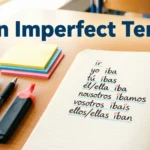
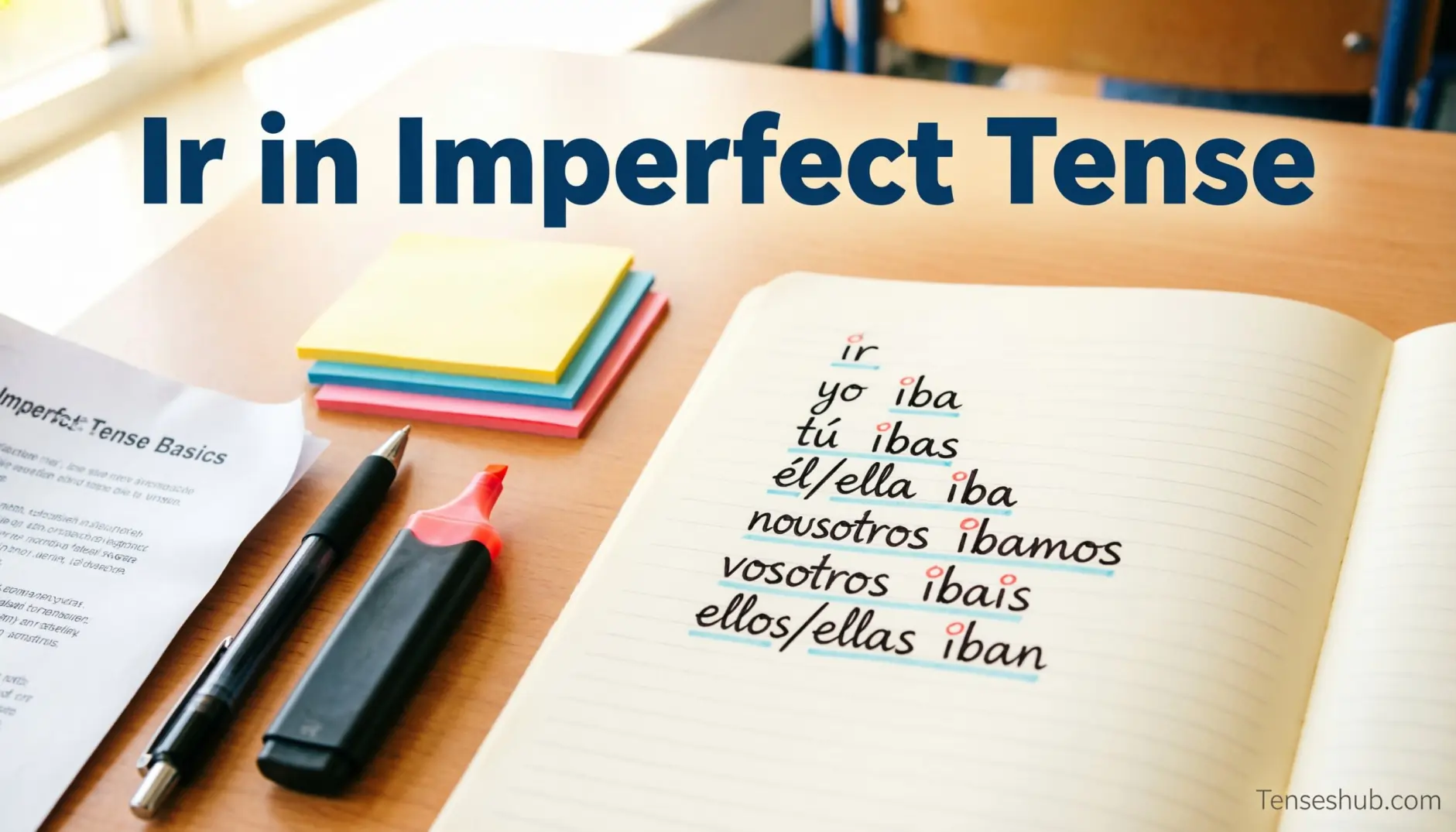
- yo → iba
- tú → ibas
- él/ella → iba
- nosotros → íbamos
- vosotros → ibais
- ellos → iban
Important spelling note
The nosotros form has an accent:
íbamos
Examples:
- Yo iba
- Tú ibas
- Nosotros íbamos
You simply need to memorize these forms because they do not follow a regular pattern.
How to Use Ir in Imperfect Tense
1. To talk about repeated actions in the past
Use it for habits.
Example:
- Iba al gimnasio cada mañana.
I used to go to the gym every morning. - Íbamos al pueblo cada verano.
We used to go to the village every summer.
2. To describe an action happening in the past
Use it for ongoing background actions.
Example:
- Yo iba a casa cuando te vi.
I was going home when I saw you. - Ella iba al trabajo cuando empezó a nevar.
She was going to work when it started snowing.
3. To describe past routines
Example:
- Cuando era niño, iba al parque después de la escuela.
When I was a child, I used to go to the park after school.
4. To soften speech or narration
Spanish speakers also use the imperfect in storytelling.
Example:
- Íbamos por la carretera cuando vimos el accidente.
We were going down the road when we saw the accident.
Structure / Verb Pattern Table (Imperfect of ir)
| Sentence Type | Formula | Example |
|---|---|---|
| Affirmative | Subject + iba / ibas / íbamos + complement | Yo iba al mercado. |
| Negative | Subject + no + iba / ibas / íbamos + complement | Yo no iba al mercado. |
| Question | ¿Question word + iba / ibas / íbamos + complement? | ¿Adónde ibas? |
Real Life Examples
Here are everyday examples of ir in imperfect tense.
Affirmative
- Yo iba a la biblioteca cada tarde.
- Tú ibas al colegio en autobús.
- Ella iba al centro comercial los sábados.
- Nosotros íbamos al restaurante familiar cada domingo.
- Ellos iban a la playa en verano.
Negative
- Yo no iba solo.
- Ella no iba con nosotros.
- Nosotros no íbamos muy lejos.
- Ellos no iban al mismo lugar.
Questions
- ¿Adónde ibas?
- ¿Con quién ibas?
- ¿Iban ustedes al concierto?
- ¿Por qué ibas tan temprano?
Informal conversation
- Yo iba al café de la esquina todos los días.
- Mi abuelo iba caminando al trabajo.
Formal style
- El profesor iba a la universidad cada mañana.
- La delegación iba al evento oficial.
Common Mistakes
1. Mixing imperfect with preterite
❌ Yo fui al parque cada día.
✅ Yo iba al parque cada día.
Why?
Because cada día shows a repeated action.
2. Forgetting the accent in íbamos
❌ Ibamos
✅ Íbamos
The accent is required.
3. Using present tense by mistake
❌ Yo voy al colegio cuando era niño.
✅ Yo iba al colegio cuando era niño.
4. Confusing “iba” with “fui”
- iba = used to go / was going
- fui = went
Example:
- Yo iba al parque todos los días. → repeated habit
- Yo fui al parque ayer. → one completed trip
Key Grammar Rules
1. Ir is irregular in imperfect tense
You must memorize:
iba, ibas, iba, íbamos, ibais, iban
2. Use it for repeated actions in the past
Example:
- Iba al gimnasio cada mañana.
3. Use it for actions in progress in the past
Example:
- Iba al banco cuando llamaste.
4. Use it with time expressions
Common words include:
- siempre → always
- cada día → every day
- normalmente → normally
- antes → before
- todos los veranos → every summer
Example:
- Siempre iba allí.
5. Nosotros has an accent
Always write:
íbamos
Comparisons with Similar Grammar Forms
Ir: Imperfect vs Preterite
| Form | Meaning | Example |
|---|---|---|
| iba (imperfect) | used to go / was going | Yo iba al parque. |
| fui (preterite) | went (completed action) | Yo fui al parque ayer. |
Example
- Yo iba al mercado cuando empezó a llover.
I was going to the market when it started raining. - Yo fui al mercado ayer.
I went to the market yesterday.
Ir Imperfect vs Present Tense
Present:
- Voy al trabajo.
I go to work.
Imperfect:
- Iba al trabajo.
I used to go / I was going to work.
Ir Imperfect vs Ir + a + infinitive
These are often confused.
Example:
- Iba a estudiar.
I was going to study. - Voy a estudiar.
I am going to study.
One is past. One is present/future intention.
Exercises
Fill in the blanks
Complete using the correct imperfect form of ir.
- Yo ______ al parque todos los días.
- Nosotros ______ a la escuela juntos.
- Ellos ______ al mercado cada sábado.
- Tú ______ en autobús.
- Ella ______ a casa temprano.
Sentence correction
Fix the mistakes.
- Yo fui al colegio cada día.
- Ibamos al cine los viernes.
- Tú va al mercado cuando eras niño.
Rewrite
Rewrite using imperfect tense.
- I used to go to the beach every summer.
- We were going to school.
- She used to go with her grandmother.
Multiple Choice
1. Which means “we used to go”?
A. iban
B. íbamos
C. ibas
2. Which means “they were going”?
A. iban
B. iba
C. ibais
Answer Key
Fill in the blanks
- iba
- íbamos
- iban
- ibas
- iba
Corrections
- Yo iba al colegio cada día.
- Íbamos al cine los viernes.
- Tú ibas al mercado cuando eras niño.
Rewrite
- Yo iba a la playa cada verano.
- Nosotros íbamos a la escuela.
- Ella iba con su abuela.
MCQs
- B — íbamos
- A — iban
FAQs
What is ir in imperfect tense?
It is the past imperfect form of ir, meaning used to go, would go, or was/were going.
Is ir irregular in imperfect tense?
Yes. It is irregular and must be memorized.
What does iba mean?
Iba can mean:
- I used to go
- I was going
- he/she used to go
- he/she was going
Meaning depends on context.
What is the nosotros form of ir imperfect?
Íbamos
How do you say “I used to go” in Spanish?
Yo iba
Example:
Yo iba al parque.
Conclusion
Learning ir in imperfect tense is an important step for speaking naturally about the past in Spanish. It helps you describe places you used to go, routines you had, and actions that were happening in the background.
The forms are:
iba, ibas, iba, íbamos, ibais, iban
Even though ir is irregular, it becomes much easier with practice.