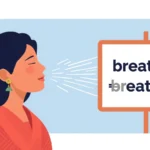
Have you ever wondered what the past tense of “breathe” is when talking about breathing in a story or describing an action in the past? Many English learners get confused with verbs like breathe, breath, breathing, and their correct forms.
Understanding the past tense of breathe is very important because it is used in daily conversation, storytelling, writing, and exams.
For example, when you say “I breathed deeply,” you are talking about something that already happened.
In this article, you will learn everything about the past tense of breathe (breathed) in a simple, clear, and easy way. Even if you are a beginner, you will understand it step by step.
Quick Answer
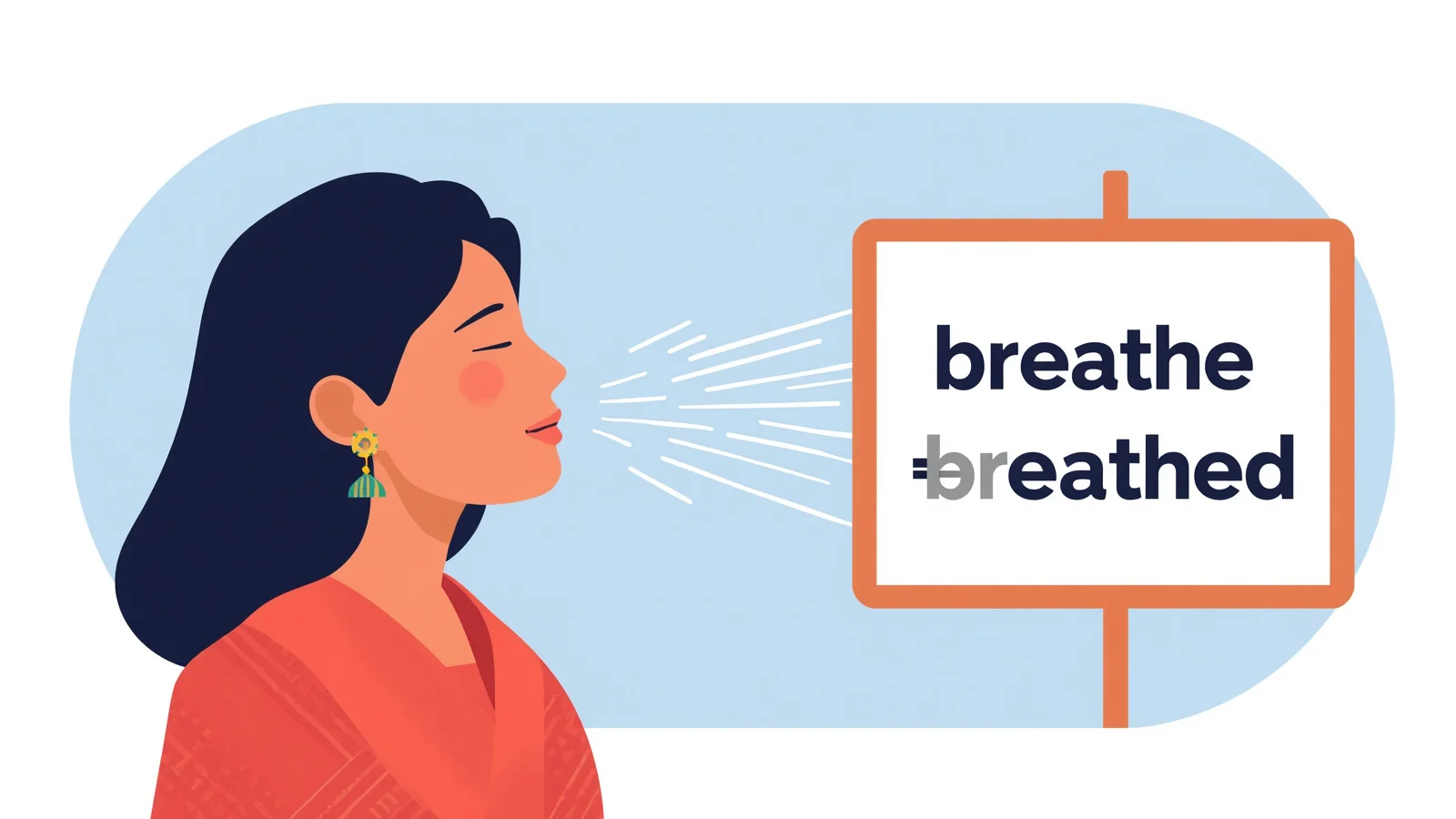
The past tense of “breathe” is “breathed.”
It is a regular verb, so we add “ ed” at the end.
| Form | Word |
|---|---|
| Base Form | breathe |
| Past Tense | breathed |
| Past Participle | breathed |
| Present Participle | breathing |
👉 Example:
- Present: I breathe slowly.
- Past: I breathed slowly.
Explanation (Basic → Advanced)
What does “breathe” mean?
The word breathe means to take air into your lungs and let it out. It is something every living person does.
Example:
- I breathe fresh air in the morning.
What is the past tense of breathe?
The past tense of breathe is “breathed.”
We use it when we talk about breathing that already happened.
Example:
- She breathed deeply after running.
Why is “breathed” a regular verb?
“Breathe” is a regular verb, which means:
- We simply add ed to make the past tense.
- No spelling change in the middle.
👉 breathe → breathed
Forms / Conjugation of “Breathe”
Here is the full verb chart to help you understand better:
Complete Tense Table
| Tense | Form | Example |
|---|---|---|
| Base Form | breathe | I breathe air. |
| Past Tense | breathed | I breathed deeply. |
| Past Participle | breathed | I have breathed slowly. |
| Present Participle | breathing | I am breathing now. |
| Future | will breathe | I will breathe fresh air. |
Comparison Section
1. Present vs Past
- Present: I breathe slowly.
- Past: I breathed slowly yesterday.
2. Past vs Past Continuous
- Past: She breathed heavily.
- Past Continuous: She was breathing heavily.
3. Past vs Present Perfect
- Past: He breathed in relief.
- Present Perfect: He has breathed in relief many times.
4. Breathe vs Breath
- Breathe (verb): I breathe air.
- Breath (noun): Take a deep breath.
5. Active vs Passive Usage
- Active: The athlete breathed heavily.
- Passive: (Rare) The air was breathed in by him.
Sentence Structure
1. Positive Sentences
Formula:
Subject + breathed + object
Examples:
- I breathed fresh air.
- She breathed deeply.
- They breathed slowly.
2. Negative Sentences
Formula:
Subject + did not + breathe
Examples:
- I did not breathe fast.
- He did not breathe properly.
- They did not breathe deeply.
3. Questions
Formula:
Did + subject + breathe?
Examples:
- Did you breathe deeply?
- Did she breathe after running?
- Did they breathe in fresh air?
Real Life Usage (Daily Examples)
Here are 15 simple examples using breathed:
- I breathed deeply after exercise.
- She breathed with relief.
- He breathed fresh mountain air.
- They breathed slowly during meditation.
- The patient breathed normally again.
- I breathed in fresh oxygen.
- He breathed out slowly.
- We breathed after finishing the race.
- She breathed deeply and relaxed.
- The baby breathed softly while sleeping.
- I breathed heavily after running.
- They breathed fresh air in the park.
- He breathed with difficulty.
- She breathed in peace and calm.
- I breathed after stress relief.
Common Mistakes
❌ Incorrect vs ✅ Correct
- ❌ I breath deeply yesterday.
✅ I breathed deeply yesterday.
👉 “Breath” is a noun, not a verb.
- ❌ She breathe slowly last night.
✅ She breathed slowly last night.
👉 Past tense needs “ ed”.
- ❌ He did not breathed.
✅ He did not breathe.
👉 After “did not,” we use base form.
Key Grammar Rules
- “Breathe” is a verb; “breath” is a noun.
- Past tense of breathe is always breathed.
- Use did + base form in negatives/questions.
- Add ed because it is a regular verb.
- Do not double “e” in past form.
Advanced Usage
1. Past Continuous
Structure: was/were + breathing
- She was breathing heavily.
2. Present Perfect
Structure: has/have + breathed
- I have breathed fresh air today.
3. Future Tense
Structure: will + breathe
- I will breathe slowly tomorrow.
4. Modal Verbs
- You should breathe deeply.
- You must breathe slowly.
Practice Section
Fill in the Blanks
- I ______ deeply after running.
- She ______ fresh air yesterday.
- They did not ______ fast.
- He ______ slowly during yoga.
- We have ______ enough oxygen.
Answers:
- breathed
- breathed
- breathe
- breathed
- breathed
MCQs
- Past tense of breathe is:
- a) breath
- b) breathed
- c) breathing
Answer: b
- “I breathed” is:
- a) Present
- b) Past
- c) Future
Answer: b
- Which is a noun?
- a) breathe
- b) breathing
- c) breath
Answer: c
- Correct sentence:
- a) I breath yesterday
- b) I breathed yesterday
Answer: b
- “Did you ____ deeply?”
- a) breathed
- b) breathe
Answer: b
Error Correction
- ❌ She breathe deeply yesterday.
✅ She breathed deeply yesterday. - ❌ I did not breathed.
✅ I did not breathe. - ❌ He breathes yesterday.
✅ He breathed yesterday. - ❌ They was breathing in past.
✅ They breathed in the past. - ❌ I am breathed now.
✅ I am breathing now.
FAQs
1. What is the past tense of breathe?
It is breathed.
2. Is breathe a regular verb?
Yes, it is a regular verb.
3. What is the difference between breath and breathe?
“Breath” is a noun, “breathe” is a verb.
4. Can we say “did breathed”?
No, correct form is “did breathe.”
5. Is breathed used in daily English?
Yes, it is very common in speaking and writing.
Conclusion
Understanding the past tense of breathe (breathed) is very important for correct English usage.
It helps you speak and write more clearly in everyday situations. Since “breathe” is a regular verb, forming its past tense is simple you just add “ ed” to make “breathed.”
By practicing examples, sentence structures, and common mistakes, you can easily master this verb.
Try using “breathed” in your daily conversations, storytelling, and writing exercises. The more you practice, the more natural it will become.
Keep learning and improving your English step by step!

Hi, I’m Noah Bester, a tenses expert passionate about simplifying English grammar. I create practical, easy-to-understand guides to help learners master tenses with confidence. My goal is to make grammar clear, useful, and applicable in everyday communication. tenseshub.com