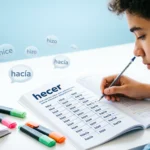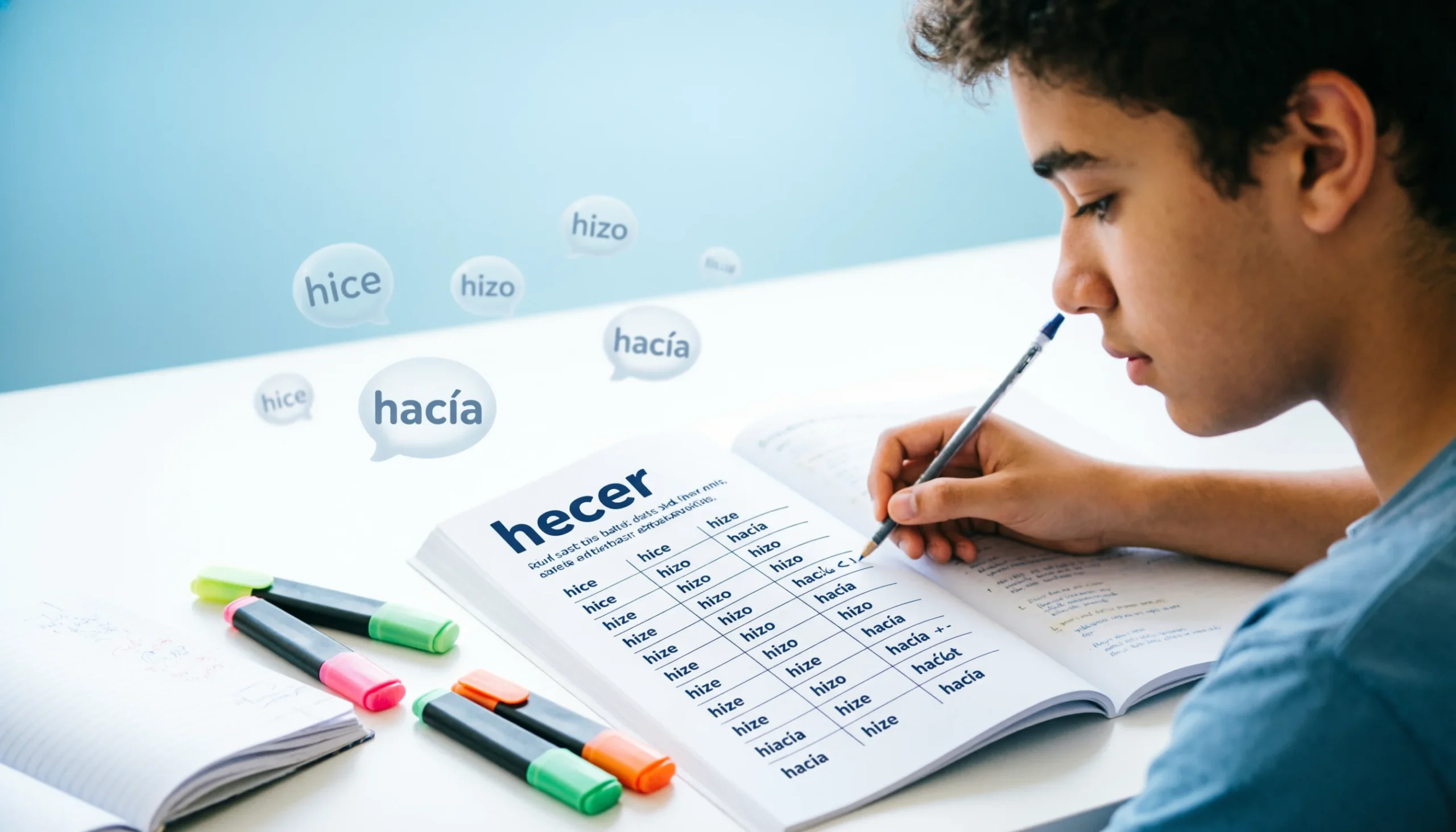
Have you ever tried speaking Spanish and got stuck on the verb “hacer” in the past tense? You are not alone. Many English speakers struggle with it because “hacer” changes form depending on time and meaning.
The verb hacer means “to do” or “to make”, and it is one of the most important verbs in Spanish.
In daily conversations, you will often need it in the past tense to talk about actions you did yesterday, last week, or in the past.
In this guide, you will learn everything about hacer in past tense in a very simple way. We will cover meanings, grammar rules, conjugation tables, examples, mistakes, and real life usage so you can speak confidently and naturally.
Quick Answer (Featured Snippet)
Past Tense Forms of “Hacer”
| Tense Type | Form of “Hacer” | Meaning |
|---|---|---|
| Preterite (simple past) | hice / hizo / hicieron | did / made (completed action) |
| Imperfect (ongoing past) | hacía | used to do / was doing |
👉 Example:
- Yo hice la tarea. → I did the homework.
- Yo hacía la tarea todos los días. → I used to do homework every day.
Explanation (Basic → Advanced)
Meaning of “Hacer”
“Hacer” is a very common Spanish verb. It is used to describe:
- Doing something
- Making something
- Performing an action
- Creating something
Past Tense Types of “Hacer”
There are two main past tenses:
1. Preterite (Simple Past)
Used for completed actions.
👉 Example:
- Yo hice la cena. (I made dinner.)
2. Imperfect Past
Used for repeated or ongoing actions in the past.
👉 Example:
- Yo hacía la cena todos los días. (I used to make dinner every day.)
Key Idea:
- Preterite = finished action
- Imperfect = repeated or ongoing past action
Forms / Conjugation of “Hacer”
Base Form and Past Forms
| Form | Spanish | English |
|---|---|---|
| Infinitive | hacer | to do / to make |
| Preterite (I) | hice | I did |
| Preterite (he/she) | hizo | he/she did |
| Preterite (they) | hicieron | they did |
| Imperfect | hacía | I/he/she used to do |
📘 Full Preterite Conjugation
| Subject | Form |
|---|---|
| Yo | hice |
| Tú | hiciste |
| Él / Ella | hizo |
| Nosotros | hicimos |
| Ellos | hicieron |
📘 Imperfect Conjugation
| Subject | Form |
|---|---|
| Yo | hacía |
| Tú | hacías |
| Él / Ella | hacía |
| Nosotros | hacíamos |
| Ellos | hacían |
Comparison Section
1. Preterite vs Imperfect
- Preterite (hice): Completed action
- Hice la tarea. (I did the homework.)
- Imperfect (hacía): Repeated action
- Hacía la tarea todos los días. (I used to do homework daily.)
2. Singular vs Plural
- Singular:
- Yo hice el trabajo.
- Plural:
- Nosotros hicimos el trabajo.
3. Past vs Present
- Present:
- Yo hago la comida. (I do the food.)
- Past:
- Yo hice la comida. (I made the food.)
4. Formal vs Informal
- Informal:
- Tú hiciste eso.
- Formal:
- Usted hizo eso.
Sentence Structure
1. Simple Sentence
Formula:
Subject + hacer (past) + object
👉 Example:
- Yo hice la tarea.
2. Negative Sentence
Formula:
Subject + no + past form + object
👉 Example:
- Yo no hice la tarea.
3. Question Sentence
Formula:
¿+ past form + subject + object?
👉 Example:
- ¿Hiciste la tarea?
Real Life Usage (Daily Sentences)
Here are common real life examples:
- Yo hice la comida ayer.
- Ella hizo su tarea.
- Nosotros hicimos ejercicio.
- Ellos hicieron un pastel.
- Tú hiciste un buen trabajo.
- Yo hacía ejercicio todos los días.
- Ella hacía café por la mañana.
- Nosotros hicimos un viaje.
- Ellos hicieron ruido.
- Yo hice una llamada importante.
- Tú hiciste la compra.
- Ella hacía yoga antes.
- Nosotros hicimos la limpieza.
- Ellos hicieron un proyecto.
- Yo hice mi mejor esfuerzo.
Common Mistakes
❌ Incorrect vs ✅ Correct
- ❌ Yo hazo la tarea.
✅ Yo hice la tarea.
👉 “Hazo” is not a correct form. - ❌ Ella hicí la comida.
✅ Ella hizo la comida.
👉 Wrong verb ending. - ❌ Nosotros hacía el trabajo.
✅ Nosotros hicimos el trabajo.
👉 Wrong tense form. - ❌ Ellos hizo la tarea.
✅ Ellos hicieron la tarea.
👉 Subject verb mismatch.
Key Grammar Rules
- “Hacer” is irregular in the past tense.
- Preterite is used for completed actions.
- Imperfect is used for repeated past actions.
- The form changes with the subject.
- “Hizo” is used for he/she/it in preterite.
Advanced Usage
1. Past Continuous Idea
- Estaba haciendo la tarea.
👉 I was doing homework.
2. Present Perfect
- He hecho la tarea.
👉 I have done the homework.
3. Future Use
- Haré la tarea mañana.
👉 I will do the homework tomorrow.
Practice Section
A. Fill in the blanks
- Yo ___ la comida.
- Ella ___ su tarea.
- Nosotros ___ ejercicio.
- Tú ___ un pastel.
- Ellos ___ un proyecto.
Answers:
- hice
- hizo
- hicimos
- hiciste
- hicieron
B. MCQs
- What is past tense of “yo”?
a) hago
b) hice
c) haré
Answer: b - “Hizo” means:
a) I did
b) He/She did
c) They do
Answer: b - Imperfect form is:
a) hice
b) hacía
c) haré
Answer: b - “Hicimos” means:
a) We did
b) They did
c) I did
Answer: a - “Hacer” is:
a) Regular verb
b) Irregular verb
c) Noun
Answer: b
C. Error Correction
- Yo hize la tarea. → Yo hice la tarea.
- Ella hacio la comida. → Ella hizo la comida.
- Nosotros hacía el trabajo. → Nosotros hicimos el trabajo.
- Ellos hiceron la tarea. → Ellos hicieron la tarea.
- Tú hizo la tarea. → Tú hiciste la tarea.
FAQs
1. What is “hacer” in past tense?
It means “did” or “made” in Spanish.
2. Is “hacer” regular or irregular?
It is an irregular verb.
3. What is “yo hice”?
It means “I did”.
4. When to use “hacía”?
Use it for repeated or ongoing past actions.
5. What is the past of “hacer” for “he/she”?
It is “hizo”.
Conclusion
Learning hacer in past tense is very important for speaking natural Spanish. This verb is irregular, but once you understand the patterns, it becomes much easier to use.
Remember the key difference between hice (completed action) and hacía (repeated action).
Practice daily with real life sentences like “yo hice la tarea” or “yo hacía ejercicio” to build strong confidence.
The more you practice, the faster you will master Spanish grammar. Keep learning, and don’t be afraid to make mistakes they are part of the journey!

Hi, I’m Noah Bester, a tenses expert passionate about simplifying English grammar. I create practical, easy-to-understand guides to help learners master tenses with confidence. My goal is to make grammar clear, useful, and applicable in everyday communication. tenseshub.com