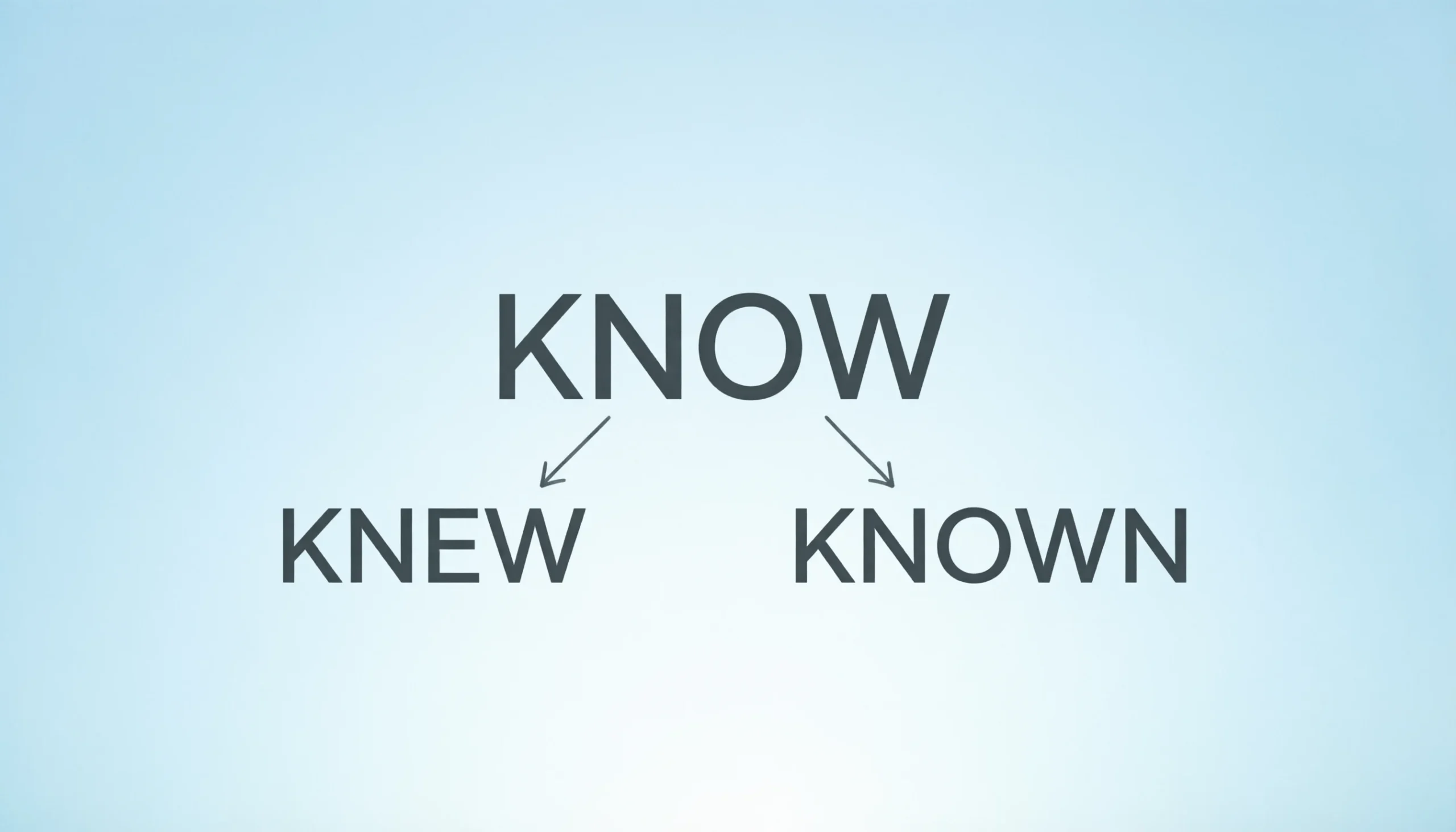
Have you ever wanted to say something in the past but felt confused about the correct form of the word “know”? You are not alone.
Many English learners struggle with this verb because it changes completely in the past tense. Instead of “knowed,” the correct form is “knew.”
Understanding the past tense of “know” is very important because we use it in daily conversations, storytelling, writing, and exams. If you master it, your English becomes more natural and confident.
In this guide, you will learn everything about the past tense of “know” in a very simple way.
We will cover rules, examples, sentence structure, mistakes, and practice exercises so you can learn step by step without confusion.
Quick Answer (Featured Snippet)
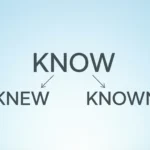
The past tense of “know” is “knew.”
The past participle is “known.”
Verb “Know” – Forms (Clean Table)
| Form | Word |
|---|---|
| Base form | know |
| Past tense | knew |
| Past participle | known |
| Present participle | knowing |
Explanation: Meaning, Rules & Usage
What does “know” mean?
The verb “know” means to have information, understanding, or awareness about something or someone.
Past tense of “know”
The past tense is “knew.” It is an irregular verb, so it does not follow the normal “ ed” rule.
Past participle
The past participle is “known.” It is used with helping verbs like has, have, had.
Simple rule
- Present: know
- Past: knew
- Perfect: known
Usage in real life
We use “knew” when we talk about:
- Something we understood before
- Something we were aware of in the past
- Past experiences or memories
Forms / Conjugation of “Know”
Here is a clear table to help you understand all forms:
| Tense | Form | Example |
|---|---|---|
| Present Simple | know / knows | I know him |
| Past Simple | knew | I knew him yesterday |
| Past Participle | known | I have known him for years |
| Present Participle | knowing | I am knowing the truth (rare) |
Comparison Section
1. Present vs Past
- Present: I know the truth.
- Past: I knew the truth.
👉 Present is current; past is already finished.
2. Past vs Present Perfect
- Past: I knew him in school.
- Present Perfect: I have known him since school.
👉 Past = finished time
👉 Present perfect = continues till now
3. Know vs Knew
- I know the answer. (now)
- I knew the answer yesterday. (before)
4. Knew vs Known
- I knew her name. (simple past)
- I have known her for years. (experience continues)
5. Common Confusion
- Wrong: I knowed him. ❌
- Correct: I knew him. ✔️
Sentence Structure
1. Positive Sentence
Formula: Subject + knew + object
Examples:
- I knew the truth.
- She knew my name.
- They knew the rules.
2. Negative Sentence
Formula: Subject + did not + know
Examples:
- I did not know the answer.
- She did not know him.
- They did not know the place.
👉 Note: We use “did not know” (not “did not knew”).
3. Question Sentence
Formula: Did + subject + know + object?
Examples:
- Did you know him?
- Did she know the truth?
- Did they know about the test?
Real Life Usage
Here are 15 natural sentences using “knew”:
- I knew you would come.
- She knew the answer immediately.
- We knew something was wrong.
- He knew my secret.
- They knew the teacher well.
- I knew the road was busy.
- She knew how to solve the problem.
- We knew the truth later.
- He knew it was a mistake.
- I knew her from childhood.
- They knew the rules clearly.
- She knew what to do next.
- I knew he was lying.
- We knew the exam was hard.
- He knew the location already.
Common Mistakes
1. Wrong: I knowed him yesterday ❌
Correct: I knew him yesterday ✔️
👉 “Knowed” is not a word in English.
2. Wrong: I did not knew the answer ❌
Correct: I did not know the answer ✔️
👉 After “did,” always use base form.
3. Wrong: Did you knew her? ❌
Correct: Did you know her? ✔️
👉 Questions use base form after “did.”
4. Wrong: I have knew him for years ❌
Correct: I have known him for years ✔️
👉 Use past participle “known.”
5. Wrong: She knowing the truth ❌
Correct: She knew the truth ✔️
👉 “Knowing” is not used like this in past simple.
Key Grammar Rules
- “Know” is an irregular verb.
- Past tense = knew (not knowed).
- After “did,” always use base form “know.”
- Present perfect uses “known.”
- “Know” is usually not used in continuous form.
Advanced Usage
1. Past Continuous (rare with know)
- I was knowing the truth. ❌ (not correct in most cases)
Instead use:
- I knew the truth. ✔️
2. Present Perfect
- I have known him for 10 years.
👉 Shows experience that continues.
3. Past Perfect
- I had known the answer before the test.
👉 One past action before another.
4. Future Form
- I will know the result tomorrow.
👉 Future knowledge.
Practice Section
A. Fill in the blanks
- I ___ him in school. (know)
- She ___ the answer yesterday.
- They did not ___ the truth.
- Did you ___ her name?
- We ___ the result already.
Answers:
- knew
- knew
- know
- know
- knew
B. MCQs
- Past tense of know is:
a) knowed
b) knew ✔️
c) known - Correct sentence:
a) I did not knew him
b) I did not know him ✔️
c) I knowed him - Past participle of know:
a) knew
b) known ✔️
c) knowed - Which is correct?
a) Did you knew her?
b) Did you know her? ✔️
c) Do you knew her? - “I have ___ him for years.”
a) knew
b) known ✔️
c) knowed
C. Error Correction
- I knowed the answer. ❌ → I knew the answer. ✔️
- She did not knew him. ❌ → She did not know him. ✔️
- Did you knew the truth? ❌ → Did you know the truth? ✔️
- I have knew him long ago. ❌ → I have known him long ago. ✔️
- They knowing the answer. ❌ → They knew the answer. ✔️
FAQs
1. What is the past tense of know?
It is knew.
2. What is the past participle of know?
It is known.
3. Is “knowed” correct?
No, it is incorrect.
4. Why is “know” irregular?
Because it does not follow the “ ed” rule.
5. Can we say “I did not knew”?
No, correct form is “I did not know.”
Conclusion
The past tense of “know” may look simple, but it is one of the most important irregular verbs in English. Instead of saying “knowed,” we always say “knew.” With practice, you will start using it naturally in speaking and writing.
Remember, grammar becomes easy when you practice daily. Try making your own sentences using “knew” and “known.” Read English conversations, watch videos, and repeat examples. The more you practice, the faster you will master it.
Keep learning, stay consistent, and your English will improve step by step.
Hi, I’m Robert Lowth, a passionate expert in English tenses and grammar. I specialize in simplifying complex tense rules to help learners understand and use English with confidence. My goal is to make grammar clear, practical, and easy for everyday communication. tenseshub.com