Have you ever written a sentence like “I seen him yesterday” and wondered if it was correct? Many English learners get confused when using see in past tense because the verb “see” is irregular. It does not follow the normal “ ed” rule like “walk → walked.”
This topic is important because we use the verb “see” almost every day in speaking and writing. We talk about movies we watched, people we met, places we visited, and things we noticed. If you use the wrong tense, your sentence may sound unnatural or incorrect.
The good news is that learning the past tense of “see” is actually simple once you understand the rules and patterns.
In this guide, you will learn the meaning, structure, formation, grammar rules, examples, common mistakes, exercises, and practical usage of see in past tense in clear and easy English.
Quick Answer
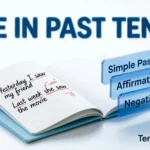
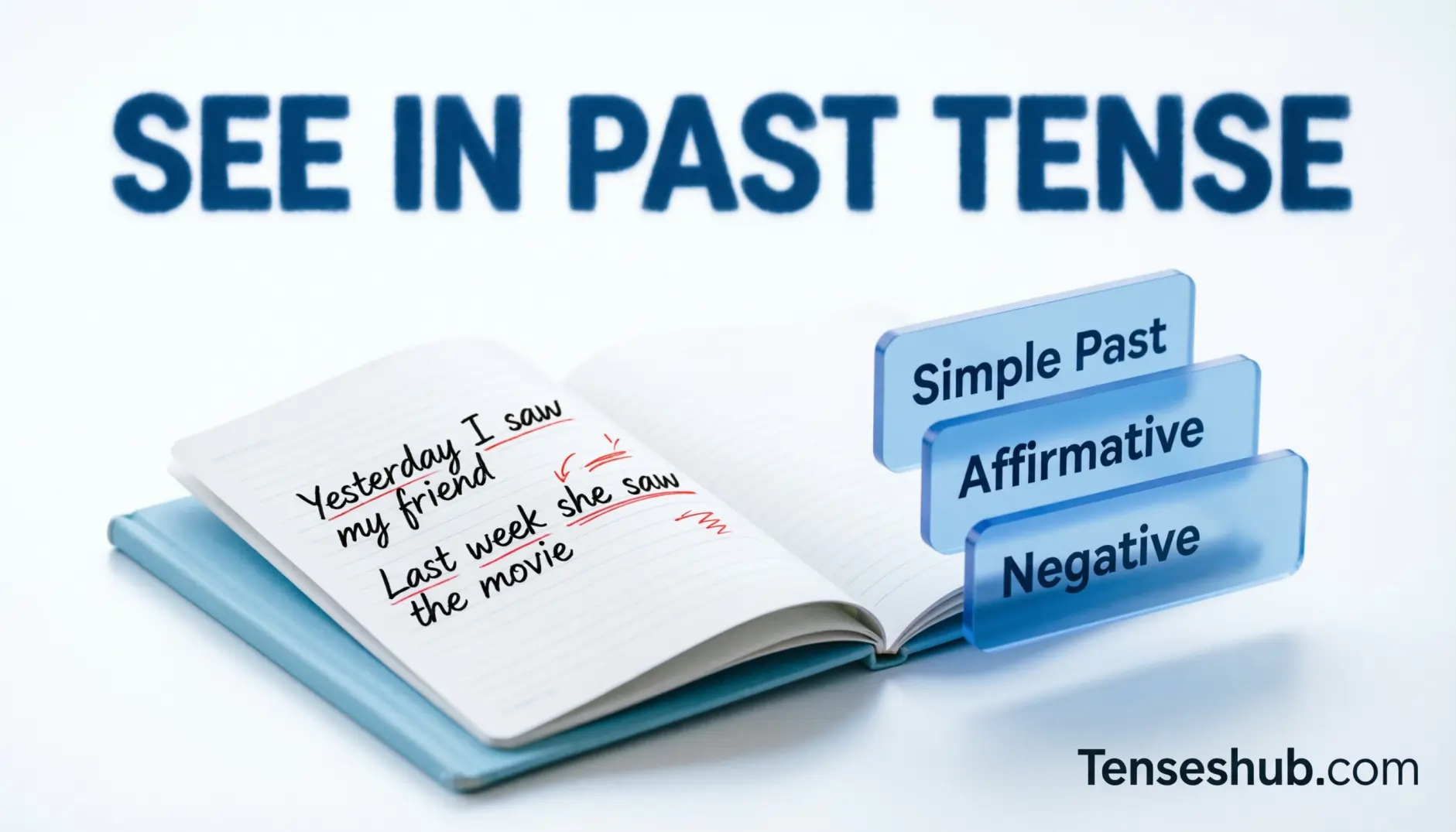
The past tense of see is saw.
The past participle of see is seen.
| Verb Form | Word |
| Base Verb | see |
| Past Tense | saw |
| Past Participle | seen |
Example:
- Present: I see the bird.
- Past: I saw the bird yesterday.
- Perfect: I have seen the bird before.
What Is See in Past Tense?
The phrase see in past tense refers to using the verb “see” to talk about something that already happened in the past.
The verb “see” means:
- to notice something with your eyes
- to watch or observe something
- to meet or visit someone
When we talk about the past, we change “see” to saw.
Examples:
- I saw a rainbow this morning.
- She saw her teacher at the mall.
- We saw a great movie last night.
The verb “see” is an irregular verb. This means it does not follow the normal pattern of adding “ ed.”
Incorrect:
- seed
- seed
Correct:
- saw
The past participle form is seen, which is used with helping verbs like:
- have
- has
- had
Examples:
- I have seen that film.
- She had seen the message earlier.
Structure of Sentences of See in Past Tense
Understanding sentence structure helps learners make correct sentences easily.
Positive Sentences
Formula:
Subject + saw + object
Examples:
- I saw a cat.
- She saw the accident.
- They saw the mountains.
Negative Sentences
Formula:
Subject + did not + see + object
Examples:
- I did not see him.
- She didn’t see the sign.
- We did not see the email.
Remember:
After “did,” always use the base verb “see,” not “saw.”
Incorrect:
- I didn’t saw him.
Correct:
- I didn’t see him.
Question Sentences
Formula:
Did + subject + see + object?
Examples:
- Did you see my bag?
- Did she see the movie?
- Did they see the teacher?
WH Questions
Formula:
WH word + did + subject + see?
Examples:
- What did you see?
- Who did she see?
- Where did they see the bird?
Formation of See in Past Tense
The verb “see” changes differently because it is irregular.
Basic Verb Forms
| Form | Verb |
| Base Form | see |
| Past Tense | saw |
| Past Participle | seen |
| Present Participle | seeing |
How the Past Tense Is Formed
Unlike regular verbs:
- walk → walked
- play → played
The verb “see” changes completely:
- see → saw
Examples:
- I see the stars. → I saw the stars.
- They see the ocean. → They saw the ocean.
How the Past Participle Is Formed
The past participle is “seen.”
It is used with helping verbs:
- have
- has
- had
Examples:
- I have seen this show before.
- She has seen my message.
- They had seen the problem earlier.
How to Use See in Past Tense
We use saw when talking about completed actions in the past.
1. Talking About Something You Watched
Examples:
- We saw a funny movie yesterday.
- I saw the football match on TV.
2. Talking About Something You Noticed
Examples:
- She saw smoke in the kitchen.
- I saw a snake near the road.
3. Talking About Meeting Someone
Examples:
- I saw my cousin last week.
- They saw their teacher at the store.
4. Talking About Past Experiences
Examples:
- We saw many beautiful places in Turkey.
- He saw snow for the first time.
5. Using Time Expressions
Common time words:
- yesterday
- last night
- last week
- two days ago
- in 2020
Examples:
- I saw him yesterday.
- She saw that movie last year.
Pronunciation Tip
- “See” sounds like /siː/
- “Saw” sounds like /sɔː/
Practice:
- see
- saw
- seen
Conjugation or Structure Table
| Tense | Structure | Example |
| Simple Present | see/sees | I see birds. |
| Simple Past | saw | I saw birds. |
| Present Perfect | have/has seen | I have seen birds. |
| Past Perfect | had seen | I had seen birds. |
| Future | will see | I will see birds. |
Real Life Examples
Here are natural examples of see in past tense in daily English.
- I saw your brother at the market.
- She saw a beautiful sunset yesterday.
- We saw a lion at the zoo.
- Did you see my phone?
- They did not see the warning sign.
- I saw your message this morning.
- My parents saw the new restaurant last night.
- Who saw the accident?
- He saw his friend after many years.
- I saw something strange outside.
- Did she see the email?
- We saw heavy rain during the trip.
- The teacher saw the mistake quickly.
- I saw your post on social media.
- They saw fireworks on New Year’s Eve.
Common Mistakes
English learners often make these mistakes with see in past tense.
| Wrong Sentence | Correct Sentence | Explanation |
| I seen him yesterday. | I saw him yesterday. | Use “saw” for simple past. |
| I didn’t saw him. | I didn’t see him. | Use base verb after “did.” |
| Did you saw it? | Did you see it? | Use “see” after “did.” |
| She have seen it. | She has seen it. | “She” uses “has.” |
| We seen the movie. | We saw the movie. | “Seen” needs a helping verb. |
Most Important Rule
- Saw = simple past
- Seen = past participle with helping verbs
Correct:
- I saw the movie.
- I have seen the movie.
Incorrect:
- I seen the movie.
Key Grammar Rules
1. “See” Is an Irregular Verb
It does not use “ ed.”
Correct:
- see → saw
Incorrect:
- see → seed
2. Use “Saw” for Simple Past
Examples:
- I saw him yesterday.
- She saw the dog.
3. Use “Seen” With Helping Verbs
Examples:
- I have seen it.
- They had seen the place.
4. After “Did,” Use the Base Verb
Examples:
- Did you see it?
- I didn’t see him.
Not:
- Did you saw it?
5. Time Words Often Show Past Tense
Examples:
- yesterday
- last night
- ago
Example:
- We saw him two days ago.
Comparisons with Similar Grammar Forms
See vs Saw
| Word | Usage |
| see | present tense |
| saw | past tense |
Examples:
- I see birds every day.
- I saw birds yesterday.
Saw vs Seen
| Word | Usage |
| saw | simple past |
| seen | perfect tenses |
Examples:
- I saw the movie.
- I have seen the movie.
Look vs See
| Verb | Meaning |
| look | direct your eyes |
| see | notice with your eyes |
Examples:
- Look at the sky.
- I saw a plane.
Watch vs See
| Verb | Meaning |
| watch | actively observe |
| see | notice or experience |
Examples:
- I watched a football match.
- I saw a football match on TV.
Exercises
Fill in the Blanks
- I _____ a rainbow yesterday.
- She did not _____ the message.
- Did you _____ my keys?
- We _____ a great movie last night.
- They have _____ this place before.
Answers
- saw
- see
- see
- saw
- seen
Sentence Correction Exercises
Correct these sentences.
- I seen him yesterday.
- Did she saw the cat?
- We didn’t saw the movie.
- He have seen this film.
- They seen the accident.
Answers
- I saw him yesterday.
- Did she see the cat?
- We didn’t see the movie.
- He has seen this film.
- They saw the accident.
Rewrite Tasks
Rewrite the sentences in past tense.
- I see a bird.
- They see the doctor.
- She sees the problem.
- We see a rainbow.
- You see the message.
Answers
- I saw a bird.
- They saw the doctor.
- She saw the problem.
- We saw a rainbow.
- You saw the message.
Multiple Choice Questions (MCQs)
- What is the past tense of “see”?
- a) seed
- b) seen
- c) saw
- d) seeing
Answer: c) saw
- Which sentence is correct?
- a) I seen him.
- b) I saw him.
- c) I seed him.
- d) I seeing him.
Answer: b) I saw him.
- Which word is the past participle?
- a) saw
- b) seeing
- c) seen
- d) see
Answer: c) seen
- Choose the correct sentence.
- a) Did you saw it?
- b) Did you see it?
- c) Did you seen it?
- d) Did you seeing it?
Answer: b) Did you see it?
- Which sentence is negative?
- a) I saw him.
- b) I did not see him.
- c) Did you see him?
- d) I have seen him.
Answer: b) I did not see him.
- “Seen” is used with:
- a) helping verbs
- b) adjectives
- c) nouns
- d) pronouns
Answer: a) helping verbs
- Which is correct?
- a) She have seen it.
- b) She has seen it.
- c) She seen it.
- d) She seeing it.
Answer: b) She has seen it.
- Which sentence uses simple past?
- a) I have seen it.
- b) I had seen it.
- c) I saw it.
- d) I will see it.
Answer: c) I saw it.
- Which word is the base form?
- a) saw
- b) seen
- c) see
- d) seeing
Answer: c) see
- Choose the correct sentence.
- a) We didn’t saw the car.
- b) We didn’t see the car.
- c) We not saw the car.
- d) We didn’t seen the car.
Answer: b) We didn’t see the car.
FAQs
What is the past tense of see?
The past tense of “see” is “saw.”
Is “seen” the past tense of see?
No. “Seen” is the past participle form.
Is “see” a regular verb?
No. It is an irregular verb.
Which is correct: “I saw” or “I seen”?
“I saw” is correct for simple past tense.
Can I say “did you saw”?
No. Correct form: “Did you see?”
What is the difference between saw and seen?
“Saw” is simple past. “Seen” is used with helping verbs like have/has/had.
What is the past participle of see?
The past participle is “seen.”
How do I use “seen” correctly?
Use it with helping verbs:
- I have seen it.
- She had seen it.
Why is “I seen him” incorrect?
Because “seen” needs a helping verb. Correct sentence:
- I saw him.
What tense is “have seen”?
It is present perfect tense.
Conclusion
Learning see in past tense is an important step in improving your English grammar. The main thing to remember is that the past tense of “see” is saw, while the past participle is seen. Many learners confuse these two forms, but with regular practice, the difference becomes easy.
Try using these forms in your daily conversations, writing exercises, and English speaking practice. Read simple sentences, make your own examples, and pay attention to how native speakers use “saw” and “seen.”
The more you practice, the more natural your English will sound. Keep learning, keep writing, and don’t be afraid of grammar mistakes because every mistake helps you improve faster.