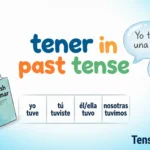
Have you ever tried to say “I had a car” or “we were hungry” in Spanish and felt confused about which form of tener to use? Many English learners struggle with tener in past tense because Spanish has more than one past tense form. Choosing between tenía and tuve can feel difficult at first.
The verb tener is one of the most important Spanish verbs because it means “to have.” People use it every day to talk about age, possessions, feelings, responsibilities, and experiences. That’s why learning tener in past tense is essential for speaking naturally in Spanish conversations.
The good news is that once you understand the patterns and sentence structures, using tener in the past becomes much easier.
In this guide, you’ll learn simple explanations, sentence formulas, examples, grammar rules, comparisons, exercises, and common mistakes. Everything is written in beginner friendly English so you can learn step by step with confidence.
Quick Answer
Tener in past tense usually appears as:
| Past Tense | Example | Meaning |
| Tenía | Yo tenía un perro. | I had a dog. |
| Tuve | Yo tuve un problema. | I had a problem. |
Tenía is used for ongoing or repeated situations in the past, while tuve is used for completed actions or specific events.
What Is Tener in Past Tense?
The Spanish verb tener means “to have.” When we talk about tener in past tense, we describe something someone had, experienced, or felt in the past.
Spanish has different past tenses, but beginners mainly learn these two forms first:
- Imperfect Past (Tenía)
- Preterite Past (Tuve)
Both mean “had” in English, but they are used differently.
Basic Function in Grammar
The verb tener helps speakers talk about:
- Possessions
- Age
- Feelings
- Experiences
- Obligations
- Physical conditions
Examples
- Yo tenía hambre.
→ I was hungry. - Ella tuvo un accidente.
→ She had an accident. - Nosotros teníamos una casa grande.
→ We had a big house. - Ellos tuvieron suerte.
→ They were lucky.
Why Learners Get Confused
English usually uses one simple word: “had.”
Spanish uses different past forms depending on:
- Whether the action was completed
- Whether it happened repeatedly
- Whether it describes a background situation
That’s why understanding context is important.
Structure of Sentences of Tener in Past Tense
Learning sentence structure helps you build correct Spanish sentences easily.
Positive Sentence Structure
Imperfect Form
Subject + tenía/tenías/teníamos + object
Examples:
- Yo tenía mucho trabajo.
- Tú tenías un gato.
- Nosotros teníamos tiempo.
Preterite Form
Subject + tuve/tuviste/tuvo + object
Examples:
- Yo tuve fiebre ayer.
- Ella tuvo una reunión.
- Ellos tuvieron problemas.
Negative Sentence Structure
Subject + no + past form of tener + object
Examples:
- Yo no tenía dinero.
- Ella no tuvo tiempo.
- Nosotros no teníamos hambre.
Question Structure
¿Past form of tener + subject + object?
Examples:
- ¿Tuviste clase hoy?
- ¿Tenían un coche?
- ¿Tuvo ella una idea?
Short Answers
- Sí, tuve.
- No, no tuve.
- Sí, tenía.
- No, no tenía.
Formation of Tener in Past Tense
The verb tener is irregular, which means it does not follow normal verb ending rules.
Imperfect Form of Tener
The imperfect form is used for:
- Habitual actions
- Ongoing situations
- Descriptions in the past
Conjugation
| Subject | Imperfect Form |
| Yo | tenía |
| Tú | tenías |
| Él/Ella | tenía |
| Nosotros | teníamos |
| Vosotros | teníais |
| Ellos | tenían |
Preterite Form of Tener
The preterite form is used for:
- Completed actions
- Specific events
- Sudden situations
Conjugation
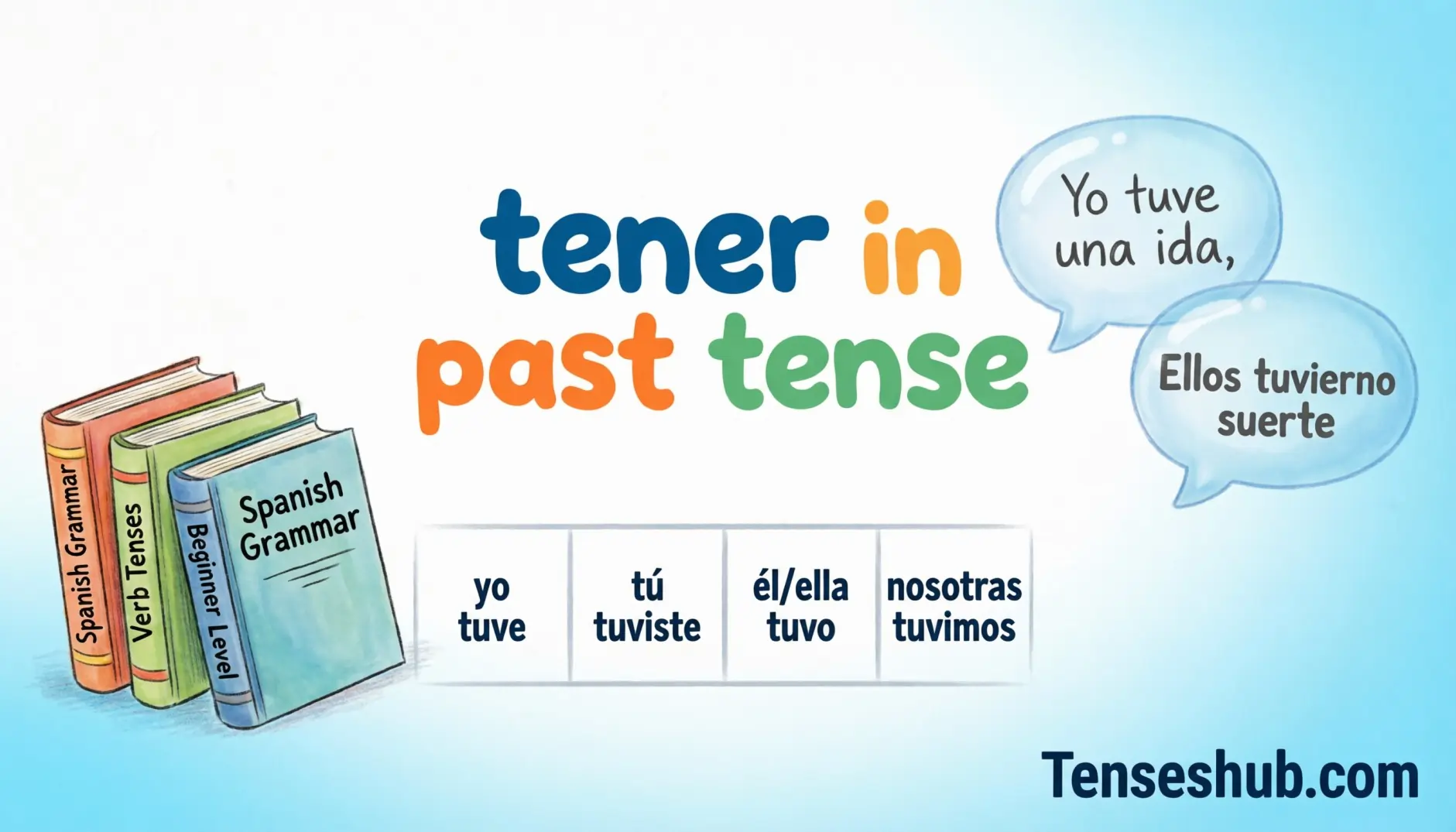
| Subject | Preterite Form |
| Yo | tuve |
| Tú | tuviste |
| Él/Ella | tuvo |
| Nosotros | tuvimos |
| Vosotros | tuvisteis |
| Ellos | tuvieron |
Important Note
The stem changes completely in the preterite:
- tener → tuv
That’s why it is called an irregular verb.
How to Use Tener in Past Tense
Understanding usage is more important than memorizing rules alone.
1. Use “Tenía” for Ongoing Situations
Use tenía when something continued for some time in the past.
Examples:
- Yo tenía sueño.
- Ella tenía una bicicleta roja.
- Teníamos mucho tiempo.
These sentences describe background situations.
2. Use “Tuve” for Completed Events
Use tuve for finished or specific actions.
Examples:
- Tuve un examen ayer.
- Ella tuvo un accidente.
- Tuvieron una fiesta anoche.
These actions happened once and ended.
3. Use Tener for Age
Spanish uses tener to express age.
Examples:
- Yo tenía diez años.
- Mi abuelo tenía setenta años.
4. Use Tener for Feelings or Conditions
Examples:
- Tenía hambre.
- Teníamos frío.
- Tuve miedo.
5. Use Tener with Expressions
Common expressions include:
- tener hambre → to be hungry
- tener sed → to be thirsty
- tener sueño → to be sleepy
- tener suerte → to be lucky
Examples:
- Ella tenía hambre.
- Nosotros tuvimos suerte.
6. Pronunciation Tip
The stress usually falls naturally:
- te NÍ a
- TU ve
Practicing aloud helps improve fluency.
Conjugation or Structure Table
| Subject | Imperfect | Preterite |
| Yo | tenía | tuve |
| Tú | tenías | tuviste |
| Él/Ella | tenía | tuvo |
| Nosotros | teníamos | tuvimos |
| Vosotros | teníais | tuvisteis |
| Ellos | tenían | tuvieron |
Real Life Examples
- Yo tenía una mochila azul.
- Ella tenía mucho sueño ayer.
- Nosotros teníamos una clase importante.
- Tú tuviste una buena idea.
- Ellos tuvieron problemas en el viaje.
- ¿Tuviste tiempo para estudiar?
- Yo no tenía dinero.
- Ella no tuvo suerte.
- ¿Tenían ustedes un perro?
- Mi padre tenía cuarenta años.
- Tuve fiebre la semana pasada.
- Nosotros tuvimos una reunión ayer.
- ¿Tuvo ella una entrevista?
- Ellos no tenían hambre.
- Yo tenía miedo durante la tormenta.
Common Mistakes
Mistake 1: Using Present Instead of Past
❌ Yo tengo hambre ayer.
✅ Yo tenía hambre ayer.
Explanation: Use past tense for past situations.
Mistake 2: Mixing Imperfect and Preterite
❌ Tuve un coche cuando era niño.
✅ Tenía un coche cuando era niño.
Explanation: Childhood situations are usually ongoing, so use imperfect.
Mistake 3: Wrong Verb Ending
❌ Yo tenió hambre.
✅ Yo tenía hambre.
Explanation: The correct imperfect form is tenía.
Mistake 4: Forgetting Irregular Stem
❌ Yo tené un problema.
✅ Yo tuve un problema.
Explanation: Preterite uses the irregular stem tuv .
Mistake 5: Incorrect Question Structure
❌ Tú tuviste tiempo?
✅ ¿Tuviste tiempo?
Explanation: Spanish questions usually begin with question marks.
Key Grammar Rules
Rule 1: Use Imperfect for Habitual Past Actions
- Cuando era niño, tenía muchos juguetes.
Rule 2: Use Preterite for Finished Events
- Tuve una reunión ayer.
Rule 3: Tener Is Irregular in Preterite
- tener → tuve
Rule 4: Use Tener for Physical Conditions
- Ella tenía frío.
Rule 5: Use Tener for Age
- Yo tenía quince años.
Rule 6: Context Decides the Meaning
Both tenía and tuve can mean “had,” but the situation changes the meaning.
Rule 7: Learn Common Expressions
Expressions with tener are very common in daily Spanish.
Comparisons with Similar Grammar Forms
Tener vs Ser
- Tenía hambre. → I was hungry.
- Era feliz. → I was happy.
Tener expresses conditions, while ser describes identity or characteristics.
Tenía vs Tuve
| Form | Use | Example |
| Tenía | Ongoing or repeated past | Tenía un perro. |
| Tuve | Completed event | Tuve un accidente. |
Tener vs Haber
- Tenía un coche. → I had a car.
- Había un coche. → There was a car.
Tener shows possession.
Haber shows existence.
Tener vs Estar
- Tengo miedo.
- Estoy cansado.
Both describe conditions, but they work differently in grammar.
Exercises
Fill in the Blanks
- Yo ______ hambre ayer.
- Nosotros ______ un examen.
- Ella no ______ tiempo.
- ¿Tú ______ una bicicleta?
- Ellos ______ suerte.
Answers
- tenía
- tuvimos
- tuvo
- tenías
- tuvieron
Sentence Correction Exercises
Correct these sentences.
- Yo tengo sueño ayer.
- Ella tenió una idea.
- Nosotros tuve hambre.
- Tú tenías un accidente ayer.
- Ellos tenieron suerte.
Answers
- Yo tenía sueño ayer.
- Ella tuvo una idea.
- Nosotros tuvimos hambre.
- Tú tuviste un accidente ayer.
- Ellos tuvieron suerte.
Rewrite Tasks
Rewrite the sentences in past tense.
- Yo tengo un perro.
- Ella tiene frío.
- Nosotros tenemos suerte.
- Tú tienes miedo.
- Ellos tienen dinero.
Answers
- Yo tenía un perro.
- Ella tenía frío.
- Nosotros tuvimos suerte.
- Tú tenías miedo.
- Ellos tenían dinero.
Multiple Choice Questions (MCQs)
1. Which form means “I had”?
A. tengo
B. tuve
C. tendrás
D. tienes
Answer: B
2. Which sentence is correct?
A. Yo tenió hambre.
B. Yo tuve hambre.
C. Yo tener hambre.
D. Yo tuve hambre ayered.
Answer: B
3. Which form is imperfect?
A. tuvo
B. tuve
C. tenía
D. tuvimos
Answer: C
4. Which sentence describes an ongoing past situation?
A. Tuve un accidente.
B. Tenía una bicicleta.
C. Tuvimos una reunión.
D. Ella tuvo suerte.
Answer: B
5. Which form is used for completed actions?
A. tenía
B. tenías
C. tuve
D. tenían
Answer: C
6. What is the preterite stem of tener?
A. ten
B. tien
C. tuv
D. teng
Answer: C
7. Which sentence is negative?
A. Yo tenía hambre.
B. Yo no tenía hambre.
C. ¿Tenías hambre?
D. Tuve hambre.
Answer: B
8. Which sentence is a question?
A. Tuve suerte.
B. No tuve suerte.
C. ¿Tuviste suerte?
D. Tenía suerte.
Answer: C
9. Which form fits this sentence?
“Ayer yo ____ fiebre.”
A. tenía
B. tuve
C. tengo
D. tendrás
Answer: B
10. Which sentence uses age correctly?
A. Yo tuve diez años.
B. Yo tengo diez años ayer.
C. Yo tenía diez años.
D. Yo tener diez años.
Answer: C
FAQs
1. What does tener mean in English?
Tener usually means “to have.”
2. What is the past tense of tener?
The main past forms are tenía and tuve.
3. What is the difference between tenía and tuve?
Tenía describes ongoing situations, while tuve describes completed events.
4. Is tener an irregular verb?
Yes, especially in the preterite tense.
5. How do I say “I was hungry” in Spanish?
You can say: Yo tenía hambre.
6. Can tener describe age?
Yes. Example: Yo tenía veinte años.
7. Which tense should beginners learn first?
Most beginners start with both imperfect and preterite forms together.
8. Is tuve formal or informal?
It can be used in both formal and informal conversations.
9. How can I practice tener in past tense?
Practice speaking, writing sentences, and reading simple Spanish stories.
10. Why does Spanish have two past tense forms?
Spanish gives more detail about whether an action was ongoing or completed.
Conclusion
Learning tener in past tense is an important step in speaking natural Spanish. Even though forms like tenía and tuve may seem confusing at first, they become much easier with regular practice and real life examples. Remember that tenía is usually used for ongoing or repeated situations, while tuve is used for completed events.
Try practicing a few sentences every day about your past experiences, feelings, or possessions. Reading simple Spanish stories and speaking aloud can also improve your confidence quickly. Mistakes are part of learning, so don’t worry if you mix the forms sometimes.
Keep practicing, stay patient, and soon you will use tener in past tense naturally in conversations, writing, and daily communication.
Hi, I’m Robert Lowth, a passionate expert in English tenses and grammar. I specialize in simplifying complex tense rules to help learners understand and use English with confidence. My goal is to make grammar clear, practical, and easy for everyday communication. tenseshub.com