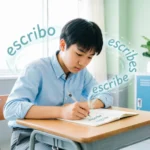
Have you ever tried to say “I write” in Spanish but felt confused about how to form it correctly? You are not alone. Many English speakers struggle with Spanish verb conjugations, especially with common verbs like escribir (to write).
Learning the present tense of escribir is very important because it is used in daily conversations, school work, texting, and even professional communication.
In this guide, you will learn everything about escribir present tense in a very simple way. We will break it into easy steps, show clear tables, give real life examples, and help you avoid common mistakes. By the end, you will confidently use escribir in the present tense without confusion.
Quick Answer (Featured Snippet)
The present tense of escribir (to write) in Spanish describes actions happening right now or regularly.
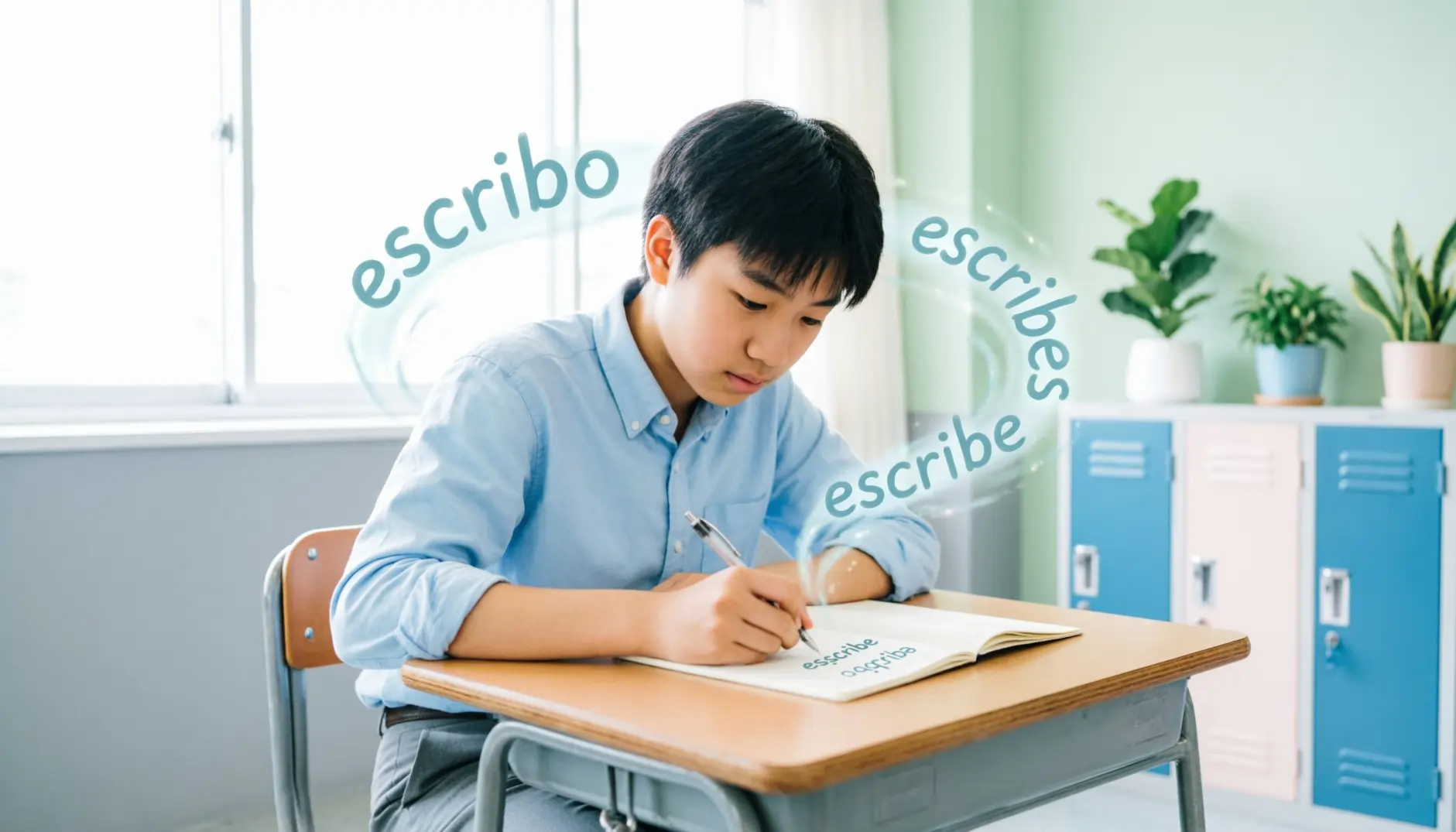
Present Tense Conjugation of Escribir
Conjugation Table
| Subject | Conjugation |
|---|---|
| Yo (I) | escribo |
| Tú (You informal) | escribes |
| Él / Ella (He / She) | escribe |
| Nosotros (We) | escribimos |
| Vosotros (You plural – Spain) | escribís |
| Ellos / Ellas (They) | escriben |
Explanation: Meaning, Rules, and Usage
What Does “Escribir” Mean?
Escribir is a Spanish verb that means “to write.” It is a regular ir verb, which follows a specific pattern in the present tense.
When Do We Use Present Tense?
We use the present tense of escribir to talk about:
- Actions happening now → I am writing
- Daily habits → I write every day
- General facts → She writes books
- Instructions → Write your name here
How Conjugation Works
In Spanish, verbs change depending on the subject. For escribir, we remove ir and add endings:
- escribir → escrib + ending
For example:
- yo + o = escribo
- tú + es = escribes
Forms / Conjugation of Escribir
Base Form and Tenses
| Tense | Form |
|---|---|
| Infinitive | escribir |
| Present | escribo, escribes, escribe… |
| Past (Preterite) | escribí, escribiste… |
| Future | escribiré, escribirás… |
| Gerund (-ing form) | escribiendo |
| Past Participle | escrito |
📘 Present Tense Full Table
| Subject | Form | Example |
|---|---|---|
| Yo | escribo | Yo escribo una historia. |
| Tú | escribes | Tú escribes rápido. |
| Él / Ella / Usted | escribe | Ella escribe un mensaje. |
| Nosotros | escribimos | Nosotros escribimos juntos. |
| Vosotros | escribís | Vosotros escribís cartas. |
| Ellos / Ellas / Ustedes | escriben | Ellos escriben libros. |
Comparison Section: Present vs Other Tenses
1. Present vs Past
- Present: action now
- Past: action finished
Examples:
- Yo escribo una carta. (I write a letter now)
- Yo escribí una carta. (I wrote a letter)
2. Present vs Future
- Present: now
- Future: later
Examples:
- Ella escribe un correo. (She writes an email now)
- Ella escribirá un correo. (She will write an email)
3. Present vs Continuous
- Present: general action
- Continuous: action happening right now
Examples:
- Yo escribo mucho. (I write a lot)
- Yo estoy escribiendo. (I am writing right now)
4. Formal vs Informal Use
- Tú escribes (informal)
- Usted escribe (formal)
Sentence Structure
1. Simple Sentence Formula
Subject + verb (escribir form) + object
Examples:
- Yo escribo cartas.
- Tú escribes mensajes.
2. Negative Sentences
Subject + no + verb
Examples:
- Yo no escribo correos.
- Ella no escribe rápido.
3. Questions
¿ + verb + subject?
Examples:
- ¿Escribes tú una carta?
- ¿Escribe él un libro?
Real Life Usage (Daily Examples)
Here are 15 practical sentences using escribir:
- Yo escribo un diario.
- Tú escribes tu nombre.
- Ella escribe un mensaje.
- Nosotros escribimos tareas.
- Ellos escriben libros.
- Yo escribo en mi cuaderno.
- Tú escribes rápido.
- Él escribe una carta.
- Nosotros escribimos juntos.
- Ustedes escriben correos.
- Yo escribo todos los días.
- Ella escribe poemas.
- Tú escribes en español.
- Ellos escriben historias.
- Nosotros escribimos proyectos.
Common Mistakes
1. Wrong: Yo escribe
✔ Correct: Yo escribo
👉 Why? “Yo” always uses o ending.
2. Wrong: Tú escribo
✔ Correct: Tú escribes
👉 “Tú” uses es, not o.
3. Wrong: Ellos escriba
✔ Correct: Ellos escriben
👉 “Ellos” uses en ending.
4. Wrong: Nosotros escribe
✔ Correct: Nosotros escribimos
👉 “Nosotros” always ends in imos.
Key Grammar Rules
- Escribir is a regular ir verb
- Each subject has a fixed ending
- “Yo” form always ends in o
- “Nosotros” always ends in imos
- “Ellos” always ends in en
Advanced Usage
1. Present Continuous
Use: estar + escribiendo
Examples:
- Yo estoy escribiendo una carta.
- Ella está escribiendo un email.
2. Present Perfect
Use: haber + escrito
Examples:
- Yo he escrito un libro.
- Tú has escrito mucho.
3. Near Future
Use: ir a + escribir
Examples:
- Voy a escribir una historia.
- Vamos a escribir un ensayo.
Practice Section
A. Fill in the Blanks
- Yo ______ (escribir) una carta.
- Tú ______ un mensaje.
- Ella ______ un libro.
- Nosotros ______ juntos.
- Ellos ______ correos.
Answers:
- escribo
- escribes
- escribe
- escribimos
- escriben
B. MCQs
- Yo ___ una historia.
- a) escribo ✔
- b) escribes
- c) escribe
- Tú ___ cartas.
- a) escribo
- b) escribes ✔
- c) escriben
- Ellos ___ libros.
- a) escribe
- b) escriben ✔
- c) escribimos
- Nosotros ___ juntos.
- a) escribimos ✔
- b) escribo
- c) escribes
- Ella ___ un mensaje.
- a) escriben
- b) escribe ✔
- c) escribimos
C. Error Correction
- Yo escribe → Yo escribo ✔
- Tú escribo → Tú escribes ✔
- Ellos escriba → Ellos escriben ✔
- Nosotros escribe → Nosotros escribimos ✔
- Ella escribes → Ella escribe ✔
FAQs
1. What is escribir in present tense?
It means “to write” in Spanish, used for current actions.
2. Is escribir a regular verb?
Yes, it is a regular ir verb.
3. What is “yo escribo”?
It means “I write.”
4. How do you say “they write”?
Ellos escriben.
5. What is the easiest way to remember it?
Learn endings: o, es, e, imos, en
Conclusion
Learning the present tense of escribir is one of the most important steps in mastering Spanish. This verb is used in everyday life writing messages, emails, stories, and more. Once you understand the pattern, it becomes very easy to use.
The key is practice. Try writing simple sentences every day using escribir. Start with “yo escribo” and slowly build more complex sentences.
With repetition, you will remember it naturally without effort. Keep practicing, and soon you will feel confident using Spanish in real conversations, writing tasks, and exams.