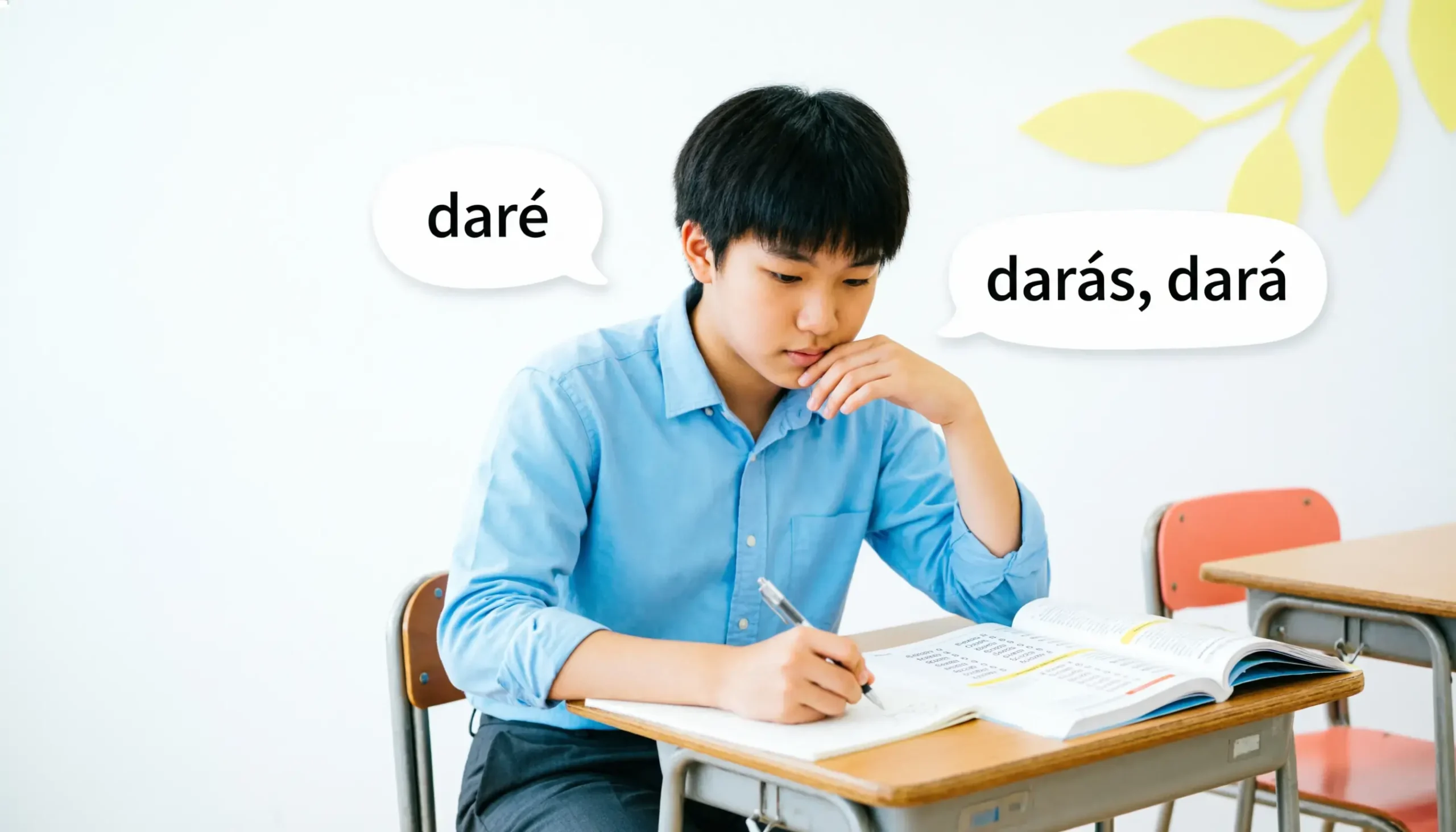
Have you ever tried to say “I will give” in Spanish and got stuck choosing the right form? You’re not alone.
Many learners feel confused when using the dar future tense, especially because dar is irregular.
The dar future tense is used to talk about giving something in the future like “I will give you a gift” or “They will give advice.”
It’s simple once you understand the pattern, but small mistakes can change the meaning.
For students, bloggers, and writers, mastering the dar future tense helps you express plans, promises, and intentions clearly.
In this guide, you’ll learn everything from basic rules to advanced usage so you never feel unsure again.
FEATURED SNIPPET
| Subject | Future Form | Meaning (English) |
|---|---|---|
| Yo | daré | I will give |
| Tú | darás | You will give |
| Él / Ella | dará | He/She will give |
| Nosotros | daremos | We will give |
| Vosotros | daréis | You all will give |
| Ellos / Ellas | darán | They will give |
DETAILED EXPLANATION
Basic Meaning
“Dar” means to give.
Future tense means something that will happen later.
👉 So, dar future tense = will give
How It Works (Simple)
Unlike many verbs, dar is slightly irregular but easy:
You keep the verb (dar) and add endings.
Future Endings
- é
- ás
- á
- emos
- éis
- án
Usage
Use the dar future tense when:
- Making promises → Te daré ayuda
- Offering something → Le daré un regalo
- Predicting → Ellos darán resultados
Advanced Insight
Even though dar is short, it behaves like regular future verbs (add endings directly to infinitive).
FORMS / CONJUGATION TABLES (MANDATORY)
Verb Forms Overview
| Form | Verb |
|---|---|
| Base Form | dar |
| Present (Yo) | doy |
| Past (Preterite Yo) | di |
| Future (Yo) | daré |
| Past Participle | dado |
Full Future Conjugation
| Subject | Conjugation |
|---|---|
| Yo | daré |
| Tú | darás |
| Él / Ella / Usted | dará |
| Nosotros | daremos |
| Vosotros | daréis |
| Ellos / Ustedes | darán |
COMPARISON SECTION (STRICT FORMAT)
Dar Future vs Present Difference
Present = now
Future = later
- Yo doy dinero.
- Yo daré dinero.
Future vs Past Difference
Past = already happened
Future = will happen
- Él dio ayuda.
- Él dará ayuda.
Past vs Past Participle Difference
Past = action completed
Participle = used with “have”
- Yo di un regalo.
- He dado un regalo.
Preterite vs Imperfect Difference
Preterite = finished action
Imperfect = ongoing
- Yo di dinero.
- Yo daba dinero.
Future vs Conditional Difference
Future = will give
Conditional = would give
- Te daré el libro.
- Te daría el libro.
SENTENCE STRUCTURE
Simple Sentences Formula
Subject + dar (future) + object
Examples:
- Yo daré comida.
- Ella dará apoyo.
- Nosotros daremos ayuda.
- Él dará dinero.
- Tú darás un regalo.
Negative Sentences Formula
Subject + no + dar (future)
Examples:
- Yo no daré dinero.
- Ella no dará ayuda.
- Nosotros no daremos regalos.
- Él no dará permiso.
- Tú no darás nada.
Interrogative Sentences Formula
¿Dar (future) + subject + object?
Examples:
- ¿Darás el libro?
- ¿Dará ella dinero?
- ¿Daremos ayuda?
- ¿Darán ellos apoyo?
- ¿Daré yo la respuesta?
REAL LIFE EXAMPLES
- Yo daré un regalo mañana.
- Ella dará una sorpresa.
- Nosotros daremos comida.
- Ellos darán dinero.
- Tú darás apoyo.
- ¿Darás ayuda?
- ¿Dará él el informe?
- ¿Darán ustedes permiso?
- Yo no daré excusas.
- Ella no dará problemas.
- Nosotros no daremos errores.
- Ellos no darán nada.
- Te daré mi tiempo.
- Le daré un consejo.
- Les darán una oportunidad.
- Daré todo por ti.
- Darán resultados pronto.
- ¿Te daré el libro?
- No daré respuestas falsas.
- Daremos lo mejor.
DAILY USE + DIALOGUE
Conversation 1:
A: ¿Me darás ayuda?
B: Sí, te daré apoyo mañana.
Conversation 2:
A: ¿Qué darás en la fiesta?
B: Daré regalos a todos.
COMMON MISTAKES (VERY IMPORTANT)
❌ Yo daré a él un libro
✅ Yo le daré un libro
👉 Spanish uses indirect object pronouns
❌ Yo daría mañana (wrong tense)
✅ Yo daré mañana
👉 Confusing future with conditiona
❌ Darás tú dinero?
✅ ¿Darás tú dinero?
👉 Missing question marks
GRAMMAR RULES
- Use infinitive + future endings
- Do not remove “dar” base
- Always match subject with ending
- Use pronouns correctly (le, les)
- Add accents in endings (daré, dará)
ADVANCED USAGE
Future Continuous
- Estaré dando ayuda
Future Perfect
- Habré dado el libro
Near Future (Going to)
- Voy a dar un regalo
PRACTICE SECTION (ENGAGEMENT BOOST)
Fill in the blanks
- Yo ____ (dar) un regalo
- Ellos ____ (dar) ayuda
- Tú ____ (dar) dinero
- Nosotros ____ (dar) comida
- Ella ____ (dar) apoyo
MCQs
- “I will give” =
a) doy
b) daré ✅
c) di - “They will give” =
a) darán ✅
b) daban
c) dieron
Error Correction
- Yo darás dinero → Yo daré dinero
- Ella daré ayuda → Ella dará ayuda
- Nosotros darán comida → Nosotros daremos comida
Answers
Fill blanks: daré, darán, darás, daremos, dará
FAQs
1. What is dar future tense?
It means “will give” in Spanish.
2. When to use it?
For future actions, promises, or plans.
3. Is dar irregular?
Yes, slightly but easy to use.
4. Example sentence?
Yo daré un regalo.
5. Difference from present?
Present = now, Future = later
6. Can I use it in questions?
Yes: ¿Darás ayuda?
CONCLUSION
Learning the dar future tense is a powerful step toward speaking Spanish fluently.
It helps you express future plans, promises, and intentions with clarity and confidence.
While it may seem tricky at first due to its irregular nature, consistent practice makes it easy to master.
The key is repetition try creating your own sentences daily using forms like daré, darás, and darán.
You can also practice by writing short dialogues or imagining real life situations where you would “give” something in the future.
To improve faster, consider using a grammar checker or language app to verify your sentences.
This will help you avoid common mistakes and reinforce correct patterns.