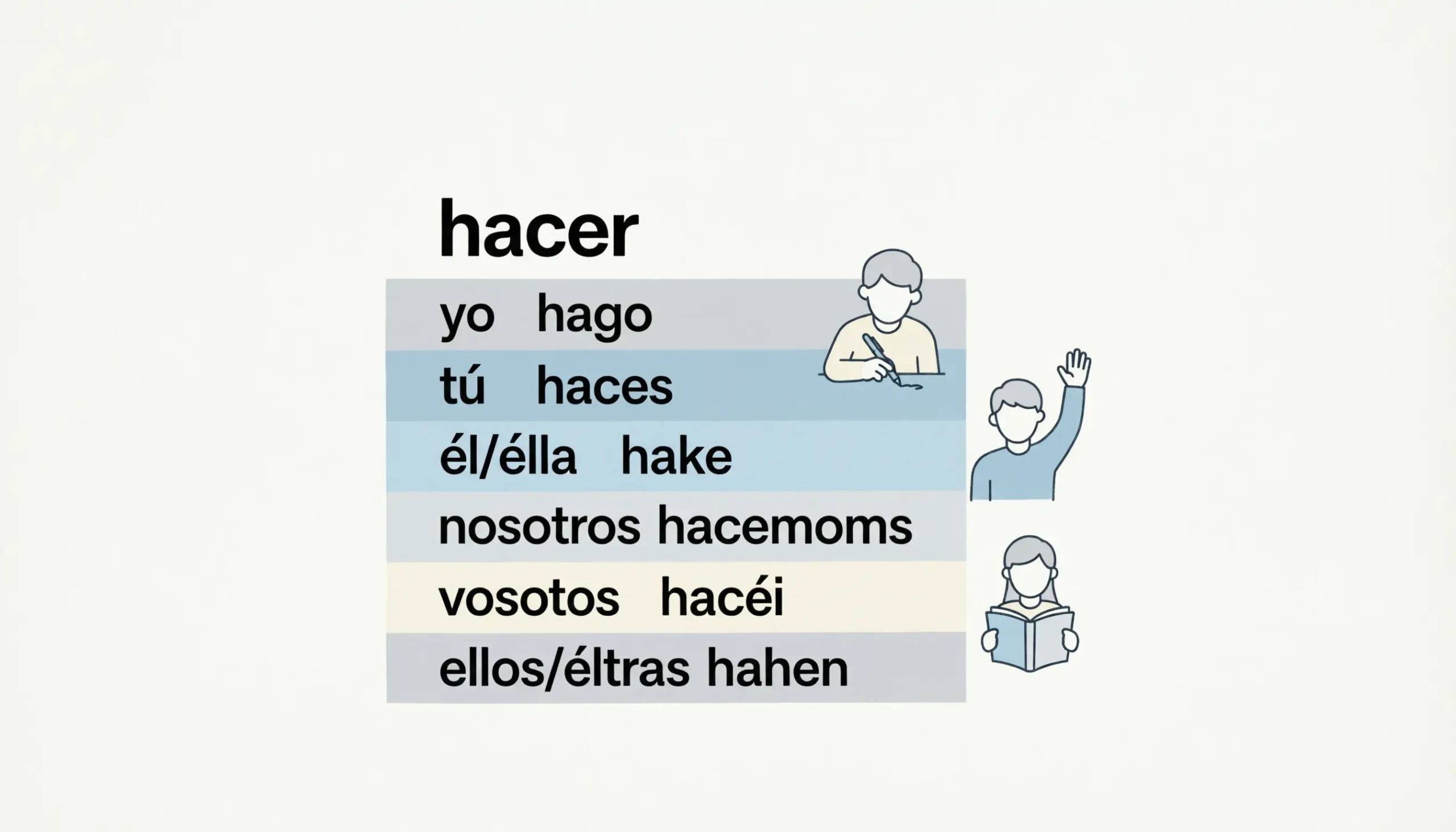
Have you ever tried to say “I do” or “I make” in Spanish but got confused about which form to use?
Many learners struggle with hacer in present tense because it doesn’t follow simple patterns like regular verbs.
In very simple terms, hacer means “to do” or “to make.” But when used in the present tense, it changes forms depending on who is doing the action. That’s where most mistakes happen.
Understanding hacer in present tense is very important for students, bloggers, and writers because it is one of the most commonly used Spanish verbs in daily conversations.
Once you master it, you can express actions, habits, and routines easily and confidently.
FEATURED SNIPPET
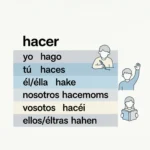
Conjugation Table
| Subject | Present Form |
|---|---|
| Yo | hago |
| Tú | haces |
| Él / Ella | hace |
| Nosotros | hacemos |
| Vosotros | hacéis |
| Ellos | hacen |
DETAILED EXPLANATION (Simple → Advanced)
Basic Meaning
Hacer = to do / to make
Examples:
- Yo hago mi tarea → I do my homework
- Ella hace comida → She makes food
Simple Rule
- Replace er ending
- BUT “yo” form becomes hago (irregular)
Why It’s Important
You use hacer for:
- Daily activities
- Work tasks
- Creating things
Advanced Insight
Unlike regular verbs, hacer changes its root slightly in “yo” form. This makes it an irregular verb, and you must memorize its forms.
FORMS / CONJUGATION TABLES
Basic Verb Forms
| Form | Verb |
|---|---|
| Base Form | hacer |
| Present | hago, haces, hace… |
| Past (Preterite Yo) | hice |
| Future (Yo) | haré |
| Past Participle | hecho |
Present Tense Conjugation
| Subject | Conjugation |
|---|---|
| Yo | hago |
| Tú | haces |
| Él / Ella / Usted | hace |
| Nosotros | hacemos |
| Vosotros | hacéis |
| Ellos / Ustedes | hacen |
COMPARISON SECTION (STRICT FORMAT)
Present vs Past
Present = happening now
Past = already done
- Yo hago la comida → I make food
- Yo hice la comida → I made food
Past vs Past Participle
Past = action finished
Past participle = used with “have”
- Yo hice tarea → I did homework
- He hecho tarea → I have done homework
Present vs Future
Present = now
Future = later
- Ella hace café → She makes coffee
- Ella hará café → She will make coffee
Preterite vs Imperfect
Preterite = completed action
Imperfect = repeated action
- Hice ejercicio → I did exercise (once)
- Hacía ejercicio → I used to exercise
Hacer vs Crear
Hacer = general making
Crear = creative making
- Hago comida → I make food
- Creo arte → I create art
SENTENCE STRUCTURE
Simple Formula
Subject + hacer (present form) + object
Examples:
- Yo hago trabajo
- Tú haces ejercicio
- Él hace café
- Nosotros hacemos tareas
- Ellos hacen ruido
Negative Formula
Subject + no + hacer + object
Examples:
- Yo no hago tarea
- Tú no haces nada
- Ella no hace comida
- Nosotros no hacemos eso
- Ellos no hacen ejercicio
Interrogative Formula
¿Hacer (conjugated) + subject + object?
Examples:
- ¿Haces tarea?
- ¿Hace él comida?
- ¿Hacemos esto?
- ¿Hacen ellos ruido?
- ¿Hago bien esto?
REAL LIFE EXAMPLES
- Yo hago mi cama
- Ella hace café
- Nosotros hacemos ejercicio
- Tú haces la tarea
- Él hace su trabajo
- Yo no hago ruido
- Ella no hace comida hoy
- ¿Haces deporte?
- ¿Hace frío hoy?
- Ellos hacen fiesta
- Nosotros no hacemos eso
- Yo hago un pastel
- Tú haces dibujos
- Ella hace compras
- ¿Hacen ustedes tarea?
- Yo hago mi trabajo diario
- Él hace llamadas
- Nosotros hacemos planes
- Tú haces preguntas
- Ellos hacen cambios
DAILY USE + DIALOGUE
Dialogue 1:
A: ¿Qué haces?
B: Hago mi tarea
A: ¿La haces todos los días?
B: Sí, siempre
Dialogue 2:
A: ¿Hace ella comida?
B: Sí, hace cena cada noche
COMMON MISTAKES (VERY IMPORTANT)
❌ Yo hace tarea
✅ Yo hago tarea
👉 Mistake: wrong conjugation
❌ Tú hago comida
✅ Tú haces comida
👉 Mistake: mixing forms
❌ Nosotros hace ejercicio
✅ Nosotros hacemos ejercicio
👉 Mistake: ignoring plural
GRAMMAR RULES
- “Yo” form is always hago
- Match verb with subject
- Use present for daily actions
- Don’t mix conjugations
- Use correct pronoun with verb
ADVANCED USAGE
Continuous Form
Estoy haciendo tarea → I am doing homework
Perfect Form
He hecho trabajo → I have done work
Future Form
Haré comida → I will make food
PRACTICE SECTION (ENGAGEMENT BOOST)
Fill in the blanks
- Yo tarea
- Tú ejercicio
- Ella comida
- Nosotros trabajo
- Ellos ruido
Answers: hago, haces, hace, hacemos, hacen
MCQs
- Yo tarea
a) hace b) hago c) haces - Tú comida
a) haces b) hago c) hace - Nosotros ejercicio
a) hacen b) hacemos c) hace - Él café
a) hago b) hace c) haces - Ellos ruido
a) hacen b) hace c) hago
Answers: b, a, b, b, a
Error Correction
- Yo hace tarea → hago
- Tú hago comida → haces
- Él hacen café → hace
- Nosotros hace ejercicio → hacemos
- Ellos hace ruido → hacen
FAQs
1. What is hacer in present tense?
It means “to do” or “to make” in current time.
2. Is hacer regular?
No, it is irregular.
3. What is “yo” form?
Hago
4. When to use hacer?
For actions and making things
5. What is past form?
Hice
6. What is past participle?
Hecho
7. Can it be used daily?
Yes, very common
CONCLUSION
Mastering hacer in present tense is a key step in becoming fluent in Spanish.
Since it is one of the most commonly used verbs, understanding its forms and usage will instantly improve your speaking and writing skills.
From daily routines to simple conversations, hacer helps you express actions naturally.
The most important thing is consistency. Practice using different forms like hago, haces, and hacemos in real sentences.
Try creating your own examples or speaking them aloud to build confidence.
To speed up your learning, you can also use grammar tools or apps to check your sentences.
The more you practice, the more natural it will feel.

Hi, I’m Noah Bester, a tenses expert passionate about simplifying English grammar. I create practical, easy-to-understand guides to help learners master tenses with confidence. My goal is to make grammar clear, useful, and applicable in everyday communication. tenseshub.com