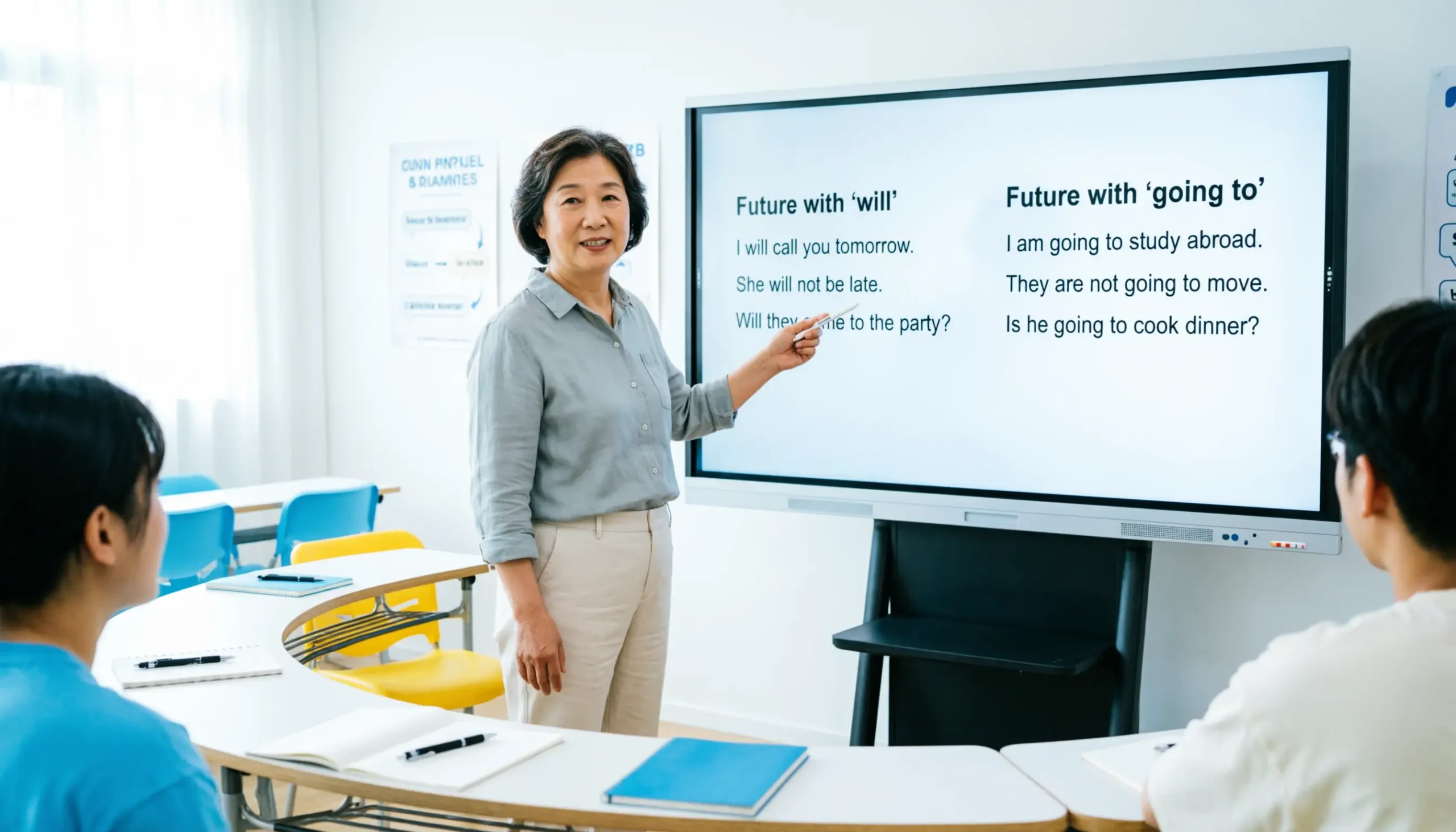
Have you ever said something about the future and wondered, “Did I say that correctly?” You’re not alone.
Many learners get confused about how to talk about plans, predictions, and promises in English. That’s where future tense examples become incredibly helpful.
The future tense is simply a way to talk about things that haven’t happened yet.
If you’re a student, blogger, or someone improving English skills, understanding future tense examples can make your communication clearer and more confident.
In this guide, you’ll learn everything from simple rules to advanced usage through easy explanations and real-life future tense examples you can start using today.
FEATURED SNIPPET
Future Tense Forms
| Form | Example |
|---|---|
| Will | I will call you. |
| Going to | She is going to travel. |
DETAILED EXPLANATION
What is Future Tense?
Future tense talks about actions that will happen after now.
👉 Example: I will eat dinner.
Basic Uses
- Plans → I am going to study.
- Predictions → It will rain.
- Promises → I will help you.
Simple Understanding
Think of future tense as:
👉 “Not now, but later.”
Deeper Explanation
There are multiple ways to express the future:
- Will → instant decisions, promises
- Going to → planned actions
- Present continuous → fixed arrangements
- Future continuous/perfect → advanced timing
FORMS / CONJUGATION TABLES
Basic Verb Forms – Eat
| Form | Verb |
|---|---|
| Base | eat |
| Present | eat / eats |
| Past | ate |
| Future | will eat |
| Past Participle | eaten |
Future Forms
| Structure | Example |
|---|---|
| Will + Verb | I will eat |
| Going to + Verb | I am going to eat |
| Present Continuous | I am eating tomorrow |
COMPARISON SECTION
Future vs Present
Future: I will go tomorrow.
Present: I go every day.
Future vs Past
Future: She will call me.
Past: She called me.
Will vs Going To
Will: I will help you. (instant decision)
Going to: I am going to help you. (planned)
Future Continuous vs Simple Future
Future Continuous: I will be working.
Simple Future: I will work.
Future Perfect vs Simple Future
Future Perfect: I will have finished.
Simple Future: I will finish.
SENTENCE STRUCTURE
1. Simple Sentences Formula
Subject + will + base verb
Examples:
- I will travel.
- She will study.
- They will play.
- He will cook dinner.
- We will win the match.
2. Negative Sentences Formula
Subject + will not + verb
Examples:
- I will not go.
- She will not eat.
- They won’t come.
- He will not call.
- We will not wait.
3. Interrogative Sentences Formula
Will + subject + verb?
Examples:
- Will you come?
- Will she study?
- Will they play?
- Will he call?
- Will we win?
REAL-LIFE EXAMPLES
- I will call you later.
- She will finish her work.
- They will arrive soon.
- I am going to buy a car.
- We will watch a movie.
- He will help you.
- Will you join us?
- Will she come today?
- I will not forget this.
- She won’t agree.
- They will not wait.
- I will meet him tomorrow.
- It will rain tonight.
- We are going to travel.
- He will learn English.
- I will try again.
- Will they understand?
- She will not complain.
- I will send the email.
- We will celebrate soon.
DAILY USE + DIALOGUE
Conversation 1:
A: What will you do tomorrow?
B: I will visit my friend.
A: Will you stay long?
B: No, I will come back early.
Conversation 2:
A: Are you going to study tonight?
B: Yes, I am going to prepare for exams.
COMMON MISTAKES (VERY IMPORTANT)
❌ I will going to school.
✅ I will go to school.
👉 Mistake: Using “will” with “going”
❌ I going to eat.
✅ I am going to eat.
👉 Missing “am/is/are”
❌ She will goes.
✅ She will go.
👉 No “s” after will
GRAMMAR RULES
- Use base verb after “will”
- Do not add “s” or “ed” after “will”
- Use “going to” for planned actions
- Use “will” for instant decisions
- Always include subject
ADVANCED USAGE
Future Continuous
Action in progress in future
👉 I will be working at 8 PM.
Future Perfect
Completed before a future time
👉 I will have finished my work.
Future “Going To”
Plans already decided
👉 I am going to start a business.
PRACTICE SECTION
Fill in the Blanks
- I ___ (go) tomorrow.
- She ___ (call) you.
- They ___ (play) later.
- We ___ (travel) next week.
- He ___ (study) tonight.
MCQs
- Which is correct?
a) She will goes
b) She will go ✅ - “Going to” is used for:
a) Past
b) Plans ✅ - Future tense shows:
a) Past
b) Future actions ✅ - Choose correct:
a) I will eat
b) I will ate - “Will” expresses:
a) Promise ✅
b) Past
Error Correction
- I will going → I will go
- She will eats → She will eat
- I going to study → I am going to study
- He will not goes → He will not go
- They will playing → They will play
FAQs
1. What is future tense?
It shows actions that will happen later.
2. When to use “will”?
For instant decisions and promises.
3. When to use “going to”?
For planned actions.
4. Can we use present tense for future?
Yes, for schedules.
5. Is future tense difficult?
No, with practice it becomes easy.
CONCLUSION
Mastering the future tense is a powerful step toward fluent English communication.
By understanding how to use “will,” “going to,” and other future forms, you can express plans, predictions, and promises with clarity and confidence.
The key is consistent practice. Start by using simple sentences in your daily conversations, then gradually move to more advanced structures like future continuous and future perfect.
Don’t worry about making mistakes they are part of the learning process.
Focus on applying what you’ve learned through real-life examples and exercises.
Over time, you’ll notice a big improvement in your speaking and writing skills.

Hi, I’m Robert Lowth, a passionate expert in English tenses and grammar. I specialize in simplifying complex tense rules to help learners understand and use English with confidence. My goal is to make grammar clear, practical, and easy for everyday communication. tenseshub.com