Have you ever wanted to say “I start,” “you begin,” or “they are starting” in Spanish—but got confused about which form of the verb to use?
You’re not alone. Many learners struggle with the empezar present tense, especially because it changes in ways that aren’t always obvious.
In simple terms, empezar means “to start” or “to begin.”
But using the empezar present tense correctly is important if you want to speak naturally in daily conversations, write better content, or understand Spanish clearly.
If you’re a student, blogger, or language enthusiast, mastering this verb will boost your fluency quickly.
Let’s break it down step by step so you can use it with confidence.
FEATURED SNIPPET
📘 Empezar – Present Tense
| Subject | Conjugation |
|---|---|
| Yo | empiezo |
| Tú | empiezas |
| Él/Ella | empieza |
DETAILED EXPLANATION
Basic Meaning
Empezar = to start / to begin
Example:
- Yo empiezo el trabajo. (I start the work.)
Key Idea
In the present tense, empezar changes its stem:
👉 e → ie
How It Works
- The “e” in empezar becomes “ie” in most forms
- BUT not in nosotros and vosotros
Why This Matters
If you don’t apply the change, your Spanish will sound unnatural.
FORMS / CONJUGATION TABLES
📘 Base Verb Forms – Empezar
| Form | Verb |
|---|---|
| Base | empezar |
| Present | empiezo |
| Past (Preterite) | empecé |
| Past Participle | empezado |
| Future | empezaré |
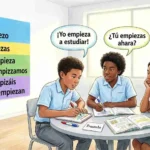
✅ Present Tense Conjugation
| Subject | Form |
|---|---|
| Yo | empiezo |
| Tú | empiezas |
| Él/Ella/Usted | empieza |
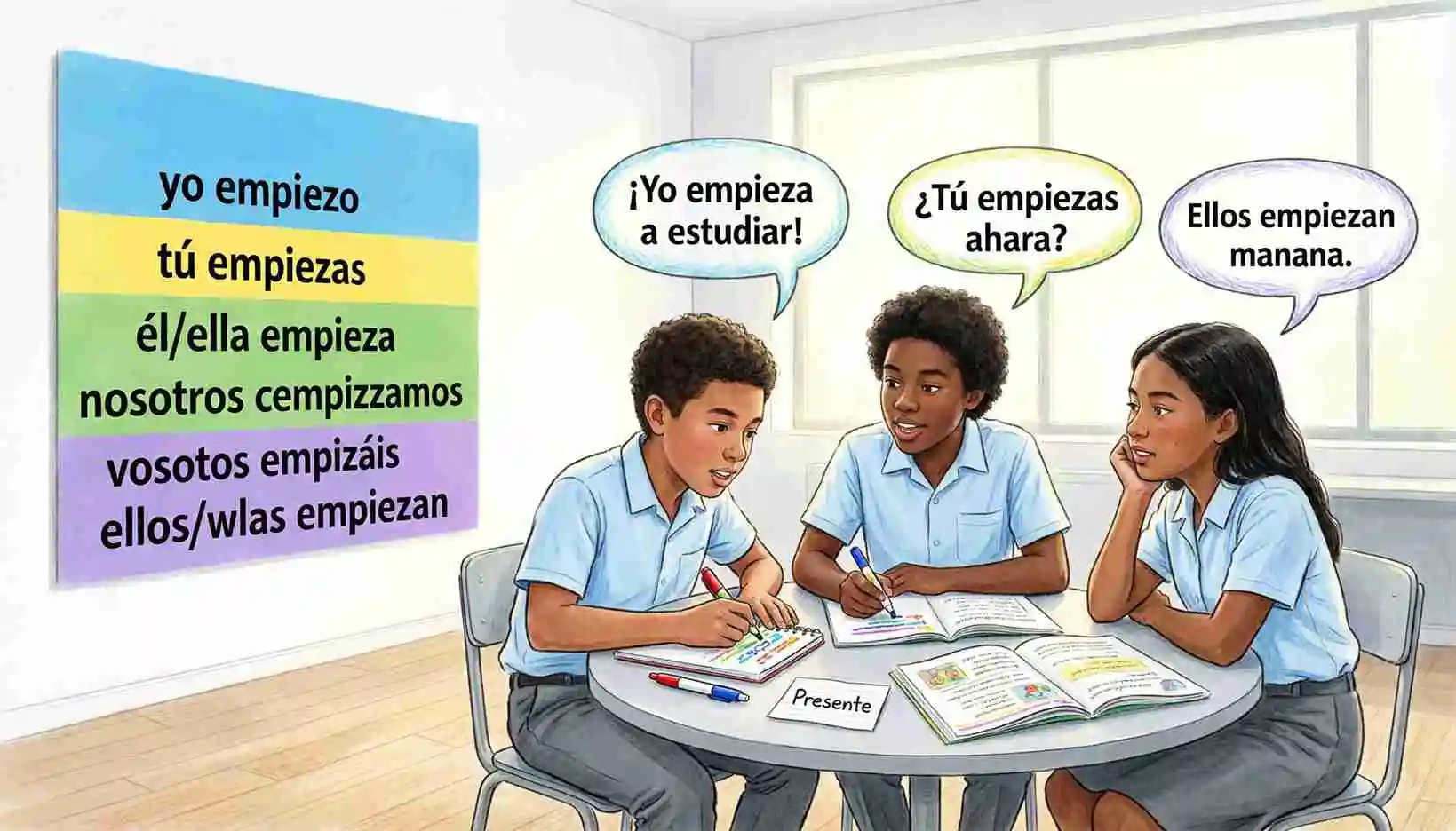
| Nosotros | empezamos |
| Vosotros | empezáis |
| Ellos/Ustedes | empiezan |
COMPARISON SECTION
Empezar Present vs Past
- Yo empiezo ahora.
- Yo empecé ayer.
Present vs Past Participle
- Yo empiezo el proyecto.
- He empezado el proyecto.
Preterite vs Imperfect
- Empecé a estudiar. (I started – completed action)
- Empezaba a estudiar. (I used to start – repeated)
Empezar vs Comenzar
- Empiezo la clase.
- Comienzo la clase.
👉 Same meaning, comenzar is slightly more formal.
Present vs Future
- Empiezo ahora.
- Empezaré mañana.
SENTENCE STRUCTURE
Simple Sentences Formula
Subject + empezar (conjugated) + object
Examples:
- Yo empiezo el día temprano.
- Ella empieza su tarea.
- Nosotros empezamos la reunión.
- Tú empiezas el juego.
- Ellos empiezan el proyecto.
Negative Sentences Formula
Subject + no + empezar + object
Examples:
- Yo no empiezo hoy.
- Ella no empieza la clase.
- Nosotros no empezamos tarde.
- Tú no empiezas ahora.
- Ellos no empiezan el trabajo.
Interrogative Sentences Formula
¿Empezar (conjugated) + subject + object?
Examples:
- ¿Empiezas tú ahora?
- ¿Empieza ella la clase?
- ¿Empiezan ellos hoy?
- ¿Empiezo yo primero?
- ¿Empezamos nosotros ya?
REAL-LIFE EXAMPLES
- Yo empiezo mi día a las 8.
- Ella empieza a estudiar temprano.
- ¿Empiezas ahora?
- No empiezo sin café.
- Ellos empiezan el proyecto hoy.
- Nosotros empezamos juntos.
- ¿Empieza la película?
- Tú empiezas bien.
- No empiezan sin permiso.
- Empiezo a trabajar ahora.
- Ella empieza con energía.
- ¿Empiezan mañana?
- No empiezo tarde.
- Empezamos la clase.
- ¿Empiezas el libro hoy?
- Él empieza rápido.
- No empieza sin ayuda.
- Empiezan temprano.
- ¿Empiezo yo primero?
- Empezamos ahora mismo.
DAILY USE + DIALOGUE
Conversation 1:
- A: ¿Empiezas el trabajo hoy?
- B: Sí, empiezo en la mañana.
- A: Perfecto, yo también empiezo temprano.
Conversation 2:
- A: ¿Empieza la clase ahora?
- B: No, empieza en 10 minutos.
COMMON MISTAKES (VERY IMPORTANT)
❌ Yo empezO
✅ Yo empiezo
👉 Mistake: forgetting stem change
❌ Nosotros empiezamos
✅ Nosotros empezamos
👉 Mistake: applying change where it shouldn’t
❌ Yo empiezo a estudiar ayer
✅ Yo empecé a estudiar ayer
👉 Mistake: wrong tense
GRAMMAR RULES
- Empezar is a stem-changing verb (e → ie)
- Change happens in all forms except nosotros/vosotros
- Use present tense for current or habitual actions
- Match verb with subject
- Use correct tense for time expressions
ADVANCED USAGE
Continuous Form
- Estoy empezando el trabajo.
(I am starting the work)
Perfect Form
- He empezado el proyecto.
(I have started the project)
Future Form
- Empezaré mañana.
(I will start tomorrow)
PRACTICE SECTION
Fill in the blanks
- Yo ______ (empezar) ahora.
- Ellos ______ el proyecto.
- Nosotros ______ temprano.
- Tú ______ bien.
- Ella ______ la clase.
MCQs
- Yo ___ el trabajo
a) empiezo
b) empezas
c) empezamos - Nosotros ___
a) empiezamos
b) empezamos
c) empiezo - Él ___
a) empieza
b) empiezo
c) empiezas - Ellos ___
a) empiezan
b) empieza
c) empezamos - Tú ___
a) empiezo
b) empiezas
c) empieza
Error Correction
- Yo empezas → ______
- Nosotros empiezamos → ______
- Ella empiezo → ______
- Tú empieza → ______
- Ellos empieza → ______
Answers
Fill in the blanks:
- empiezo
- empiezan
- empezamos
- empiezas
- empieza
MCQs:
1-a, 2-b, 3-a, 4-a, 5-b
Corrections:
- empiezo
- empezamos
- empieza
- empiezas
- empiezan
FAQs
What is empezar present tense?
It shows actions happening now using empezar.
Why does empezar change?
Because it is a stem-changing verb (e → ie).
When to use it?
For current or repeated actions.
Is empezar irregular?
Yes, partially (stem change).
Difference between empezar and comenzar?
Same meaning, comenzar is more formal.
Conclusion
Learning the empezar present tense is a powerful step toward Spanish fluency.
While the stem change might seem tricky at first, consistent practice makes it second nature.
By understanding its structure, avoiding common mistakes, and applying it in real-life conversations, you’ll quickly gain confidence.
Don’t just memorize, use it actively. Try writing your own sentences, speaking aloud, or even using a grammar checker to test yourself.
The more you practice, the more natural it becomes. Start today—and empieza your journey to better Spanish!

Hi, I’m Noah Bester, a tenses expert passionate about simplifying English grammar. I create practical, easy-to-understand guides to help learners master tenses with confidence. My goal is to make grammar clear, useful, and applicable in everyday communication. tenseshub.com