Have you ever tried to say “I will live” in Spanish and suddenly got confused about verb endings? You’re not alone.
Many learners struggle with the vivir future tense, especially when they try to remember conjugation patterns and usage rules.
The vivir future tense is used to talk about actions that will happen later.
It’s simple, logical, and actually easier than many other tenses once you understand the pattern.
If you’re a student, blogger, or language enthusiast, mastering this tense will boost your confidence in Spanish writing and speaking.
In this guide, you’ll learn everything about the vivir future tense from basic meaning to advanced usage so clearly that you won’t need any other resource.
FEATURED SNIPPET
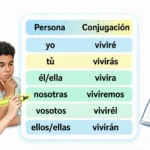
Vivir – Future Tense
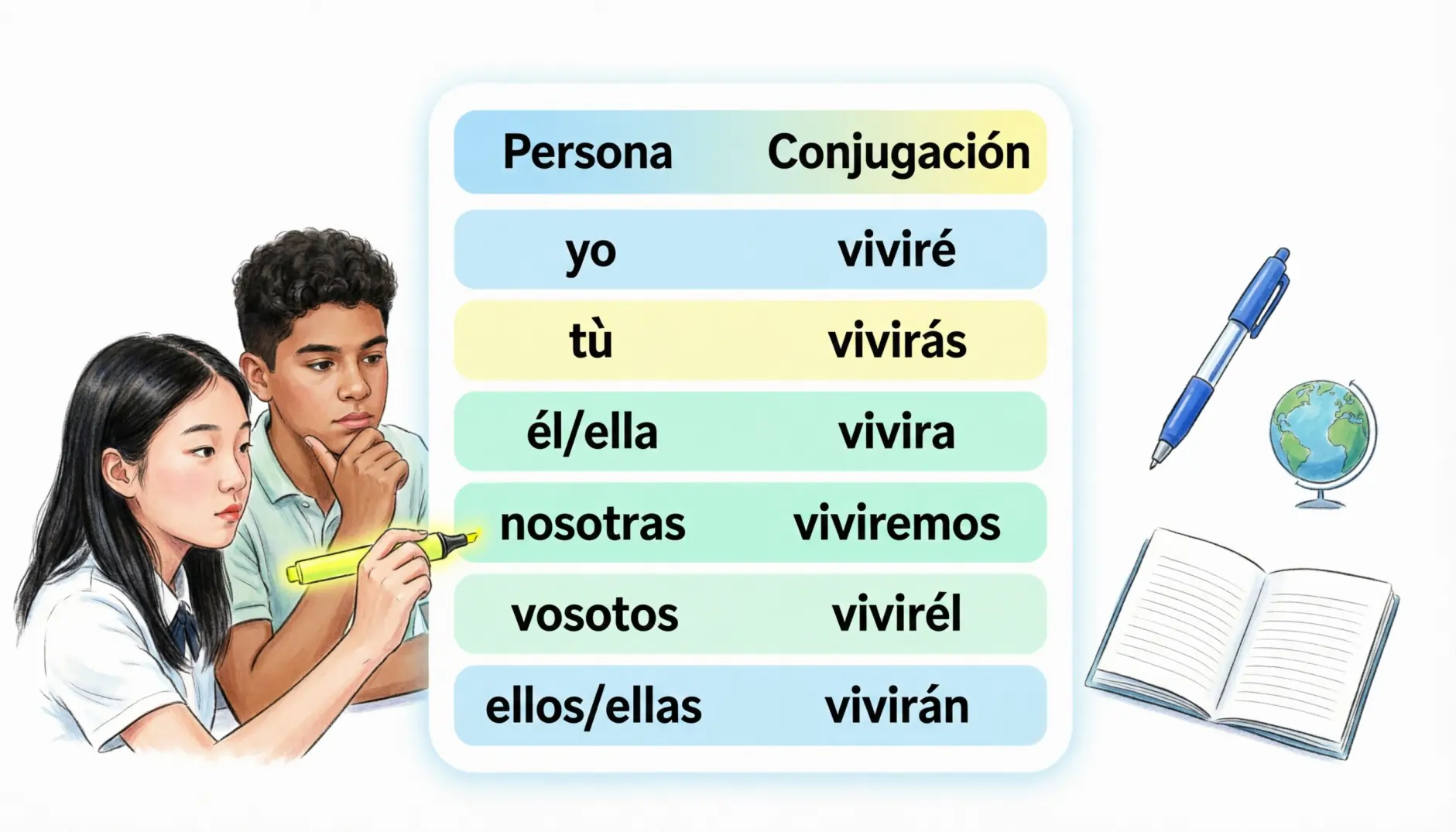
| Subject | Conjugation |
|---|---|
| Yo | viviré |
| Tú | vivirás |
| Él/Ella | vivirá |
| Nosotros | viviremos |
| Vosotros | viviréis |
| Ellos | vivirán |
DETAILED EXPLANATION
Beginner Level
The verb “vivir” means “to live.”
In future tense, it becomes “will live.”
Example:
- Yo viviré → I will live
How It Works
Unlike many verbs, Spanish future tense is easy:
👉 Keep the whole verb (vivir)
👉 Add endings
Future Endings
- é, ás, á, emos, éis, án
Advanced Insight
The vivir future tense is also used to:
- Make predictions → “It will rain tomorrow”
- Express probability → “He must be at home”
FORMS / CONJUGATION TABLES (MANDATORY)
Base Verb Forms – Vivir
| Form | Verb |
|---|---|
| Base | vivir |
| Present | vivo |
| Past | viví |
| Future | viviré |
| Past Participle | vivido |
Full Future Conjugation
| Subject | Vivir (Future) |
|---|---|
| Yo | viviré |
| Tú | vivirás |
| Él/Ella/Usted | vivirá |
| Nosotros/as | viviremos |
| Vosotros/as | viviréis |
| Ellos/as/Ustedes | vivirán |
COMPARISON SECTION
Vivir Future vs Present – short difference
Future = action later
Present = action now
- Yo vivo en Madrid.
- Yo viviré en Madrid.
Vivir Past vs Future – short difference
Past = completed action
Future = upcoming action
- Yo viví allí.
- Yo viviré allí.
Past vs Past Participle – short difference
Past = action done
Participle = used in perfect tenses
- Viví en España.
- He vivido en España.
Preterite vs Imperfect – short difference
Preterite = finished
Imperfect = ongoing
- Viví allí por 2 años.
- Vivía allí cuando era niño.
Future vs “Ir a + Vivir” – short difference
Future = formal
Ir a = near future
- Viviré allí.
- Voy a vivir allí.
SENTENCE STRUCTURE
Simple Sentences Formula
Subject + vivir (future form)
Examples:
- Yo viviré feliz.
- Tú vivirás aquí.
- Él vivirá en España.
- Nosotros viviremos juntos.
- Ellos vivirán mejor.
Negative Sentences Formula
Subject + no + vivir (future)
Examples:
- Yo no viviré allí.
- Tú no vivirás solo.
- Él no vivirá aquí.
- Nosotros no viviremos juntos.
- Ellos no vivirán lejos.
Interrogative Sentences Formula
¿ + vivir (future) + subject?
Examples:
- ¿Viviré aquí?
- ¿Vivirás conmigo?
- ¿Vivirá ella allí?
- ¿Viviremos juntos?
- ¿Vivirán en España?
REAL-LIFE EXAMPLES
- Viviré en una casa grande.
- Vivirás cerca del mar.
- Él vivirá feliz.
- Nosotros viviremos en paz.
- Ellos vivirán en Europa.
- ¿Vivirás aquí mañana?
- ¿Vivirá ella contigo?
- No viviré sin ti.
- No vivirás solo.
- No viviremos allí.
- Viviré mejor el próximo año.
- Vivirás tus sueños.
- Él vivirá su vida plenamente.
- ¿Dónde vivirás?
- Viviremos juntos siempre.
- Vivirán en una ciudad grande.
- ¿Cuándo vivirás aquí?
- No vivirán lejos.
DAILY USE + DIALOGUE
Conversation 1:
- A: ¿Dónde vivirás el próximo año?
- B: Viviré en Madrid.
- A: ¡Qué bien!
- B: Sí, viviré cerca del centro.
Conversation 2:
- A: ¿Viviremos juntos?
- B: Sí, viviremos en un apartamento.
- A: Perfecto.
COMMON MISTAKES
❌ Yo vivir (missing ending)
✅ Yo viviré
👉 Mistake: forgetting future endings
❌ Yo viviría (wrong tense)
✅ Yo viviré
👉 Mistake: confusing conditional tense
❌ Yo vivo mañana
✅ Yo viviré mañana
👉 Mistake: using present instead of future
GRAMMAR RULES
- Always keep the full infinitive (vivir)
- Add future endings directly
- Same endings apply to all verbs
- No stem change needed
- Use for predictions and plans
ADVANCED USAGE
Future Continuous
- Estaré viviendo → I will be living
Future Perfect
- Habré vivido → I will have lived
Example:
- Para 2030, habré vivido en tres países.
PRACTICE SECTION (ENGAGEMENT BOOST)
Fill in the blanks
- Yo ______ (vivir) en España.
- Tú ______ (vivir) aquí.
- Él ______ (vivir) solo.
- Nosotros ______ (vivir) juntos.
- Ellos ______ (vivir) bien.
MCQs
- “I will live” =
a) vivo
b) viví
c) viviré - Correct form:
a) vivirás
b) vivir
c) vivo - Future ending for “yo”:
a) é
b) í
c) a - “They will live”:
a) vivirán
b) vivían
c) viven - Correct sentence:
a) Yo vivir mañana
b) Yo viviré mañana
c) Yo vivo mañana
Error Correction
- Yo vivir mañana
- Tú vivirás ayer
- Él vivo mañana
- Nosotros vivíremos
- Ellos vivir
Answers
Fill:
- viviré
- vivirás
- vivirá
- viviremos
- vivirán
MCQs:
- c
- a
- a
- a
- b
Corrections:
- Yo viviré mañana
- Tú viviste ayer
- Él vivirá mañana
- Nosotros viviremos
- Ellos vivirán
FAQs
What is vivir future tense?
It describes actions that will happen later.
How do you form it?
Add endings to the full verb vivir.
Is vivir regular?
Yes, completely regular.
When to use it?
For future plans and predictions.
Difference from “voy a vivir”?
That means “going to live” (near future).
Is it hard to learn?
No, it’s one of the easiest tenses.
CONCLUSION
Learning the vivir future tense doesn’t have to be complicated.
In fact, it’s one of the most straightforward parts of Spanish grammar once you understand the pattern of adding endings directly to the infinitive verb.
From forming simple sentences like “viviré” to expressing advanced ideas such as predictions and future goals, this tense is incredibly useful in real-life communication.
The key is consistent practice. Start by creating your own sentences, ask questions using the future tense, and try using it in daily conversations even if they’re imaginary at first.
Over time, it will become natural.
If you want to improve faster, consider using a grammar checker or language app to test your sentences.
Now it’s your turn write 5 sentences using vivir future tense and take your Spanish skills to the next level!