Have you ever tried to say “I can do this” in Spanish and suddenly got stuck? You’re not alone.
Many learners struggle with poder conjugation present tense because it doesn’t follow simple patterns like regular verbs.
In very simple words, poder means “can” or “to be able to.” It’s one of the most useful verbs in everyday Spanish conversations.
But here’s the catch it changes in tricky ways depending on the subject.
Understanding poder conjugation present tense is important for students, writers, bloggers, and anyone learning Spanish.
Once you master it, you can express ability, permission, and possibility with confidence.
Let’s break it down step by step simple, clear, and practical.
FEATURED SNIPPET
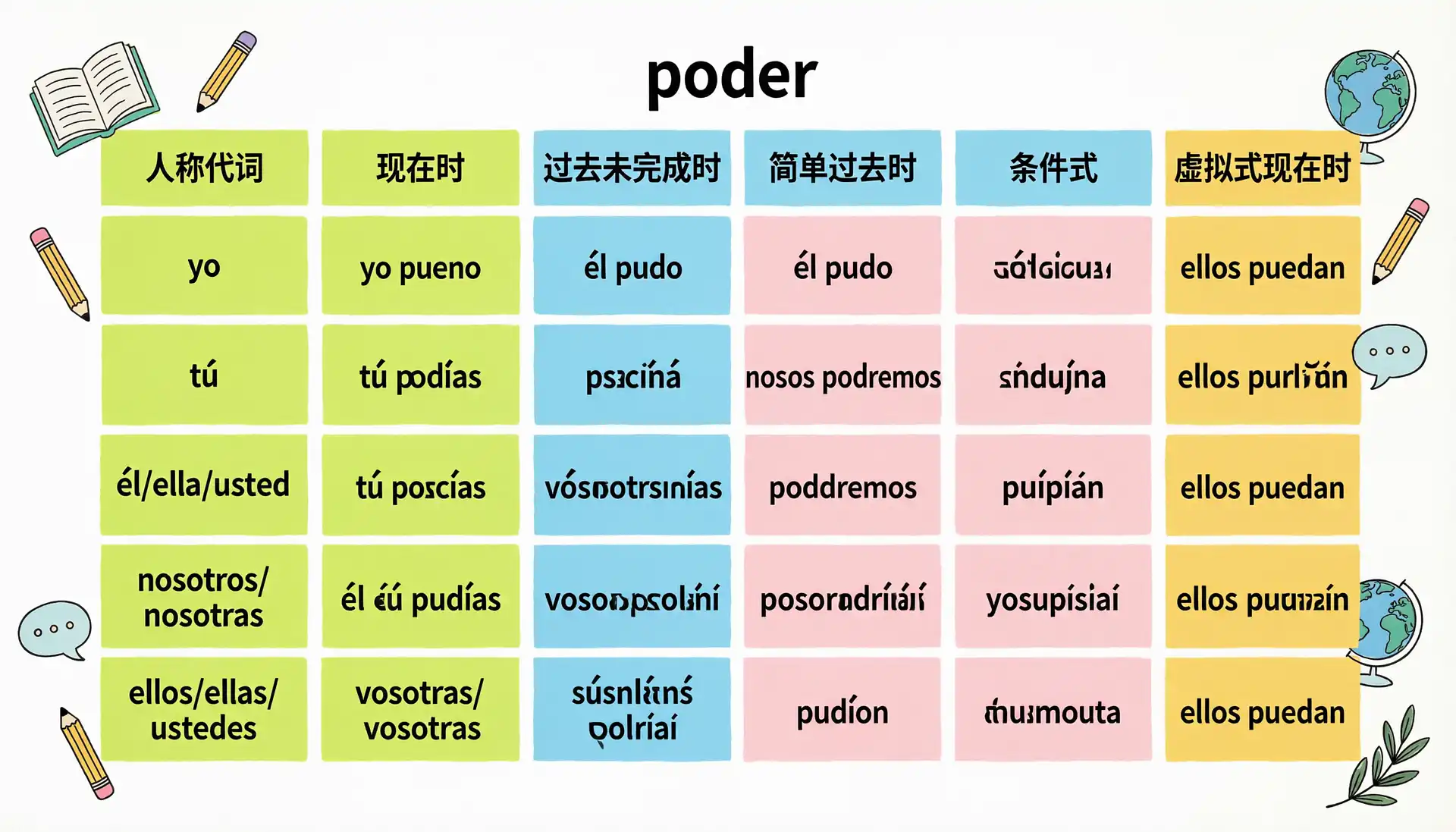
✅ Conjugation Table
| Subject | Conjugation |
|---|---|
| Yo | puedo |
| Tú | puedes |
| Él/Ella/Usted | puede |
| Nosotros | podemos |
| Vosotros | podéis |
| Ellos/Ustedes | pueden |
DETAILED EXPLANATION
What Does “Poder” Mean?
“Poder” means:
- Can
- Be able to
- May (permission)
Example:
- Yo puedo nadar = I can swim
How Does It Work?
“Poder” is an irregular verb. That means it doesn’t follow normal patterns.
Key change:
- o → ue (except nosotros & vosotros)
Basic Usage
Use poder + verb (infinitive)
Example:
- Puedo comer = I can eat
- Puedes correr = You can run
Why It Matters
Without poder, you cannot:
- Ask for permission
- Express ability
- Talk about possibilities
FORMS / CONJUGATION TABLES
📘 Base Forms
| Form | Word |
|---|---|
| Base | poder |
| Present | puedo |
| Past (Preterite) | pude |
| Future | podré |
| Past Participle | podido |
✅ Present Tense Conjugation
| Subject | Poder |
|---|---|
| Yo | puedo |
| Tú | puedes |
| Él/Ella/Usted | puede |
| Nosotros | podemos |
| Vosotros | podéis |
| Ellos/Ustedes | pueden |
COMPARISON SECTION
Poder Present vs Past
Present: I can now
Past: I could (completed action)
- Yo puedo hacerlo (I can do it)
- Yo pude hacerlo (I managed to do it)
Present vs Past Participle
- Puedo comer (I can eat)
- He podido comer (I have been able to eat)
Preterite vs Imperfect
- Pude abrir la puerta (I managed to open it)
- Podía abrir la puerta (I used to be able to open it)
Poder vs Saber
- Puedo nadar (I am able to swim)
- Sé nadar (I know how to swim)
Poder vs Tener Que
- Puedo ir (I can go)
- Tengo que ir (I have to go)
SENTENCE STRUCTURE
Formula
Subject + Poder + Infinitive Verb
Simple Sentences
- Yo puedo correr
- Tú puedes estudiar
- Él puede dormir
- Nosotros podemos viajar
- Ellos pueden jugar
Negative Sentences
Formula: Subject + no + poder + verb
- Yo no puedo venir
- Tú no puedes salir
- Él no puede hablar
- Nosotros no podemos pagar
- Ellos no pueden entender
Interrogative Sentences
Formula: ¿Poder + subject + verb?
- ¿Puedo entrar?
- ¿Puedes ayudarme?
- ¿Puede venir?
- ¿Podemos salir?
- ¿Pueden leer esto?
REAL-LIFE EXAMPLES
- Yo puedo cocinar
- Tú puedes manejar
- Él puede correr rápido
- Nosotros podemos viajar mañana
- Ellos pueden estudiar aquí
Questions:
- ¿Puedes ayudarme?
- ¿Puede hablar inglés?
- ¿Podemos entrar ahora?
- ¿Pueden venir hoy?
Negative:
- No puedo dormir
- No puedes comer aquí
- Él no puede salir
- No podemos pagar esto
- No pueden entender
Daily style:
- Puedo hacerlo ahora
- Puedes confiar en mí
- Podemos intentar otra vez
- Pueden llamar luego
DAILY USE + DIALOGUE
Conversation 1:
- A: ¿Puedes ayudarme?
- B: Sí, puedo ayudarte
- A: Gracias
- B: No hay problema
Conversation 2:
- A: ¿Podemos salir hoy?
- B: No, no puedo
- A: ¿Por qué?
- B: Tengo trabajo
COMMON MISTAKES (VERY IMPORTANT)
❌ Yo podo hacer esto
✅ Yo puedo hacer esto
👉 Mistake: Forgetting vowel change
❌ Nosotros puedemos
✅ Nosotros podemos
👉 Mistake: Applying change where it shouldn’t
❌ Puedo to eat
✅ Puedo comer
👉 Mistake: Mixing English & Spanish
GRAMMAR RULES
- “Poder” is irregular
- Change “o → ue” (except nosotros/vosotros)
- Always use infinitive after poder
- Do not translate word-by-word
- Use for ability, permission, possibility
ADVANCED USAGE
Continuous
- Estoy pudiendo hacerlo (rare, but possible)
Perfect
- He podido terminar (I have been able to finish)
Future
- Podré ayudarte (I will be able to help)
PRACTICE SECTION
Fill in the blanks
- Yo ______ (poder) correr
- Tú ______ estudiar
- Nosotros ______ viajar
- Ellos ______ venir
- Ella ______ leer
Answers: puedo, puedes, podemos, pueden, puede
MCQs
- Yo ___ hacerlo
a) puede
b) puedo ✅
c) puedes - Nosotros ___ ir
a) podemos ✅
b) pueden
c) puedo
Error Correction
- Yo podo → puedo
- Tú podas → puedes
- Nosotros puedemos → podemos
- Ellos podan → pueden
- Él podo → puede
FAQs
What is poder conjugation present tense?
It is the present form of “poder” meaning “can.”
When to use it?
Use it to express ability or permission.
Is poder irregular?
Yes, it changes “o → ue.”
Do all forms change?
No, nosotros/vosotros stay regular.
Example sentence?
Yo puedo nadar (I can swim)
CONCLUSION
Learning poder conjugation present tense may seem confusing at first, but once you understand the pattern, it becomes much easier.
This verb is essential for expressing ability, asking for permission, and communicating effectively in real-life situations.
The key is practice. Don’t just memorize use it in sentences, conversations, and daily thinking.
Try forming your own examples like “I can learn Spanish” or “We can go tomorrow.”
Consistency is everything. The more you practice, the more natural it will feel.
Hi, I’m Robert Lowth, a passionate expert in English tenses and grammar. I specialize in simplifying complex tense rules to help learners understand and use English with confidence. My goal is to make grammar clear, practical, and easy for everyday communication. tenseshub.com