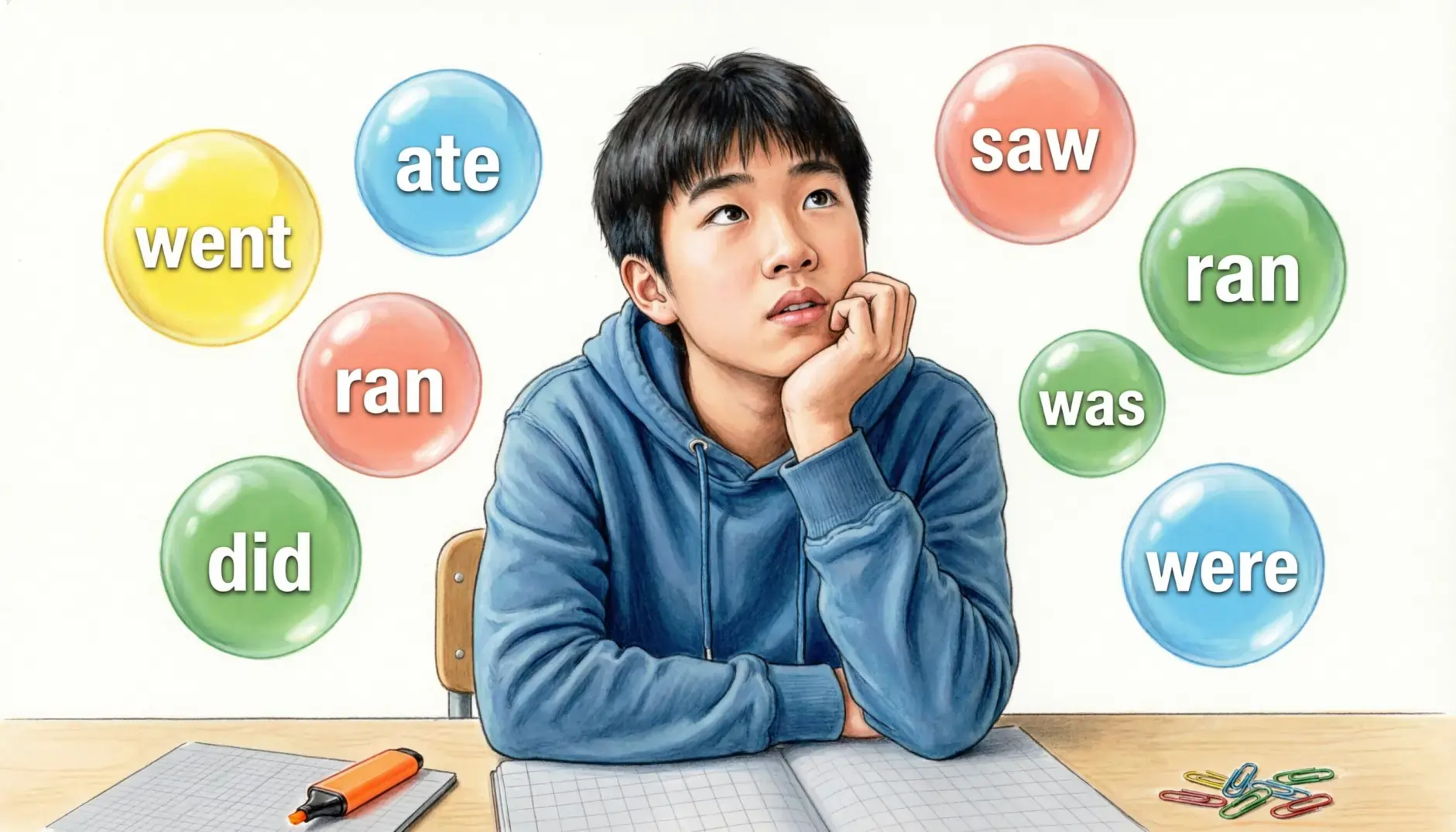
Have you ever tried to talk about something that already happened but got confused about the verb?
Maybe you said “I go yesterday” instead of “I went yesterday.” That’s where learning to think in past tense becomes important.
When you think in past tense, you naturally describe actions, events, and experiences that already happened.
This skill helps students, writers, bloggers, and English learners sound more natural and accurate.
In simple words, to think in past tense means to mentally form sentences about the past using correct verb forms. Instead of translating in your head, you automatically use past forms.
Mastering how to think in past tense improves fluency, storytelling, and everyday communication.
Let’s break it down step by step so you can use it confidently.
FEATURED SNIPPET
Thinking in Past Tense
| Tense Type | Example |
|---|---|
| Present | I eat |
| Past | I ate |
| Future | I will eat |
DETAILED EXPLANATION
Basic Meaning
To think in past tense means your brain automatically uses past forms like went, saw, played when recalling events.
Why It Matters
- Helps you speak fluently
- Improves storytelling
- Avoids grammar mistakes
Core Idea
Instead of translating from your native language, you directly form sentences like:
- “I watched a movie.”
- “She finished her work.”
How It Works (Simple to Advanced)
- Beginner Level
Use simple past verbs- I walked
- She cooked
- Intermediate Level
Add time expressions- I walked yesterday
- She cooked last night
- Advanced Level
Combine with other tenses- I had finished before he came
- I was watching when she called
FORMS / CONJUGATION TABLES (MANDATORY)
📘 Regular Verb – Play
| Form | Verb |
|---|---|
| Base | play |
| Present | play / plays |
| Past | played |
| Past Participle | played |
| Future | will play |
📘 Irregular Verb – Go
| Form | Verb |
|---|---|
| Base | go |
| Present | go / goes |
| Past | went |
| Past Participle | gone |
| Future | will go |
📘 Irregular Verb – Eat
| Form | Verb |
|---|---|
| Base | eat |
| Present | eat / eats |
| Past | ate |
| Past Participle | eaten |
| Future | will eat |
COMPARISON SECTION
Past vs Present – short difference
Past describes completed actions; present describes current actions.
- I walked to school.
- I walk to school.
Past vs Past Participle – short difference
Past is used alone; past participle is used with helping verbs.
- I ate food.
- I have eaten food.
Simple Past vs Past Continuous – short difference
Simple past = finished action; continuous = ongoing in past
- I watched TV.
- I was watching TV.
Past vs Present Perfect – short difference
Past = specific time; present perfect = connection to now
- I finished work yesterday.
- I have finished work.
Past vs Future – short difference
Past = already happened; future = will happen
- I visited Lahore.
- I will visit Lahore.
SENTENCE STRUCTURE
1. Simple Sentences Formula
Subject + Past Verb + Object
Examples:
- I finished my homework.
- She bought a dress.
- They watched a movie.
- He wrote a letter.
- We played cricket.
2. Negative Sentences Formula
Subject + did not + base verb
Examples:
- I did not go.
- She did not eat.
- They did not play.
- He did not call.
- We did not study.
3. Interrogative Sentences Formula
Did + subject + base verb?
Examples:
- Did you go?
- Did she call?
- Did they eat?
- Did he finish?
- Did we win?
REAL LIFE EXAMPLES
- I woke up late.
- She cooked dinner.
- They visited us.
- He called me.
- We watched a match.
- I forgot my keys.
- She cleaned the room.
- Did you finish work?
- Did he arrive on time?
- Why did you leave?
- I did not understand.
- She did not agree.
- They did not come.
- He did not study.
- We did not win.
- I met him yesterday.
- She wrote a message.
- They bought a car.
- He lost his phone.
- We enjoyed the trip.
DAILY USE + DIALOGUE
Conversation Example:
A: What did you do yesterday?
B: I visited my friend.
A: Did you enjoy it?
B: Yes, we watched a movie.
A: Sounds fun!
COMMON MISTAKES (VERY IMPORTANT)
❌ I go yesterday
✅ I went yesterday
👉 Mistake: using present instead of past
❌ I did not went
✅ I did not go
👉 Mistake: using past verb after “did”
❌ She eated food
✅ She ate food
👉 Mistake: incorrect irregular verb
❌ Did you went?
✅ Did you go?
👉 Mistake: double past
GRAMMAR RULES
- Use past form for completed actions
- Add _ed for regular verbs
- Use second form for irregular verbs
- Use did for negatives and questions
- Do not use past verb after “did”
ADVANCED USAGE
Past Continuous
- I was reading a book
Past Perfect
- I had finished work
Future in Past Context
- I thought I would go
PRACTICE SECTION
Fill in the blanks
- I ___ (go) yesterday
- She ___ (eat) dinner
- They ___ (play) cricket
- He ___ (write) a letter
- We ___ (watch) TV
MCQs
- Correct form:
a) go
b) went ✅ - “She ___ food”
a) eat
b) ate ✅ - Past of “take”
a) took ✅
b) taked - “Did you ___?”
a) went
b) go ✅ - Past of “see”
a) saw ✅
b) seed
Error Correction
- I did not went → I did not go
- She eated → She ate
- Did he went? → Did he go?
- They not came → They did not come
- I seen him → I saw him
FAQs
What is think in past tense?
It means forming thoughts using past verbs.
When should I use it?
When talking about completed actions.
Is it important?
Yes, for fluency and accuracy.
Example?
“I went home.”
Common confusion?
Using present instead of past.
Is “did” always needed?
Only for questions and negatives.
Can I use irregular verbs?
Yes, very important.
CONCLUSION
Learning to think in past tense is a powerful step toward mastering English fluency.
It allows you to naturally describe experiences, tell stories, and communicate clearly without hesitation.
Instead of stopping to translate from your native language, your mind begins to form correct past tense sentences automatically.
The key is consistent practice. Start with simple sentences, then gradually move to more advanced forms like past continuous and past perfect.
Pay attention to irregular verbs and common mistakes, as they are the most frequent sources of errors.
Remember, fluency doesn’t come from memorization alone—it comes from usage.
Try describing your day every evening using past tense or practice conversations with friends.
Hi, I’m Robert Lowth, a passionate expert in English tenses and grammar. I specialize in simplifying complex tense rules to help learners understand and use English with confidence. My goal is to make grammar clear, practical, and easy for everyday communication. tenseshub.com