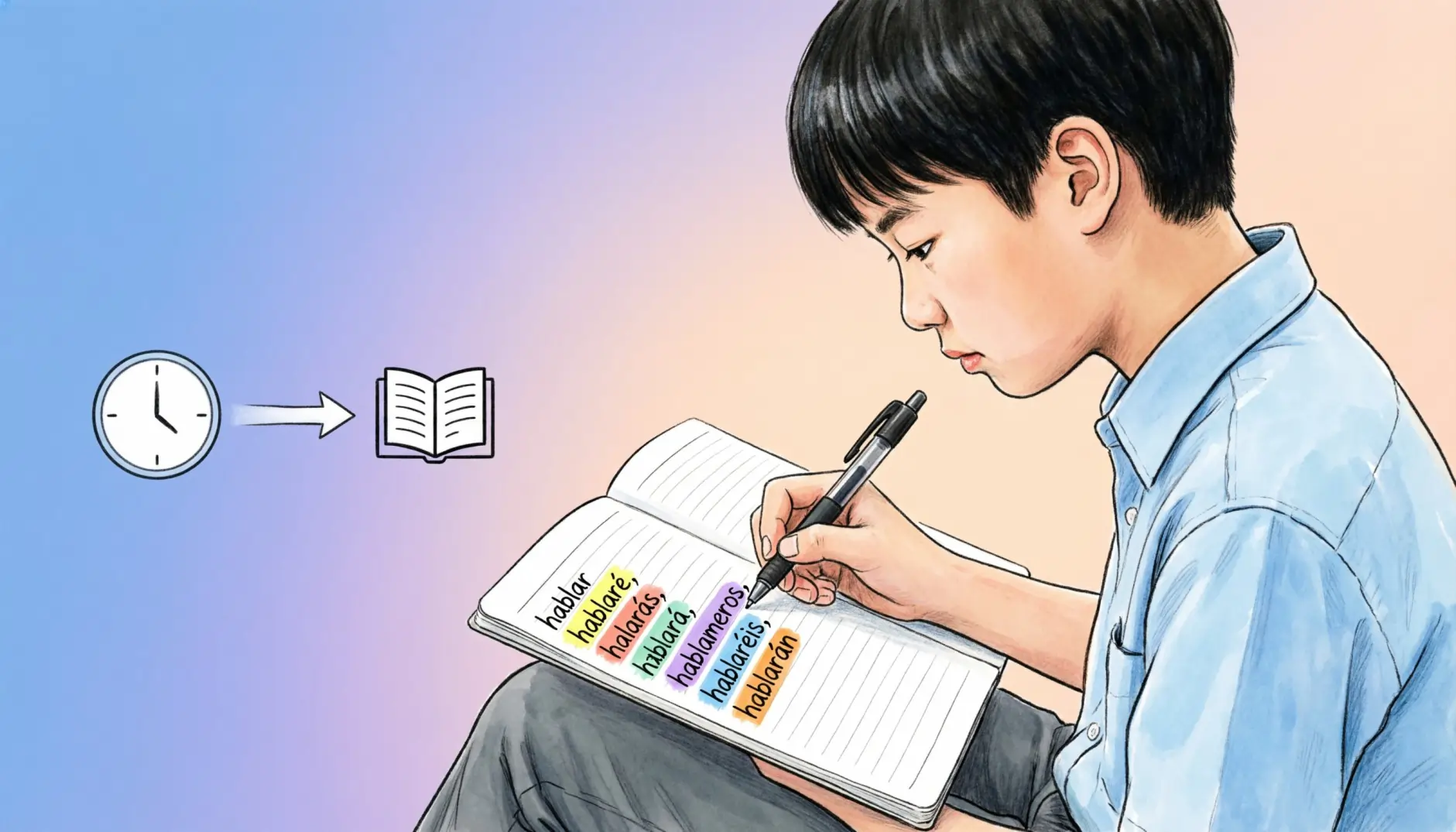
Have you ever tried to say what you will do in Spanish but got confused about the endings? You’re not alone.
Many learners struggle with future tense endings Spanish because they look different from English.
The good news? Spanish future tense is actually very simple and predictable once you understand the pattern.
Instead of changing the whole verb, you mostly just add endings.
In this guide, you’ll learn everything step by step rules, examples, tables, and real-life usage so you can speak about the future with confidence.
Quick Answer
F
| Subject | Ending | Example (Hablar) |
|---|---|---|
| Yo | -é | hablaré |
| Tú | -ás | hablarás |
| Él / Ella | -á | hablará |
| Nosotros | -emos | hablaremos |
| Vosotros | -éis | hablaréis |
| Ellos | -án | hablarán |
Explanation (Basic → Advanced)
What is Future Tense in Spanish?
The future tense is used to talk about actions that will happen later.
👉 Example:
- Yo estudiaré mañana. (I will study tomorrow)
Basic Rule
Instead of removing endings (like in present tense), Spanish does something easier:
👉 Keep the whole verb + add future endings
✔ hablar → hablaré
✔ comer → comeré
✔ vivir → viviré
Why It’s Easy
Unlike other tenses:
- Same endings for all verbs
- No need to change verb roots (mostly)
- Works for all regular verbs
Usage of Future Tense
You use future tense to:
✔ Talk about future plans
✔ Make predictions
✔ Express probability
👉 Examples:
- Mañana viajaré. (I will travel tomorrow)
- Ella tendrá éxito. (She will succeed)
- ¿Dónde estará Juan? (Where could Juan be?)
Forms / Conjugation
| Verb | Meaning |
|---|---|
| Hablar | to speak |
| Comer | to eat |
| Vivir | to live |
⏳ Future Tense Conjugation Table
| Subject | Hablar | Comer | Vivir |
|---|---|---|---|
| Yo | hablaré | comeré | viviré |
| Tú | hablarás | comerás | vivirás |
| Él / Ella | hablará | comerá | vivirá |
| Nosotros | hablaremos | comeremos | viviremos |
| Vosotros | hablaréis | comeréis | viviréis |
| Ellos | hablarán | comerán | vivirán |
🔄 Past & Present Quick Comparison
| Tense | Example |
|---|---|
| Present | hablo (I speak) |
| Past | hablé (I spoke) |
| Future | hablaré (I will speak) |
Comparison Section
Future vs Present – Time difference
Present = now, Future = later
Example:
- I study now → Estudio
- I will study → Estudiaré
Future vs “Ir + a” – Planned vs immediate
“Ir + a” = near future
Example:
- I will eat (future) → Comeré
- I am going to eat → Voy a comer
Future vs Conditional – Certainty vs possibility
Future = will happen
Conditional = would happen
Example:
- I will go → Iré
- I would go → Iría
Future vs Present for Probability
Future can show guessing
Example:
- He is at home → Está en casa
- He must be at home → Estará en casa
Sentence Structure
1. Simple Sentence
Formula:
Subject + Verb (future)
👉 Example:
- Yo estudiaré (I will study)
2. Negative Sentence
Formula:
Subject + no + verb
👉 Example:
- Yo no estudiaré (I will not study)
3. Question Sentence
Formula:
¿Verb + subject?
👉 Example:
- ¿Estudiarás tú? (Will you study?)
Real-Life Usage (Daily Sentences)
- I will call you tomorrow.
→ Te llamaré mañana. - We will travel next week.
→ Viajaremos la próxima semana. - She will buy a car.
→ Comprará un coche. - They will arrive late.
→ Llegarán tarde. - I will help you.
→ Te ayudaré. - Will you come?
→ ¿Vendrás? - He will work hard.
→ Trabajará duro. - We will learn Spanish.
→ Aprenderemos español. - I will see you later.
→ Te veré luego. - They will win.
→ Ganarán. - I will study tonight.
→ Estudiaré esta noche. - She will cook dinner.
→ Cocinará la cena.
Common Mistakes
❌ Removing verb ending
Wrong: hablré
✔ Correct: hablaré
👉 Always keep full verb!
❌ Using wrong endings
Wrong: comerás yo
✔ Correct: yo comeré
❌ Mixing with present tense
Wrong: yo hablo mañana
✔ Correct: yo hablaré mañana
❌ Forgetting accents
Wrong: hablare
✔ Correct: hablaré
Key Grammar Rules
- Future endings are added to the full verb
- Same endings for -ar, -er, -ir verbs
- Accent marks are important
- Used for future + predictions + probability
- Some verbs are irregular (like tener → tendré)
Practice Section
Fill in the Blanks
- Yo ______ (hablar) mañana
- Nosotros ______ (comer) juntos
- Ella ______ (vivir) aquí
- Tú ______ (estudiar) hoy
- Ellos ______ (trabajar)
MCQs Practice
Q1: What is the correct future form of “hablar”?
A. Hablaré
B. Hablo
C. Hablaba
D. Hablado
Give feedback
Q2: What is the correct future form of “comer”?
A. Comeré
B. Como
C. Comía
D. Comer
Give feedback
\
Q3: Choose the correct future sentence
A. Yo hablo mañana
B. Yo hablaré mañana
C. Yo hablaba mañana
D. Yo hablar
Give feedback
Q4: What is the future form of “vivir” for “nosotros”?
A. Vivirán
B. Vivo
C. Viviremos
D. Vivía
Give feedback
Q5: Which sentence is correct?
A. Yo hablre mañana
B. Yo hablar mañana
C. Yo hablo mañana
D. Yo hablaré mañana
Error Correction
- Yo hablre mañana → ______
- Ella comera tarde → ______
- Nosotros viviremos ayer → ______
- Tú estudias mañana → ______
- Ellos trabajaran hoy → ______
Answers
Fill in the blanks:
- hablaré
- comeremos
- vivirá
- estudiarás
- Trabajarán
MCQs:
- Q1 → A. Hablaré
- Q2 → A. Comeré
- Q3 → B. Yo hablaré mañana
- Q4 → C. Viviremos
- Q5 → D. Yo hablaré mañana
Error correction:
- hablaré
- comerá
- viviremos mañana
- estudiarás
- trabajarán
FAQs
1. Are future tense endings the same for all verbs?
Yes, they are the same for -ar, -er, and -ir verbs.
2. Do I remove the verb ending?
No, you keep the full verb and add endings.
3. Is future tense commonly used?
Yes, but many speakers also use “ir + a”.
4. Are there irregular verbs?
Yes, some verbs change slightly (like tener → tendré).
5. Can future tense show probability?
Yes, it can express guessing or assumption.
Conclusion
Learning future tense endings Spanish is one of the easiest steps in mastering Spanish grammar.
The pattern is simple: keep the full verb and add the correct ending.
Once you memorize these endings, you can talk about future plans, predictions, and ideas confidently.
Start practicing daily with small sentences, and soon you’ll use future tense naturally in conversation.
Keep going consistency is the key to fluency!