Have you ever said “I knowed the answer” and felt unsure if it was correct? You’re not alone. Many learners get confused about the past tense of “know”, especially because it doesn’t follow regular verb rules.
The past tense of know is a common topic in English grammar, but it can be tricky for students, writers, and even bloggers. Understanding it clearly helps you speak and write correctly in everyday situations.
In simple words, the past tense of know tells us that you understood or were aware of something before now.
If you’re writing essays, chatting with friends, or preparing for exams, mastering this verb will make your English more natural and confident.
FEATURED SNIPPET
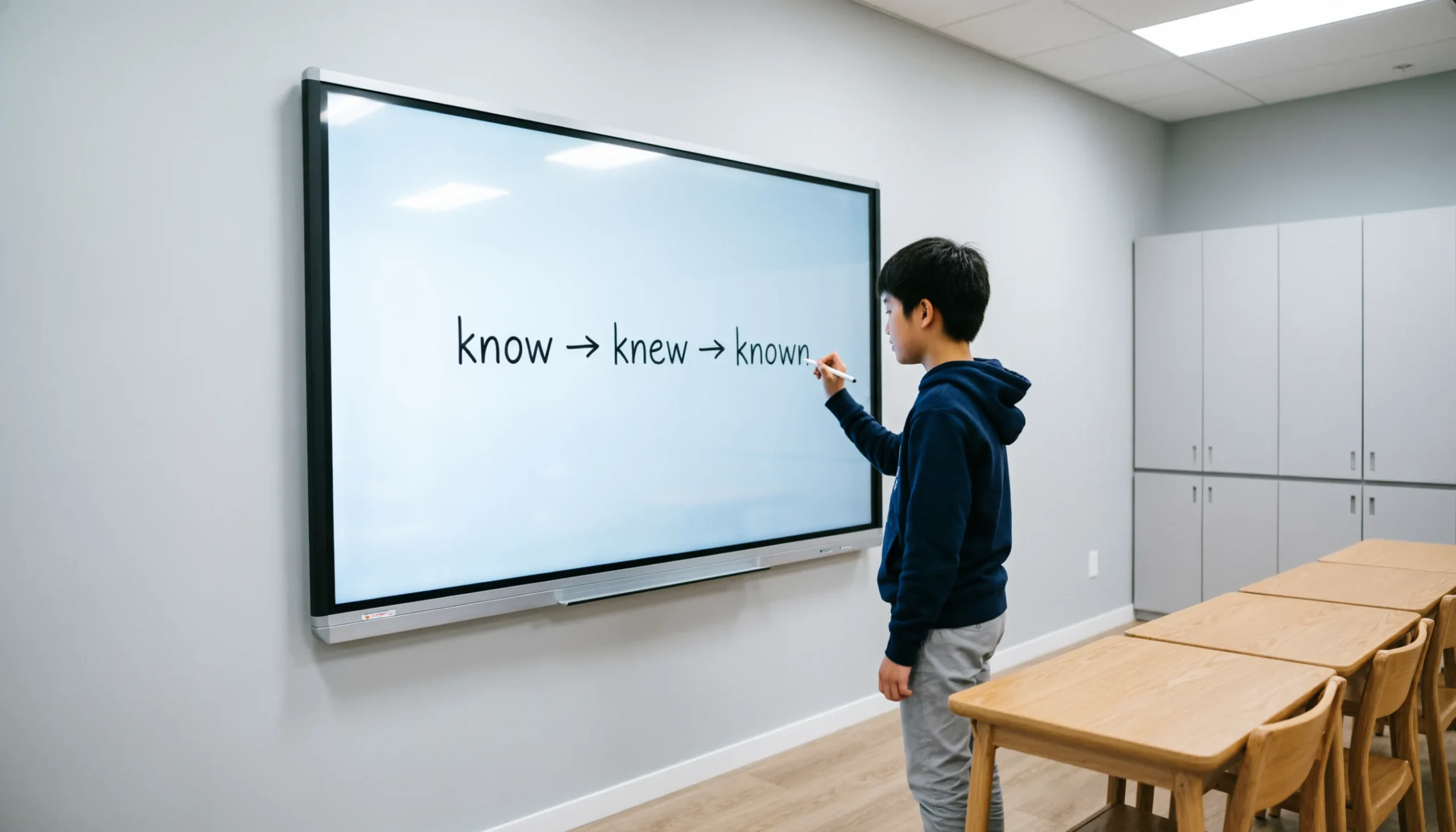
The past tense of “know” is “knew”, and the past participle is “known.”
| Form | Verb |
|---|---|
| Base Form | know |
| Past Tense | knew |
| Past Participle | known |
DETAILED EXPLANATION
Basic Meaning
“Know” means to understand, recognize, or be aware of something.
👉 Example:
- I know the answer.
Past Tense Meaning
“Knew” means you had knowledge in the past.
👉 Example:
- I knew the answer yesterday.
Past Participle Meaning
“Known” is used with helping verbs (has, have, had).
👉 Example:
- I have known him for years.
Important Rule
“Know” is an irregular verb, so it does NOT follow the “ ed” rule.
❌ Knowed (wrong)
✅ Knew (correct)
Usage Summary
- Use knew → for past actions
- Use known → with helping verbs
FORMS / CONJUGATION TABLES
Basic Verb Forms: “Know”
| Tense | Form |
|---|---|
| Base | know |
| Past | knew |
| Past Participle | known |
| Present Participle | knowing |
⏳ Full Tense Table
| Tense | Example |
|---|---|
| Present | I know the truth. |
| Past | I knew the truth. |
| Future | I will know the truth. |
| Present Perfect | I have known the truth. |
| Past Perfect | I had known the truth. |
| Future Perfect | I will have known the truth. |
COMPARISON SECTION (STRICT FORMAT)
Know vs Knew – Present vs Past
Example:
- I know the answer.
- I knew the answer yesterday.
Knew vs Known – Past vs Past Participle
Example:
- I knew him well.
- I have known him for years.
Know vs Knowing – Base vs Continuous
Example:
- I know her.
- I am knowing her (❌ incorrect usage in most cases)
Knew vs Was Knowing – Simple vs Continuous
Example:
- I knew the result.
- I was knowing the result (❌ incorrect)
Known vs Knew – Perfect vs Simple Past
Example:
- I had known him before.
- I knew him last year.
SENTENCE STRUCTURE
1. Simple Sentence Formula
👉 Subject + Verb (Past) + Object
Examples:
- I knew the answer.
- She knew my name.
- They knew the truth.
- We knew the plan.
- He knew the rules.
2. Negative Sentence Formula
👉 Subject + did not + base verb
Examples:
- I did not know the answer.
- She did not know me.
- They didn’t know the truth.
- We didn’t know the time.
- He didn’t know the rules.
3. Interrogative Sentence Formula
👉 Did + Subject + base verb?
Examples:
- Did you know the answer?
- Did she know him?
- Did they know the truth?
- Did we know the plan?
- Did he know the rules?
REAL LIFE EXAMPLES
- I knew this would happen.
- She knew my secret.
- They knew the teacher.
- We knew the answer quickly.
- He knew the way home.
- I didn’t know that.
- She didn’t know the truth.
- Did you know him?
- Did they know about the meeting?
- I knew it was wrong.
- We knew the result already.
- He knew her very well.
- I knew the story.
- She knew everything.
- They knew nothing about it.
- I didn’t know your name.
- Did you know the rules?
- We didn’t know the answer.
- He knew the risk.
- I knew you were right.
DAILY USE + DIALOGUE
Conversation 1:
A: Did you know about the test?
B: Yes, I knew it was today.
A: I didn’t know!
B: You should check your messages.
Conversation 2:
A: Did she know the answer?
B: Yes, she knew it very well.
A: I didn’t know she was that smart.
COMMON MISTAKES (VERY IMPORTANT)
❌ I knowed the answer
✅ I knew the answer
👉 Reason: “Know” is irregular
❌ I have knew him
✅ I have known him
👉 Reason: Use past participle with “have”
❌ Did you knew him?
✅ Did you know him?
👉 Reason: After “did,” use base form
GRAMMAR RULES
- “Know” is an irregular verb → use “knew”
- Never use “knowed”
- Use “known” with helping verbs (have/has/had)
- Use base form after “did”
- Do not use continuous form with “know”
ADVANCED USAGE
Perfect Forms
- I have known her for years
- She had known the truth
Future Forms
- I will know the answer
- They will have known by tomorrow
Continuous (Rare/Incorrect)
- “Knowing” is rarely used in continuous tense
PRACTICE SECTION (ENGAGEMENT BOOST)
Fill in the Blanks
- I ______ the answer yesterday.
- She has ______ him for years.
- They ______ the truth last night.
- Did you ______ him?
- We had ______ about it before.
MCQs
- Past tense of know:
a) Knowed
b) Knew ✅
c) Known - Past participle:
a) Knew
b) Known ✅
c) Knowing - Correct sentence:
a) I have knew
b) I have known ✅ - After “did”:
a) Knew
b) Know ✅ - Incorrect form:
a) Knowed ❌
b) Knew
Error Correction
- I knowed him → I knew him
- She have knew → She has known
- Did you knew? → Did you know?
- I has known → I have known
- They knowed it → They knew it
Answers
Fill blanks: knew, known, knew, know, known
FAQs
What is the past tense of know?
👉 Knew
What is the past participle of know?
👉 Known
Is “knowed” correct?
👉 No, it is incorrect
When to use “known”?
👉 With helping verbs (have, has, had)
Can we say “I am knowing”?
👉 No, it is incorrect
What is the base form?
👉 Know
Is “knew” regular or irregular?
👉 Irregular
CONCLUSION
Understanding the past tense of “know” is essential for clear and correct English communication.
Since it is an irregular verb, remembering its forms know, knew, known is key to avoiding common mistakes.
Many learners struggle because they try to apply regular verb rules, but once you practice using it in real sentences, it becomes natural.
If you’re a student, writer, or English learner, using “knew” and “known” correctly will boost your confidence and accuracy.
The best way to master this is through consistent practice try forming your own sentences daily and notice how native speakers use it in conversations.
Hi, I’m Robert Lowth, a passionate expert in English tenses and grammar. I specialize in simplifying complex tense rules to help learners understand and use English with confidence. My goal is to make grammar clear, practical, and easy for everyday communication. tenseshub.com