I once heard a student say, “I read (reed) it yesterday,” and the whole class paused. Some looked confused. Others tried to correct it, but weren’t sure how.
If this has ever happened to you, you’re not alone.
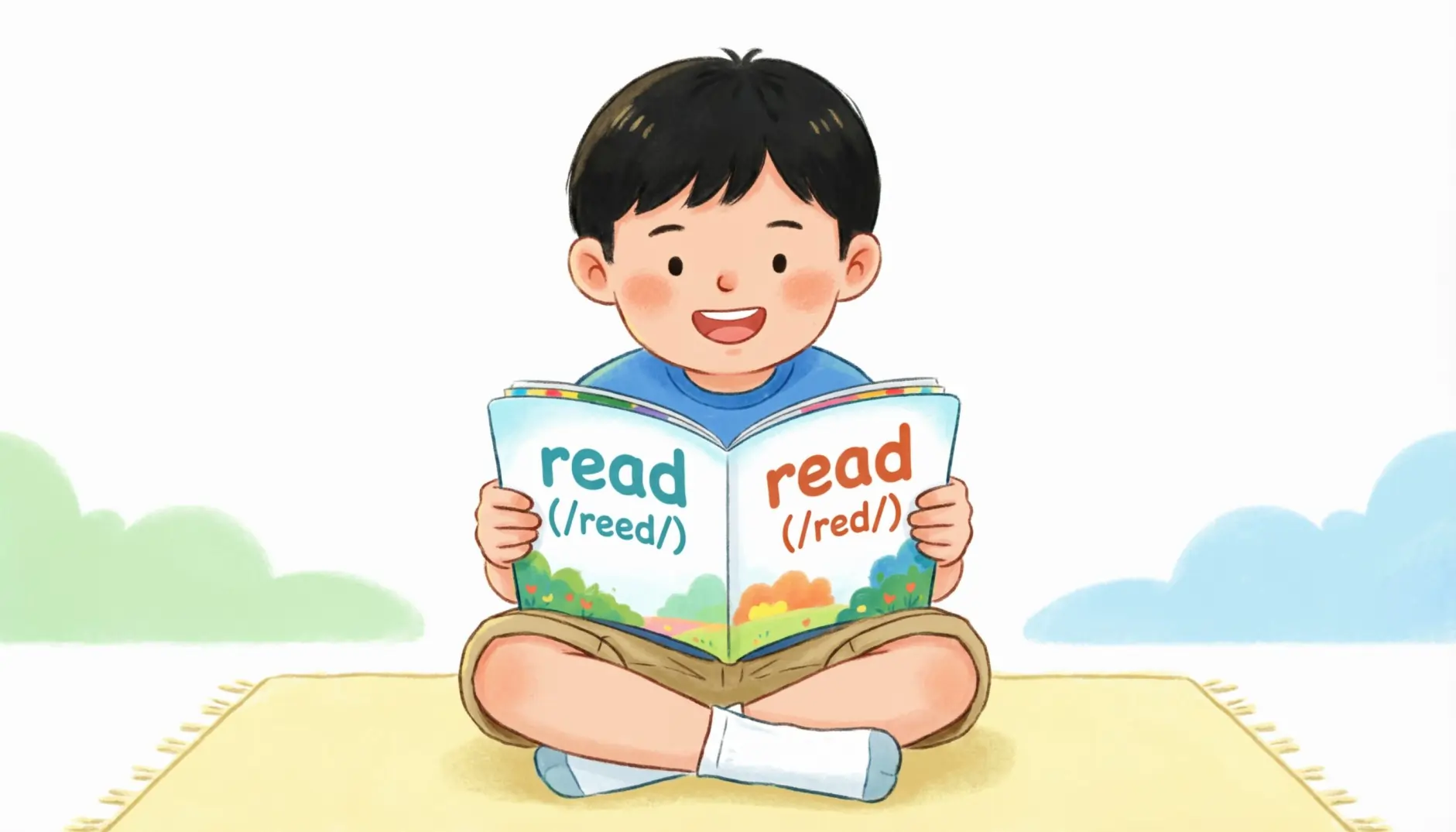
The verb “read” is tricky because it looks the same in present and past, but the pronunciation changes. This can cause confusion in speaking and listening.But don’t worry.
In this guide, I’ll explain past tense “read” in the simplest way possible. You’ll learn the rule, see real-life examples, and practice until it feels natural.
Quick Answer
| Tense | Spelling | Pronunciation | Example Sentence |
|---|---|---|---|
| Present | read | /riːd/ | I read every day. |
| Past | read | /red/ | I read that book yesterday. |
| Past Participle | read | /red/ | I have read this before. |
Explanation (Meaning, Rules, Usage)
What does “read” mean?
“Read” means to look at and understand written words.
The Simple Rule
👉 Present = /reed/
👉 Past = /red/
Even though the spelling doesn’t change, the sound changes.
Easy Memory Trick
Think of this:
- “Red” (color) = past
- So, past tense read = red
Example:
- Yesterday → past → say red
Usage in Different Contexts
1. Daily Life
- I read a message yesterday.
2. Emails
- I read your email last night.
3. News
- She read the news this morning.
4. Instructions
- He read the manual before using the machine.
5. Stories
- We read a story before sleeping.
Forms / Conjugation
| Form | Verb |
|---|---|
| Base Form | read |
| Past Simple | read (/red/) |
| Past Participle | read (/red/) |
| Present Participle | reading |
Comparison (Present vs Past “Read”)
Pronunciation
- Present: /reed/ → I read books daily
- Past: /red/ → I read a book yesterday
Time Expression
- Present: now, every day
- Past: yesterday, last night
Meaning
- Present: habit or routine
- Past: completed action
Sentence Example
Present
- I read English books every day.
- She reads before sleeping.
Past
- I read that book yesterday.
- She read before going to bed.
Sentence Structure
Positive Sentences
Formula:
Subject + read (/red/) + object
Examples:
- I read the article yesterday.
- He read the message.
Negative Sentences
Formula:
Subject + did not + read (/reed/)
Examples:
- I did not read the book.
- She didn’t read the email.
👉 Important: After “did,” use base form (/reed/)
Questions
Formula:
Did + subject + read (/reed/)?
Examples:
- Did you read the book?
- Did she read the message?
WH Questions
- What did you read yesterday?
- Where did he read the news?
Real-Life Usage (Daily Sentences)
- I read your text yesterday.
- She read the instructions carefully.
- We read that story last week.
- He read the email but didn’t reply.
- They read the news this morning.
- I read that message twice.
- She read it before sleeping.
- We read the rules first.
- He read everything quickly.
- I read your comment online.
- She read the sign incorrectly.
- They read the report yesterday.
- I read it and understood it.
- He read the book in one day.
- We read about it in the newspaper.
Common Mistakes
| Incorrect Sentence | Correct Sentence | Reason |
|---|---|---|
| I read (reed) it yesterday | I read (red) it yesterday | Wrong pronunciation in past tense |
| I did not read (red) | I did not read (reed) | Use base form after “did” |
| Did you read (red)? | Did you read (reed)? | Base form is used in questions |
| I have read (reed) it | I have read (red) it | Past participle is /red/ |
Key Rules
- Spelling stays the same: read
- Past tense pronunciation is /red/
- After “did,” use base form (/reed/)
- Past participle is also /red/
- Context (time words) helps understand meaning
Advanced Usage
Continuous
- I was reading when you called.
- She is reading now.
Perfect Tense
- I have read this book before.
- She had read it already.
Future
- I will read it tomorrow.
- She is going to read the book.
Practice
Fill in the Blanks
- I ____ that book yesterday.
- She has ____ the email.
- Did you ____ the message?
- We ____ it last night.
- He did not ____ the instructions.
MCQs
- Past tense of “read” pronunciation is:
a) reed
b) red
c) rid - After “did,” we use:
a) past
b) base form
c) future - “I read yesterday” pronunciation:
a) reed
b) red
c) rod - “Have read” pronunciation:
a) reed
b) red
c) rid - Which is correct?
a) I did not read (red)
b) I did not read (reed)
c) I did not read (rid)
Error Correction
- I read (reed) it yesterday.
- Did you read (red) the book?
- I did not read (red) it.
- She has read (reed) it.
- We read (reed) it last night.
Answers
Fill in the blanks:
- read
- read
- read
- read
- read
MCQs:
- b
- b
- b
- b
- b
Corrections:
- read (red)
- read (reed)
- read (reed)
- read (red)
- read (red)
FAQs
Why is “read” confusing?
Because the spelling is the same, but pronunciation changes.
How do I know past vs present?
Look at time words like yesterday or today.
Is “readed” correct?
❌ No. The correct past form is read (/red/)
What is past participle?
It’s also read (/red/) used with “have/has/had”
How can I remember it?
Think: past = red (color)
Conclusion
Learning the past tense of “read” may seem confusing at first, but it’s actually very simple once you understand the rule.
The key is this: same spelling, different sound.
Focus on pronunciation, practice with real sentences, and pay attention to time words like yesterday or last night.
With a little practice, you’ll use it naturally without thinking.

Hi, I’m Noah Bester, a tenses expert passionate about simplifying English grammar. I create practical, easy-to-understand guides to help learners master tenses with confidence. My goal is to make grammar clear, useful, and applicable in everyday communication. tenseshub.com