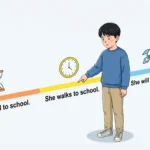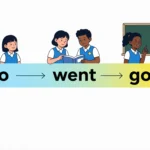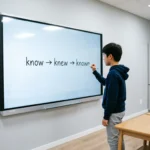
Have you ever looked at a sentence and thought, “Which verb or verb phrase is in the correct tense to complete this?” You’re not alone.
Many learners struggle with choosing the right tense, especially when there are many options.
Tense tells us when something happens past, present, or future. If you choose the wrong tense, your sentence can sound confusing or incorrect.
That’s why understanding verb tenses is so important for speaking and writing clearly.
In this guide, you’ll learn how to choose the correct verb or verb phrase easily, with simple rules, examples, and practice. Let’s make grammar easy!
Quick Answer
The correct verb or verb phrase is the one that matches the time and meaning of the sentence. It must agree with the subject and context.
Quick View Table
| Time | Correct Verb Example | Sentence Example |
|---|---|---|
| Present | eat / is eating | I eat lunch. |
| Past | ate / was eating | I ate lunch yesterday. |
| Future | will eat / am going to eat | I will eat later. |
Explanation
What Does It Mean?
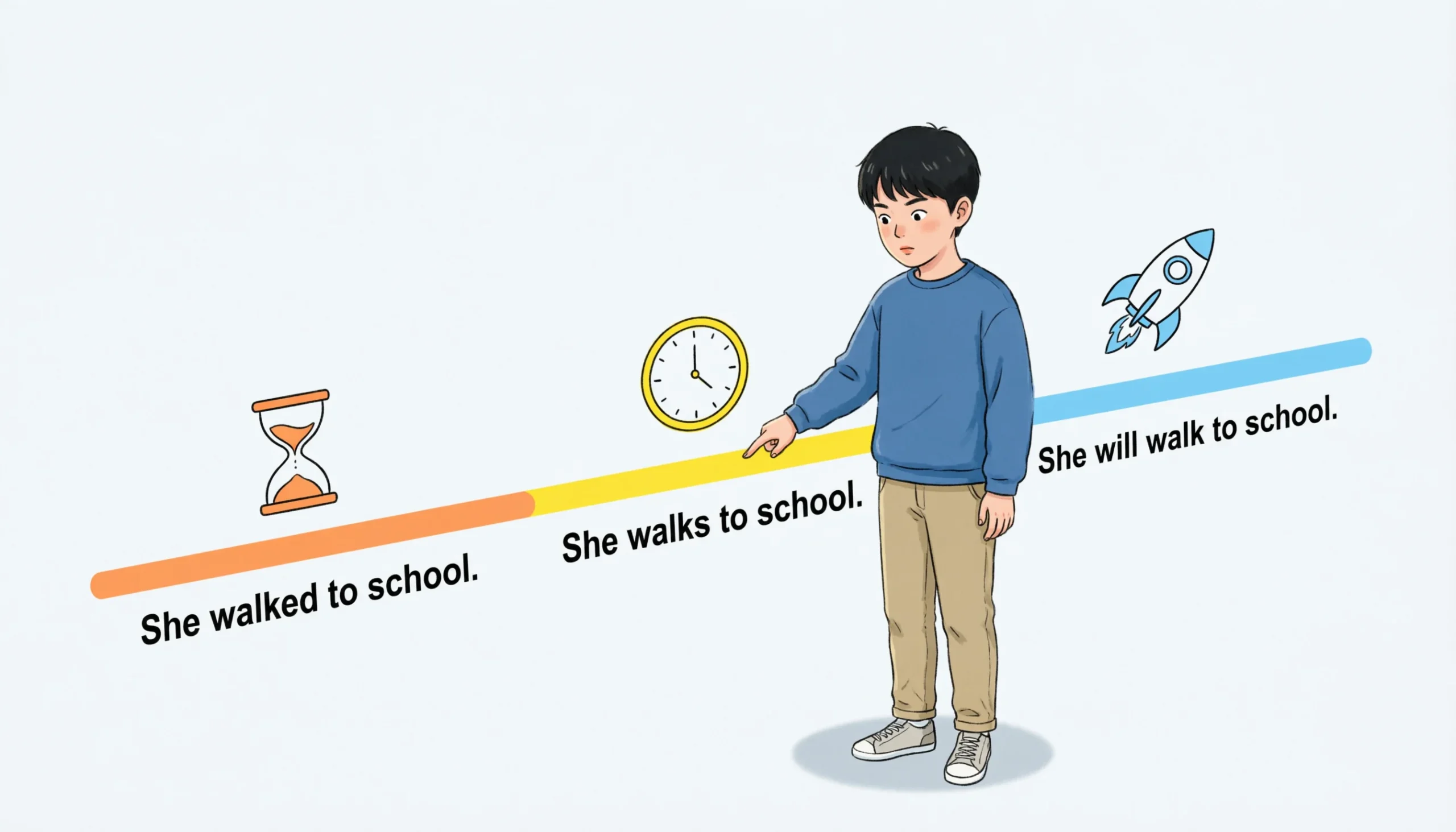
A verb tense shows when an action happens:
- Present → happening now
- Past → already happened
- Future → will happen later
Why It Matters
Choosing the correct tense:
- Makes your meaning clear
- Avoids confusion
- Improves writing and speaking
Basic Rule
👉 Match the verb tense with time words in the sentence.
Examples:
- Yesterday → past tense
- Now → present tense
- Tomorrow → future tense
Forms / Conjugation
Let’s take a simple verb: “go”
| Form | Example |
|---|---|
| Base Form | go |
| Present | go / goes |
| Past | went |
| Past Participle | gone |
| Present Continuous | going |
| Future | will go |
⏳ Tense Table
| Tense | Structure | Example Sentence |
|---|---|---|
| Present Simple | Subject + base verb | I go to school. |
| Past Simple | Subject + past verb | I went yesterday. |
| Future Simple | will + base verb | I will go tomorrow. |
| Present Perfect | have/has + past participle | I have gone already. |
Comparison Section
1. Present vs Past
- Present: happens now
- Past: already finished
Examples:
- I eat lunch.
- I ate lunch yesterday.
2. Past vs Present Perfect
- Past: specific time
- Present perfect: no exact time
Examples:
- I finished my work yesterday.
- I have finished my work.
3. Present vs Future
- Present: now
- Future: later
Examples:
- I study English.
- I will study tonight.
4. Simple vs Continuous
- Simple: regular action
- Continuous: happening now
Examples:
- She reads books.
- She is reading now.
Sentence Structure
1. Simple Sentences
Formula:
👉 Subject + Verb
Examples:
- She plays.
- They eat.
2. Negative Sentences
Formula:
👉 Subject + do/does/did + not + verb
Examples:
- I do not like tea.
- He did not go.
3. Questions
Formula:
👉 Do/Does/Did + Subject + verb?
Examples:
- Do you play?
- Did she go?
Real Life Usage
Here are daily conversation examples:
- I wake up early.
- She is cooking now.
- They went home.
- We will travel tomorrow.
- He has finished his work.
- I am learning English.
- She likes coffee.
- We played football.
- He is watching TV.
- I will call you later.
- They have arrived.
- She studies daily.
- I was reading yesterday.
- We are working now.
- He writes emails.
Common Mistakes
❌ Incorrect vs ✅ Correct
- ❌ I go yesterday
✅ I went yesterday
👉 Use past tense for past time - ❌ She eating now
✅ She is eating now
👉 Add helping verb - ❌ I will went
✅ I will go
👉 Use base form after “will” - ❌ He have done it
✅ He has done it
👉 Subject verb agreement
Key Grammar Rules
- Match tense with time words
- Use base verb after “will”
- Use helping verbs for continuous tenses
- Subject and verb must agree
- Use past tense for completed actions
Advanced Usage
1. Continuous Tense
👉 Action happening now
- I am studying
- She is running
2. Perfect Tense
👉 Action completed
- I have eaten
- He has finished
3. Future Forms
👉 Different ways to talk about future
- I will go
- I am going to go
Practice Section
Fill in the Blanks
- I ___ (go) to school yesterday.
- She ___ (eat) now.
- They ___ (play) tomorrow.
- He ___ (finish) his work already.
- We ___ (watch) TV now.
MCQs
- I ___ dinner now
a) eat
b) am eating ✅
c) ate - She ___ yesterday
a) goes
b) went ✅
c) going - They ___ tomorrow
a) will come ✅
b) came
c) coming - He ___ finished
a) have
b) has ✅
c) had - I ___ playing
a) am ✅
b) is
c) are
Error Correction
- I go yesterday → I went yesterday
- She is eat → She is eating
- He will went → He will go
- They has come → They have come
- I am study → I am studying
Answers
Fill in the blanks:
- went
- is eating
- will play
- has finished
- are watching
FAQs
1. What is a verb tense?
It shows when an action happens.
2. How do I choose the correct tense?
Look at time words and context.
3. What is a verb phrase?
A verb with helping verbs (e.g., is eating).
4. Can one sentence have multiple tenses?
Yes, if it talks about different times.
5. What is the most common mistake?
Using present tense instead of past.
Conclusion
Choosing which verb or verb phrase is in the correct tense becomes easy when you understand time and context.
Always look for clues like yesterday, now, or tomorrow. Practice daily, and you’ll improve quickly.
Start small write simple sentences and check your verbs. Over time, correct tense use will become natural.
Keep practicing, and your English will sound clear and confident!

Hi, I’m Noah Bester, a tenses expert passionate about simplifying English grammar. I create practical, easy-to-understand guides to help learners master tenses with confidence. My goal is to make grammar clear, useful, and applicable in everyday communication. tenseshub.com