Have you ever said, “I go to school yesterday” and felt something was wrong? That confusion happens when we don’t fully understand the past tense meaning.
Many learners mix present and past forms, which can make sentences unclear or incorrect.
In simple words, the past tense meaning is about talking about actions that already happened.
If you’re a student, blogger, or writer, using the correct past tense helps you communicate clearly and confidently.
Understanding the past tense meaning is essential for writing essays, telling stories, and even everyday conversations.
Once you master it, your English becomes smoother and more natural. Let’s break it down step by step so you never feel confused again.
FEATURED SNIPPET
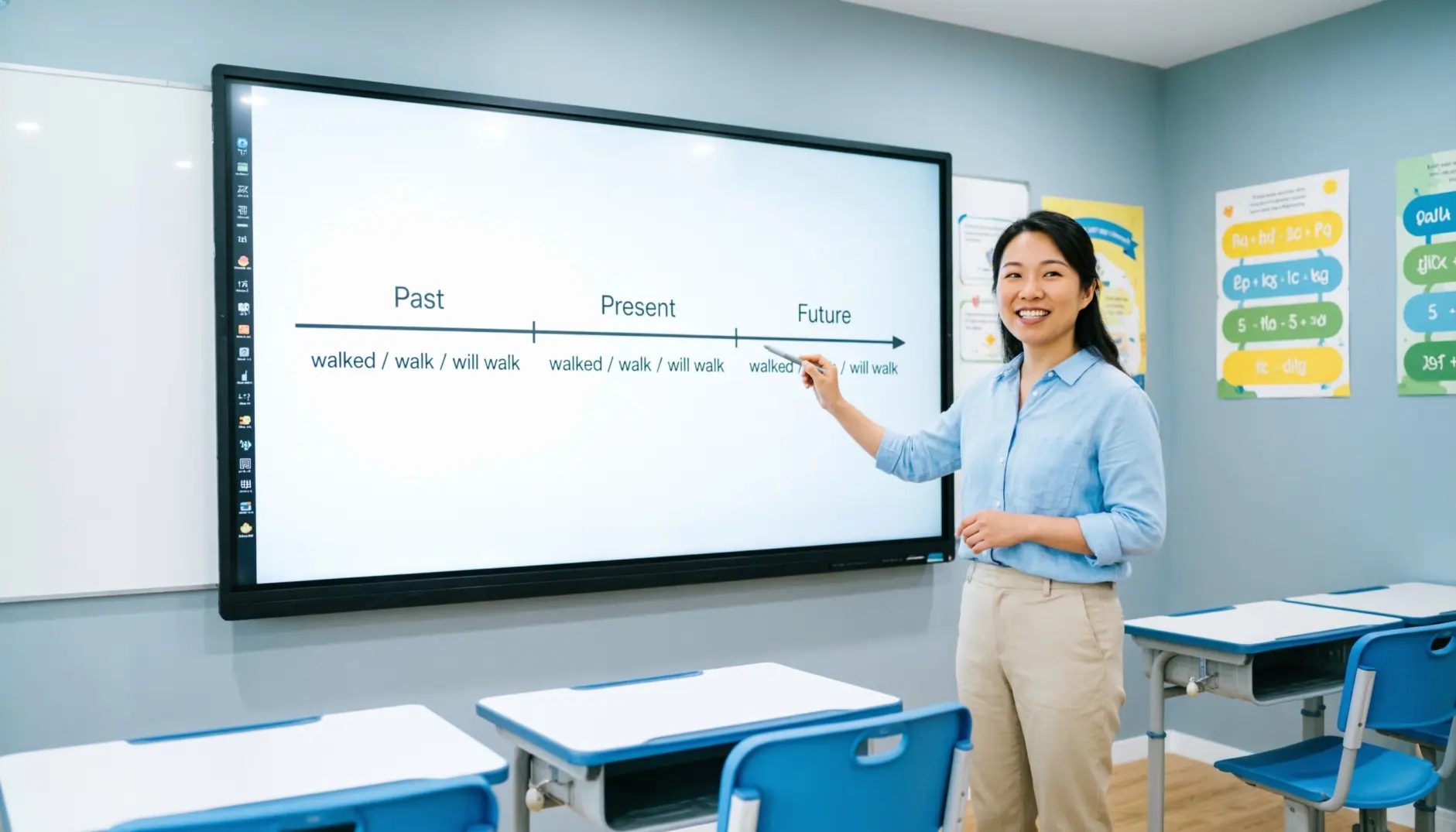
| Tense Type | Example Sentence |
|---|---|
| Past | She walked home. |
| Present | She walks home. |
| Future | She will walk home. |
DETAILED EXPLANATION What is Past Tense?
Past tense is used when an action has already happened.
👉 Example:
- I played football yesterday.
Basic Understanding
- Shows completed actions
- Refers to past time (yesterday, last night, ago)
Deeper Explanation
Past tense is not just one form. It includes:
- Simple past
- Past continuous
- Past perfect
Usage
- To describe past events
- To tell stories
- To report something
FORMS / CONJUGATION TABLES
| Form | Verb |
|---|---|
| Base | walk |
| Past | walked |
| Past Participle | walked |
| Present | walk |
| Future | will walk |
🔄 Irregular Verb Example: “Go”
| Form | Verb |
|---|---|
| Base | go |
| Past | went |
| Past Participle | gone |
| Present | go |
| Future | will go |
COMPARISON SECTION
Past vs Present
Past = completed action
Present = happening now
- I ate food.
- I eat food.
Past vs Past Participle
Past = simple form
Past participle = used with “has/have/had”
- I wrote a letter.
- I have written a letter.
Past vs Future
Past = already happened
Future = will happen
- She finished work.
- She will finish work.
Simple Past vs Past Continuous
Simple = completed
Continuous = ongoing in past
- I watched TV.
- I was watching TV.
Past vs Present Perfect
Past = specific time
Present perfect = no exact time
- I saw him yesterday.
- I have seen him.
SENTENCE STRUCTURE
Simple Sentences Formula
Subject + Verb (Past) + Object
Examples:
- I watched a movie.
- She cooked dinner.
- They played cricket.
- He cleaned the room.
- We visited a park.
Negative Sentences Formula
Subject + did not + base verb
Examples:
- I did not go.
- She did not eat.
- They did not play.
- He did not call.
- We did not study.
Interrogative Sentences Formula
Did + Subject + base verb?
Examples:
- Did you go?
- Did she eat?
- Did they play?
- Did he call?
- Did we study?
REAL LIFE EXAMPLES
- I woke up late.
- She finished her homework.
- We watched a movie.
- They traveled last year.
- He bought a car.
- Did you call me?
- Did she arrive on time?
- Did they win the match?
- I did not understand.
- She did not come.
- We did not eat lunch.
- He forgot his keys.
- I met my friend.
- They enjoyed the party.
- She cleaned her room.
- Did you see that?
- I lost my phone.
- He repaired the bike.
- We studied English.
- She opened the door.
DAILY USE + DIALOGUE
Conversation Example:
A: Did you finish your work?
B: Yes, I finished it yesterday.
A: Did you face any problems?
B: No, it was easy.
A: Great job!
COMMON MISTAKES (VERY IMPORTANT)
❌ I go yesterday
✔ I went yesterday
👉 Mistake: Using present instead of past
❌ She didn’t went
✔ She didn’t go
👉 Mistake: Double past
❌ He eated food
✔ He ate food
👉 Mistake: Wrong irregular form
GRAMMAR RULES
- Add ed for regular verbs (walk → walked)
- Use did for questions and negatives
- Irregular verbs must be memorized
- Use past for completed actions
- Avoid double past (did + past verb)
ADVANCED USAGE
Past Continuous
- I was studying.
Past Perfect
- I had finished work.
Future in Past
- I was going to travel.
PRACTICE SECTION
Fill in the blanks
- I ___ (go) home.
- She ___ (eat) food.
- They ___ (play) cricket.
- He ___ (buy) a car.
- We ___ (watch) TV.
MCQs
- Past of “go”?
a) goed
b) went ✅
c) gone - Past of “eat”?
a) ate ✅
b) eated
c) eaten
Error Correction
- I did not went → I did not go
- She eated → She ate
- He go yesterday → He went yesterday
Answers
Fill blanks: went, ate, played, bought, watched
FAQs
What is past tense meaning?
It shows actions that already happened.
When to use it?
When talking about past events.
Is it important?
Yes, for clear communication.
Example?
I visited my friend.
Difference from present?
Past = finished, Present = happening now.
CONCLUSION
Understanding the past tense meaning is one of the most important steps in mastering English grammar.
It helps you describe events clearly, tell stories effectively, and communicate with confidence in both spoken and written English.
From simple past forms to advanced structures like past continuous and past perfect, each aspect plays a vital role in expressing time correctly.
The key is consistent practice. Don’t just memorize rules use them in real life sentences, conversations, and writing exercises.
Pay attention to common mistakes, especially with irregular verbs and negative forms.
To improve faster, try writing short daily paragraphs about what you did yesterday or use a grammar checker to refine your sentences.
The more you practice, the more natural it will feel.
Hi, I’m Robert Lowth, a passionate expert in English tenses and grammar. I specialize in simplifying complex tense rules to help learners understand and use English with confidence. My goal is to make grammar clear, practical, and easy for everyday communication. tenseshub.com