Learning Spanish can feel confusing when one verb changes its form depending on who is doing the action. For example, how do you say “I eat,” “you eat,” or “they eat” in Spanish? The verb comer is a great place to start because it follows a regular conjugation pattern in the present tense.
The comer present tense is used to talk about eating habits, daily routines, meals, and actions that happen regularly or are taking place in the present. if you are ordering food at a restaurant, describing your favorite meal, or talking about your daily schedule, knowing how to conjugate comer helps you communicate more naturally in Spanish.
In this guide, you will learn the meaning of comer, all six present tense conjugations, sentence patterns, practical usage rules, and common mistakes to avoid. You will also find real life examples, comparisons with similar Spanish verb forms, and practice exercises with answers.
By the end, you will know how to use comer confidently in affirmative sentences, negative statements, and questions.
Quick Answer: Comer Present Tense
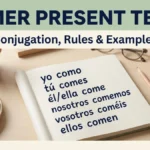
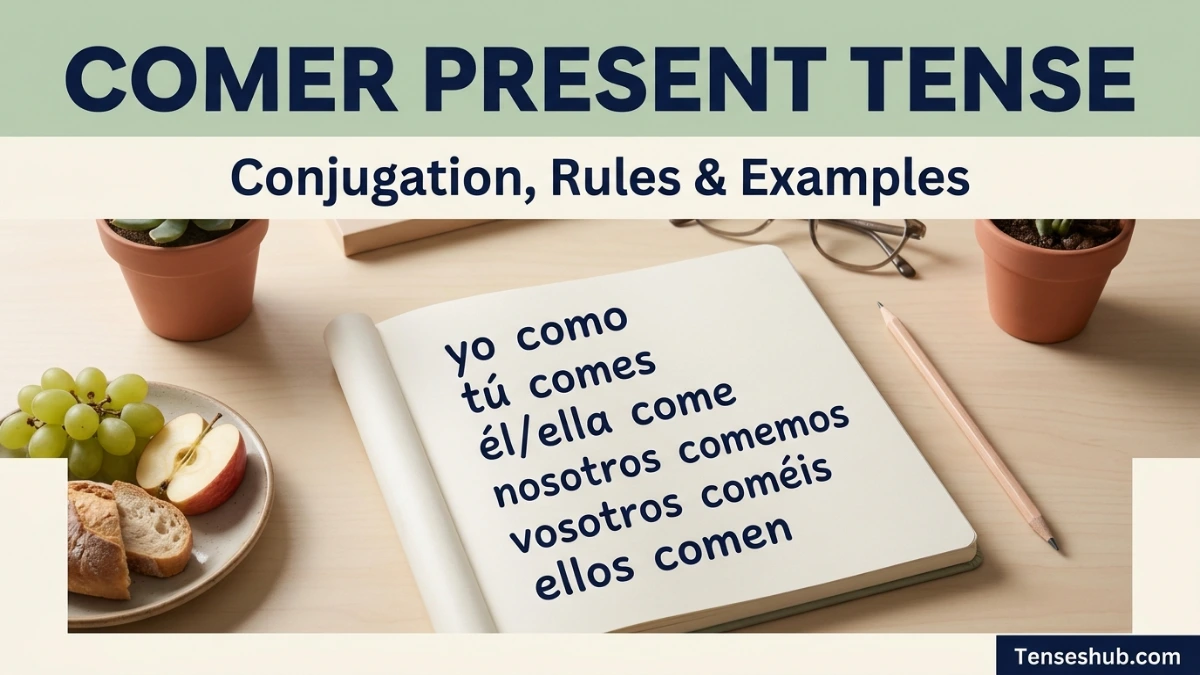
The Spanish verb comer means “to eat.” In the present tense, it is a regular er verb, so you remove er and add the appropriate present tense ending.
| Spanish | English |
|---|---|
| Yo como | I eat |
| Tú comes | You eat |
| Él/Ella come | they eats |
| Nosotros/as comemos | We eat |
| Vosotros/as coméis | You all eat (Spain) |
| Ellos/Ellas comen | They eat |
Remember: The stem is com , and the present tense endings are o, es, e, emos, éis, and en.
What Is Comer in the Present Tense?
The verb comer is an infinitive, or base form, meaning “to eat.” Spanish infinitives commonly end in ar, er, or ir. Examples include hablar (to speak), comer (to eat), and vivir (to live).
When you want to describe who eats, you conjugate the verb to match the subject.
For example:
- Yo como arroz. I eat rice.
- Tú comes pan. You eat bread.
- Ella come una manzana. She eats an apple.
- Nosotros comemos juntos. We eat together.
- Ellos comen en casa. They eat at home.
In English, the verb usually stays the same for most subjects, although we add s with he, she, and it in the simple present. Spanish uses different verb endings for different subjects.
For example, English uses “I eat” and “she eats,” while Spanish uses yo como and ella come.
The present tense of comer can describe habits, routines, general facts, and actions happening around the present time. The exact meaning depends on the context.
Structure of Sentences Using Comer in the Present Tense
Spanish sentence structure is generally similar to English, but Spanish allows the subject pronoun to be omitted when the verb ending makes the subject clear.
1. Affirmative Sentences
An affirmative sentence states that someone eats something or eats at a particular time.
Basic pattern:
Subject + conjugated verb + complement
Examples:
- Yo como frutas. I eat fruit.
- María come temprano. María eats early.
- Nosotros comemos en la cocina. We eat in the kitchen.
You can also leave out the subject pronoun:
- Como frutas. I eat fruit.
- Comemos juntos. We eat together.
Both are correct when the intended subject is clear.
2. Negative Sentences
To make a sentence negative, place no directly before the conjugated verb.
Basic pattern:
Subject + no + conjugated verb + complement
Examples:
- Yo no como carne. I do not eat meat.
- Él no come pescado. He does not eat fish.
- Ellos no comen aquí. They do not eat here.
You can omit the subject when appropriate:
- No como carne. I do not eat meat.
Unlike English, Spanish does not need a helping verb such as do or does to form this negative sentence.
3. Interrogative Sentences
Spanish questions can use the same basic word order as statements, with question marks around the sentence. The subject may also appear after the verb.
Basic patterns:
- ¿Conjugated verb + subject + complement?
- ¿Subject + conjugated verb + complement?
Examples:
- ¿Comes verduras? Do you eat vegetables?
- ¿Tú comes pescado? Do you eat fish?
- ¿Come Ana en casa? Does Ana eat at home?
- ¿Dónde comen ustedes? Where do you all eat?
Spanish uses an opening question mark (¿) and a closing question mark (?). This is an important punctuation rule.
Formation of Comer in the Present Tense
The present tense of comer is formed by removing the infinitive ending er and adding the correct ending for each subject.
Step 1: Find the Stem
Start with the infinitive:
comer
Remove er:
com
The remaining part, com , is the verb stem.
Step 2: Add the Present Tense Endings
Regular Spanish er verbs use these endings in the present tense:
| Subject | Ending | Conjugated Form |
|---|---|---|
| Yo | o | Como |
| Tú | es | Comes |
| Él/Ella/Usted | e | Come |
| Nosotros/as | emos | Comemos |
| Vosotros/as | éis | Coméis |
| Ellos/Ellas/Ustedes | en | Comen |
These endings follow a regular pattern, which makes comer easier to learn than many irregular Spanish verbs.
Step 3: Understand the Subject Pronouns
Spanish conjugation depends on the subject.
- Yo: I
- Tú: You (informal singular)
- Él: He
- Ella: She
- Usted: You (formal singular)
- Nosotros/Nosotras: We
- Vosotros/Vosotras: You all (informal plural, mainly Spain)
- Ellos/Ellas: They
- Ustedes: You all
Notice that usted uses come, while ustedes uses comen.
In much of Latin America, ustedes is the standard plural “you.” In Spain, vosotros is commonly used for informal plural “you,” while ustedes is used in formal or other regionally appropriate contexts.
Does Comer Have an Irregular Stem?
No. Comer is a regular er verb in the present tense. Its stem remains com in every form.
It does not change to forms such as cuemo or comi. Those are incorrect present tense conjugations.
How to Use Comer in the Present Tense
The present tense of comer has several practical uses. Learning these uses helps you choose the right form when speaking or writing Spanish.
1. Talking About Daily Habits
Use the present tense to describe what someone eats regularly.
Examples:
- Como huevos todas las mañanas. I eat eggs every morning.
- Mi hermano come fruta después del almuerzo. My brother eats fruit after lunch.
- Comemos en familia los domingos. We eat as a family on Sundays.
Words such as siempre (always), normalmente (normally), a menudo (often), and todos los días (every day) commonly appear with habitual actions.
2. Describing What You Eat
Use comer to explain your food choices and preferences.
Examples:
- Como arroz con pollo. I eat rice with chicken.
- Mi amiga come ensalada. My friend eats salad.
- No comemos carne. We do not eat meat.
To express a preference, combine comer with a verb such as gustar:
- Me gusta comer fruta. I like to eat fruit.
- Nos gusta comer juntos. We like to eat together.
In these examples, comer remains in the infinitive because it follows the conjugated verb phrase me gusta or nos gusta.
3. Talking About General Facts
The present tense can describe general facts or regular patterns involving food.
Examples:
- Los niños comen mucho después de jugar. Children eat a lot after playing.
- Los conejos comen plantas. Rabbits eat plants.
- Muchas personas comen arroz en diferentes países. Many people eat rice in different countries.
These statements describe general behavior rather than one completed event.
4. Talking About Current or Ongoing Situations
Spanish simple present can sometimes describe an action happening now, especially when the context is clear.
Examples:
- Ahora como con mi familia. I am eating with my family now.
- Mi padre come en la cocina. My father eats in the kitchen.
However, if you want to emphasize that someone is in the middle of eating right now, Spanish commonly uses the present progressive:
- Estoy comiendo. I am eating.
- Estamos comiendo. We are eating.
The difference between these forms is explained in the comparison section below.
5. Asking About Meals and Eating Habits
You can use comer to ask questions about food and routines.
Examples:
- ¿Qué comes en el desayuno? What do you eat for breakfast?
- ¿Comes carne? Do you eat meat?
- ¿Dónde comen ustedes? Where do you all eat?
- ¿A qué hora comemos? What time do we eat?
These expressions are useful in everyday conversations, restaurants, and Spanish language classes.
Comer Present Tense Conjugation Table
The following table summarizes the complete present tense conjugation of comer.
| Subject | Spanish | English |
|---|---|---|
| Yo | Como | I eat |
| Tú | Comes | You eat |
| Él/Ella/Usted | Come | they eats; you eat (formal) |
| Nosotros/as | Comemos | We eat |
| Vosotros/as | Coméis | You all eat |
| Ellos/Ellas/Ustedes | Comen | They eat; you all eat |
Quick pattern: como, comes, come, comemos, coméis, comen.
If you memorize this sequence, you will know the basic present tense forms of comer. You can also use the same endings with many regular er verbs, including beber (to drink) and leer (to read).
Real Life Examples of Comer in the Present Tense
Here are examples that show how the verb works in everyday situations.
Affirmative Examples
- Yo como pan con mantequilla. I eat bread with butter.
- Tú comes una manzana en la escuela. You eat an apple at school.
- Mi madre come sopa para el almuerzo. My mother eats soup for lunch.
- Nosotros comemos juntos cada noche. We eat together every night.
- Los estudiantes comen en la cafetería. The students eat in the cafeteria.
- Usted come muy temprano. You eat very early.
Negative Examples
- No como comida picante. I do not eat spicy food.
- Mi hermana no come pescado. My sister does not eat fish.
- No comemos fuera todos los días. We do not eat out every day.
- Los niños no comen dulces antes de cenar. The children do not eat sweets before dinner.
Question Examples
- ¿Comes carne? Do you eat meat?
- ¿Qué come tu familia los domingos? What does your family eat on Sundays?
- ¿Comemos aquí o en casa? Do we eat here or at home?
- ¿Dónde comen tus amigos? Where do your friends eat?
- ¿Ustedes comen a las ocho? Do you all eat at eight?
Formal and Informal Examples
Informal:
- ¿Tú comes aquí a menudo? Do you eat here often?
- ¿Comes conmigo? Are you eating with me? / Do you eat with me?
Formal:
- ¿Usted come aquí todos los días? Do you eat here every day?
- ¿Ustedes comen en este restaurante? Do you all eat at this restaurant?
The verb ending helps show if you are speaking to one person or several people and if the form is singular or plural. Formality is shown by the pronoun and context, not by a separate formal conjugation of comer.
Common Mistakes When Using Comer
Spanish learners sometimes use the wrong ending or confuse the present tense with another form. Here are mistakes to watch for.
Mistake 1: Using Como With Every Subject
Incorrect: Ella como arroz.
Correct: Ella come arroz.
Explanation: Como goes with yo. For él, ella, and usted, use come.
Mistake 2: Forgetting the Ending for Tú
Incorrect: Tú como pan.
Correct: Tú comes pan.
Explanation: The present tense form for tú is comes, not como.
Mistake 3: Adding an English Helping Verb
Incorrect: Yo do not como carne.
Correct: Yo no como carne.
Explanation: Spanish normally uses no before the conjugated verb to make a negative sentence. English do is unnecessary.
Mistake 4: Using the Infinitive After the Subject
Incorrect: Nosotros comer juntos.
Correct: Nosotros comemos juntos.
Explanation: Comer is the infinitive. A normal present tense statement needs the conjugated form comemos.
However, the infinitive is correct after certain verbs or expressions:
- Queremos comer. We want to eat.
- Me gusta comer. I like to eat.
Mistake 5: Confusing Comer and Comiendo
Incorrect: Estoy comer.
Correct: Estoy comiendo.
Explanation: To say “I am eating” using the present progressive, use estar plus the ando/ iendo form. For comer, the gerund is comiendo.
Mistake 6: Using Comen for Nosotros
Incorrect: Nosotros comen temprano.
Correct: Nosotros comemos temprano.
Explanation: Comen goes with ellos, ellas, and ustedes. The correct form for nosotros is comemos.
Mistake 7: Forgetting Spanish Question Marks
Incorrect: Comes aquí?
Correct: ¿Comes aquí?
Explanation: Spanish questions use an opening question mark and a closing question mark.
Key Grammar Rules for Comer in the Present Tense
Remember these six practical rules when using comer.
- Remove er before adding the ending. The stem is com .
Example: comer → com → como. - Match the verb ending to the subject. Use como for yo, comes for tú, and comen for ellos/ellas/ustedes.
- Use no before the conjugated verb for negative statements.
Example: No comemos carne. We do not eat meat. - Do not use do or does to form Spanish questions.
Example: ¿Come Ana aquí? Does Ana eat here? - Subject pronouns are often optional. You can say yo como or simply como when the subject is clear.
- Use the infinitive after another conjugated verb when the grammar requires it.
Example: Quiero comer. I want to eat.
These rules cover most beginner level uses of comer in the Spanish present tense.
Comer Present Tense vs. Similar Grammar Forms
Understanding the difference between related forms will help you choose the correct expression in conversation.
Comer vs. Comiendo
Comer is the infinitive, meaning “to eat.” Comiendo is the gerund, often translated as “eating.”
| Spanish | English |
|---|---|
| Quiero comer. | I want to eat. |
| Estoy comiendo. | I am eating. |
| Me gusta comer. | I like to eat. |
Comer vs. Comí
Como and comí belong to different tenses.
- Como arroz todos los días. I eat rice every day.
- Comí arroz ayer. I ate rice yesterday.
Use the present tense for current routines and general statements. Use the preterite comí for a completed past action.
Comer vs. Comía
Comía is the imperfect past form of comer for yo and él/ella/usted.
- Como en casa todos los días. I eat at home every day.
- Cuando era niño, comía en casa todos los días. When I was a child, I used to eat at home every day.
The imperfect is often used for past habits, descriptions, and ongoing past situations.
Comer vs. Beber
Both comer and beber are regular er verbs, so they use the same present tense endings.
| Subject | Comer | Beber |
|---|---|---|
| Yo | Como | Bebo |
| Tú | Comes | Bebes |
| Él/Ella | Come | Bebe |
| Nosotros/as | Comemos | Bebemos |
Comer means “to eat,” while beber means “to drink.”
Examples:
- Como una naranja. I eat an orange.
- Bebo agua. I drink water.
Learning these two verbs together is a helpful way to practice regular er conjugation.
Exercises: Practice Comer in the Present Tense
Test your understanding with these beginner friendly activities. Try answering the questions before checking the answer key.
Exercise 1: Fill in the Blanks
Complete each sentence with the correct present tense form of comer.
- Yo ________ una manzana.
- Tú ________ arroz todos los días.
- Mi padre ________ pescado.
- Nosotros ________ juntos.
- Ellos ________ en casa.
- Usted ________ muy temprano.
Exercise 2: Correct the Sentences
Each sentence contains a mistake. Rewrite it correctly.
- Yo comes pan.
- Ella como ensalada.
- Nosotros comen a las siete.
- Tú comer una naranja.
- Ellos come en la cafetería.
Exercise 3: Translate Into Spanish
Translate each English sentence into Spanish.
- I eat fruit every morning.
- She does not eat meat.
- Do you eat rice?
- We eat together.
- They eat at home.
Exercise 4: Multiple Choice Questions
Choose the correct answer.
- What is the present tense form of comer for yo?
A. Come
B. Como
C. Comen - Which form goes with nosotros?
A. Comemos
B. Coméis
C. Comes - How do you say “They eat” in Spanish?
A. Comemos
B. Come
C. Comen - Which sentence means “I do not eat meat”?
A. Yo no como carne.
B. Yo no comer carne.
C. Yo no comes carne. - Which form completes this sentence: “Estoy ________”?
A. Comer
B. Comiendo
C. Como
Answer Key
Exercise 1
- como
- comes
- come
- comemos
- comen
- come
Exercise 2
- Yo como pan.
- Ella come ensalada.
- Nosotros comemos a las siete.
- Tú comes una naranja.
- Ellos comen en la cafetería.
Exercise 3
- Como fruta todas las mañanas.
- Ella no come carne.
- ¿Comes arroz?
- Comemos juntos.
- Ellos comen en casa.
Exercise 4
- B. Como
- A. Comemos
- C. Comen
- A. Yo no como carne.
- B. Comiendo
Frequently Asked Questions (FAQs)
1. What is the present tense of comer in Spanish?
The present tense forms are como, comes, come, comemos, coméis, and comen. They mean “I eat,” “you eat,” “they eats,” “we eat,” “you all eat,” and “they eat,” respectively.
2. Is comer a regular or irregular verb?
Comer is a regular Spanish er verb in the present tense. Its stem remains com and follows the standard er endings.
3. How do you conjugate comer for yo?
The correct form is como, meaning “I eat.”
Example: Yo como pan. I eat bread.
4. What is the difference between come and comen?
Come is used with él, ella, and usted. Comen is used with ellos, ellas, and ustedes.
Examples: Ella come arroz. She eats rice. Ellos comen arroz. They eat rice.
5. Can you leave out the subject pronoun with comer?
Yes. Spanish often leaves out subject pronouns because the verb ending usually identifies the subject.
For example, Yo como and Como can both mean “I eat.”
6. How do you make comer negative?
Place no before the conjugated verb.
Example: No como carne. I do not eat meat.
7. How do you ask a question with comer?
Use Spanish question marks and the appropriate verb form.
Example: ¿Comes pescado? Do you eat fish?
8. What is the difference between comer and comiendo?
Comer is the infinitive “to eat.” Comiendo is the gerund “eating,” used in expressions such as estoy comiendo (“I am eating”).
9. What is the vosotros form of comer?
The vosotros form is coméis. It is commonly used for informal plural “you” in Spain. In most Latin American countries, ustedes comen is used instead.
10. What is the present tense form of comer for usted?
The correct form is come. Although usted means “you,” it takes the same verb form as él and ella.
Example: Usted come aquí. You eat here.
Conclusion
Learning the present tense of comer is an important step toward speaking Spanish more naturally. Since comer is a regular er verb, you can conjugate it by removing er and adding the correct ending: como, comes, come, comemos, coméis, and comen. These forms help you talk about daily meals, food preferences, eating habits, and general routines.
Remember to use no before the conjugated verb when making negative statements, and practice forming questions with the correct subject and verb ending. Also, keep the difference between comer, comiendo, and past tense forms in mind so that you can express your meaning accurately.

Hi, I’m Noah Bester, a tenses expert passionate about simplifying English grammar. I create practical, easy-to-understand guides to help learners master tenses with confidence. My goal is to make grammar clear, useful, and applicable in everyday communication. tenseshub.com