Have you ever said “I was happy yesterday” but felt unsure if it was correct? Or wondered when to use “was” vs “were”? You’re not alone.
Many learners struggle with the past tense of be, even though it’s one of the most important verbs in English.
The past tense of be is simple but it can be confusing because it changes based on the subject.
Understanding it helps you speak clearly about the past, write better sentences, and avoid common grammar mistakes.
If you’re a student, blogger, or writer, mastering the past tense of be will improve your communication skills fast.
In this guide, you’ll learn everything from basic rules to advanced usage with simple examples you can use in real life.
FEATURED SNIPPET
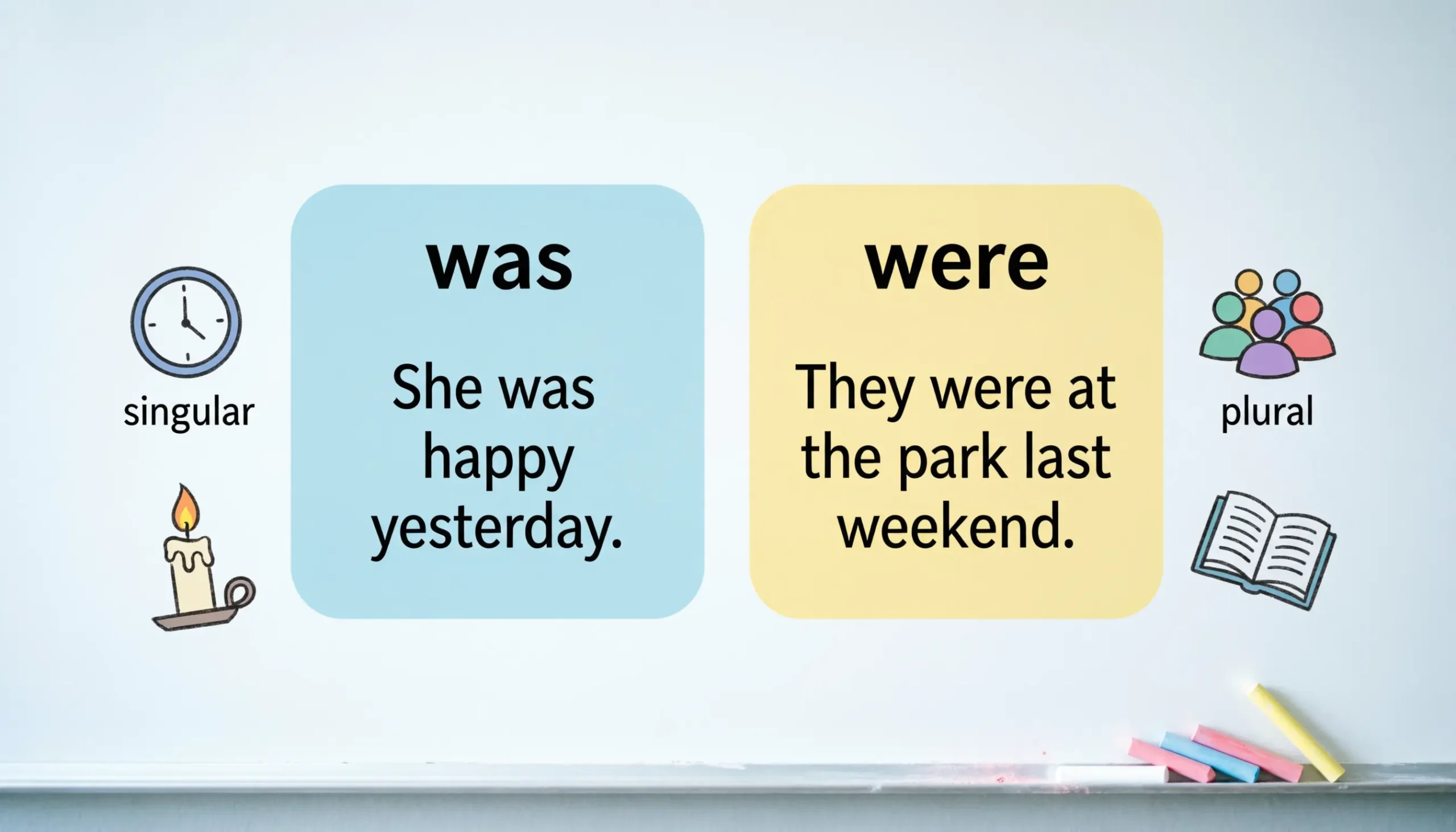
The past tense of “be” has two forms: was and were.
- Use was with singular subjects (I, he, she, it)
- Use were with plural subjects (you, we, they)
| Subject | Past Form |
|---|---|
| I / He / She / It | was |
| You / We / They | were |
DETAILED EXPLANATION
Basic Meaning
The verb “be” means to exist or to describe a state.
In the past, it tells us what something was or were before.
👉 Example:
- I was tired.
- They were happy.
Simple Rule
- Singular → was
- Plural → were
Deeper Understanding
The past tense of be does NOT follow normal verb rules. It is irregular, meaning it changes form completely.
👉 Unlike:
- walk → walked
- play → played
👉 It becomes:
- am/is → was
- are → were
FORMS / CONJUGATION TABLES
📊 Verb Forms Table
| Form | Verb |
|---|---|
| Base Form | be |
| Present | am / is / are |
| Past | was / were |
| Past Participle | been |
| Future | will be |
📊 Past Tense Conjugation
| Subject | Form |
|---|---|
| I | was |
| You | were |
| He | was |
| She | was |
| It | was |
| We | were |
| They | were |
COMPARISON SECTION
Past vs Present – Difference
Past = already happened
Present = happening now
- I was tired yesterday.
- I am tired now.
Past vs Past Participle – Difference
Past = simple past
Past participle = used with “has/have/had”
- She was late.
- She has been late before.
Was vs Were – Difference
Was = singular
Were = plural
- He was at home.
- They were at home.
Was vs Had Been – Difference
Was = simple past
Had been = earlier past
- I was sick.
- I had been sick before the exam.
Were vs Was (Conditional)
Use “were” for unreal situations
- If I were rich…
- If I was late… (less formal)
SENTENCE STRUCTURE
Simple Sentences Formula
Subject + was/were + complement
Examples:
- I was happy.
- She was tired.
- They were late.
- We were ready.
- He was angry.
Negative Sentences Formula
Subject + was/were + not
Examples:
- I was not tired.
- She was not happy.
- They were not ready.
- We were not late.
- He was not there.
Interrogative Sentences Formula
Was/Were + subject + complement?
Examples:
- Was she happy?
- Were they ready?
- Was he at home?
- Were we late?
- Was it cold?
REAL LIFE EXAMPLES
- I was at school yesterday.
- She was very kind.
- They were excited.
- We were busy last night.
- He was my teacher.
- It was cold outside.
- I was not ready.
- She was not angry.
- They were not late.
- Was he there?
- Were they happy?
- Was it easy?
- We were friends.
- I was surprised.
- She was in the room.
- They were on time.
- He was not serious.
- Were you at home?
- I was very tired.
- It was a great day.
DAILY USE + DIALOGUE
Conversation 1:
A: Where were you yesterday?
B: I was at the market.
A: Was it busy?
B: Yes, it was very crowded.
Conversation 2:
A: Were you tired after work?
B: Yes, I was really tired.
A: Was it a long day?
B: Yes, it was.
COMMON MISTAKES
❌ I were happy
✔ I was happy
👉 Mistake: wrong subjectverb agreement
❌ She were late
✔ She was late
👉 Mistake: using plural verb for singular
❌ They was here
✔ They were here
👉 Mistake: using singular for plural
❌ I am yesterday tired
✔ I was tired yesterday
👉 Mistake: mixing present and past
GRAMMAR RULES
- Use was with singular subjects
- Use were with plural subjects
- Use were in hypothetical situations
- Add not for negatives
- Start with was/were for questions
ADVANCED USAGE
Continuous Form
Past continuous = was/were + verbing
- I was studying
- They were playing
Perfect Form
- I have been tired
- She had been busy
Future Form
- I will be there
- They will be ready
PRACTICE SECTION
Fill in the Blanks
- I ___ happy yesterday.
- They ___ late.
- She ___ tired.
- We ___ ready.
- He ___ at home.
Answers: 1. was, 2. were, 3. was, 4. were, 5. was
MCQs
- She ___ happy.
a) was ✔
b) were - They ___ here.
a) was
b) were ✔ - I ___ tired.
a) was ✔
b) were - We ___ ready.
a) were ✔
b) was - He ___ late.
a) was ✔
b) were
Error Corrections
- I were tired → I was tired
- She were late → She was late
- They was here → They were here
- We was ready → We were ready
- He were happy → He was happy
FAQs
1. What is the past tense of be?
Was and were
2. When do we use “was”?
With singular subjects
3. When do we use “were”?
With plural subjects and “you”
4. Is “be” irregular?
Yes, it changes form completely
5. What is past participle of be?
Been
6. Can we use “were” for imaginary situations?
Yes, like “If I were rich”
7. Is “was” used with I?
Yes → I was
CONCLUSION
The past tense of be is one of the most essential building blocks of English grammar.
While it may seem simple at first, understanding when to use was and were correctly can significantly improve your speaking and writing skills.
From forming basic sentences to expressing complex ideas in past situations, this verb plays a key role in everyday communication.
By practicing the rules, learning from common mistakes, and using reallife examples, you can quickly become confident in using it naturally.
Don’t just memorize apply it in your daily conversations and writing.