Have you ever tried to say “I was tired” or “We were at home” in Spanish and felt confused about which form of estar to use?
Many Spanish learners struggle with the past tense of estar because this common verb changes depending on the subject and the type of past tense being used.
The verb estar is one of the most important Spanish verbs. It is used to talk about locations, temporary conditions, feelings, emotions, and ongoing actions.
While many learners understand the present tense forms like estoy and estás, the past tense forms often create confusion.
Understanding the past tense of estar is essential for everyday conversations. If you want to describe where someone was, how they felt, or what they were doing in the past, mastering this verb will help you communicate more naturally and accurately in Spanish.
Quick Answer (Featured Snippet)
The past tense of estar depends on which Spanish past tense you use.
| Tense | Estar Form | Example |
|---|---|---|
| Preterite | estuve | Yo estuve allí. (I was there.) |
| Imperfect | estaba | Yo estaba cansado. (I was tired.) |
Use estuve, estuviste, estuvo for completed past situations and estaba, estabas, estaba for ongoing or repeated past situations.
What Is Past Tense of Estar?
The past tense of estar refers to the forms of the Spanish verb estar that describe a state, condition, location, or action in the past.
In Spanish, estar means:
- To be
- To be located
- To feel
- To be in a temporary condition
Examples:
- Estoy cansado. (I am tired.)
- Estoy en casa. (I am at home.)
When talking about the past, these sentences change:
- Estaba cansado. (I was tired.)
- Estuve en casa. (I was at home.)
The past tense of estar is commonly used to discuss:
- Feelings
- Emotions
- Temporary situations
- Locations
- Past continuous actions
Structure of Sentences of Past Tense of Estar
Affirmative Sentences
Subject + past form of estar + complement
Examples:
- Yo estaba feliz.
- Ella estuvo aquí.
- Nosotros estábamos ocupados.
Negative Sentences
Subject + no + past form of estar + complement
Examples:
- Yo no estaba cansado.
- Ella no estuvo en casa.
- Nosotros no estábamos listos.
Interrogative Sentences
¿Past form of estar + subject + complement?
Examples:
- ¿Estabas enfermo?
- ¿Estuvo Juan aquí?
- ¿Estaban ustedes ocupados?
Formation of Past Tense of Estar
Spanish mainly uses two past tenses for estar:
1. Imperfect Tense of Estar
The imperfect tense describes:
- Ongoing situations
- Background information
- Repeated actions
- States and feelings
Estar
| Subject | Imperfect Form |
|---|---|
| Yo | estaba |
| Tú | estabas |
| Él / Ella / Usted | estaba |
| Nosotros / Nosotras | estábamos |
| Vosotros / Vosotras | estabais |
| Ellos / Ellas / Ustedes | estaban |
Examples:
- Yo estaba triste.
- Ellos estaban en la oficina.
2. Preterite Tense of Estar
The preterite tense describes:
- Completed actions
- Specific events
- Finished situations
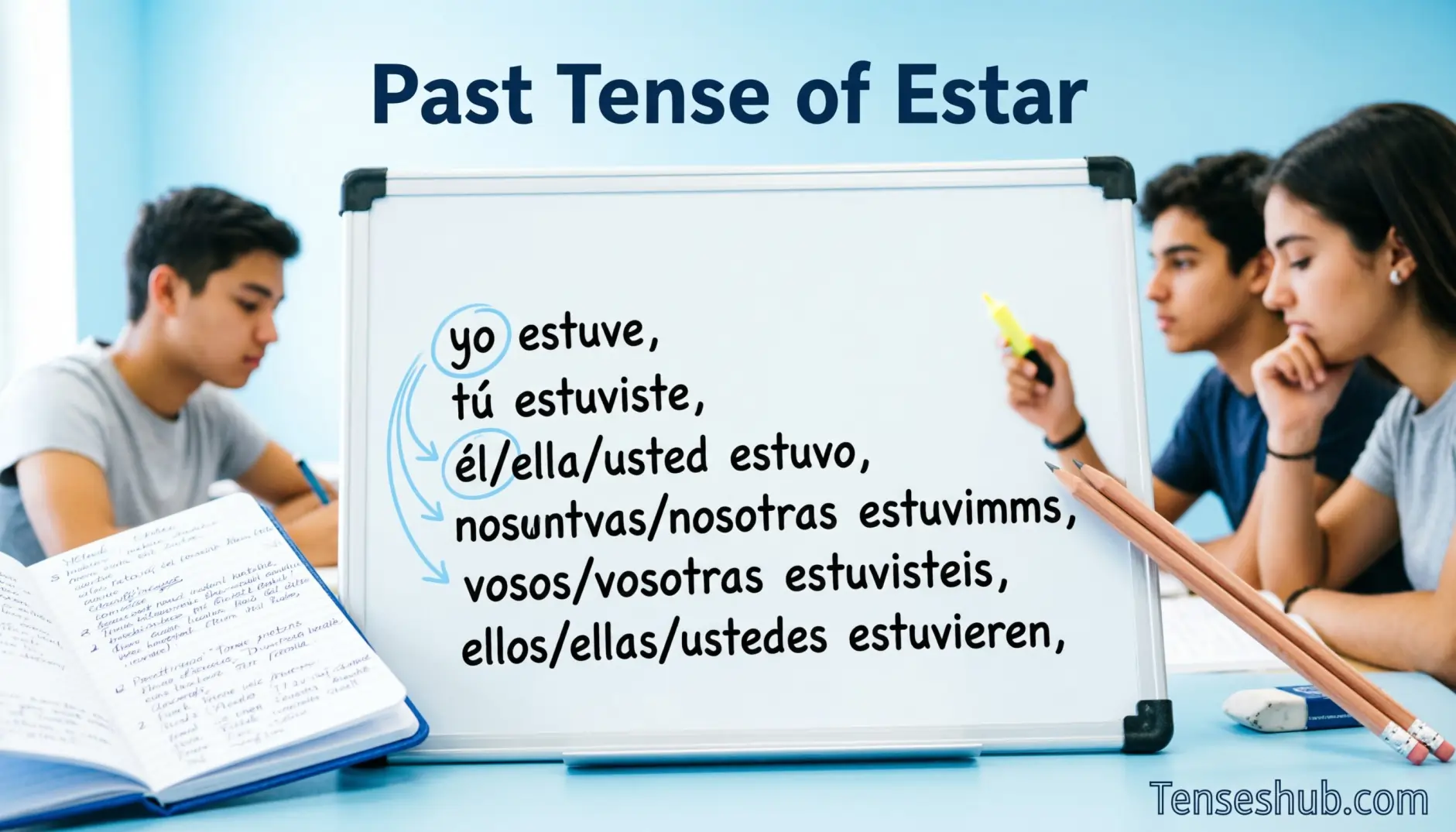
Estar (Preterite Conjugation)
| Subject | Preterite Form |
|---|---|
| Yo | estuve |
| Tú | estuviste |
| Él / Ella / Usted | estuvo |
| Nosotros / Nosotras | estuvimos |
| Vosotros / Vosotras | estuvisteis |
| Ellos / Ellas / Ustedes | estuvieron |
Examples:
- Yo estuve en Madrid.
- Ellos estuvieron aquí.
Notice that estar is an irregular verb in the preterite tense.
How to Use Past Tense of Estar
To Describe Feelings in the Past
Use the imperfect tense when describing how someone felt.
Examples:
- Estaba feliz.
- Estaban nerviosos.
- Estabas cansado.
To Describe Locations in the Past
Examples:
- Estaba en casa.
- Estábamos en la escuela.
- Estuvieron en el parque.
To Describe Ongoing Situations
Examples:
- La tienda estaba abierta.
- El clima estaba frío.
- Yo estaba ocupado.
To Talk About Completed States
Use the preterite tense when referring to a finished situation.
Examples:
- Estuve allí por dos horas.
- Estuvieron en la reunión.
- Estuvo enfermo la semana pasada.
With the Past Progressive
The imperfect form of estar combines with a gerund ( ando, iendo) to form the past progressive.
Examples:
- Estaba estudiando.
- Estaban trabajando.
- Estábamos comiendo.
These sentences mean:
- I was studying.
- They were working.
- We were eating.
Estar (Preterite Conjugation)
| Subject | Preterite Form |
|---|---|
| Yo | estuve |
| Tú | estuviste |
| Él / Ella / Usted | estuvo |
| Nosotros / Nosotras | estuvimos |
| Vosotros / Vosotras | estuvisteis |
| Ellos / Ellas / Ustedes | estuvieron |
Real Life Examples
Affirmative Examples
- Yo estaba muy feliz ayer.
- Ella estaba en la biblioteca.
- Nosotros estábamos cansados después del viaje.
- Él estuvo en la oficina toda la mañana.
- Ellos estuvieron aquí el sábado.
Negative Examples
- No estaba listo para el examen.
- Ella no estaba enferma.
- Nosotros no estuvimos en la reunión.
- Ellos no estaban en casa.
Interrogative Examples
- ¿Estabas ocupado?
- ¿Estuvo Ana aquí?
- ¿Estaban tus amigos en la fiesta?
- ¿Estuvieron ustedes en España?
Informal Examples
- Estaba súper cansado.
- ¿Dónde estabas ayer?
- No estaba de buen humor.
Formal Examples
- El director estuvo presente durante la reunión.
- Los invitados estuvieron satisfechos con el evento.
Common Mistakes
Mistake 1: Using Ser Instead of Estar
❌ Era cansado.
✅ Estaba cansado.
Explanation: Temporary conditions usually use estar.
Mistake 2: Using Preterite Instead of Imperfect
❌ Estuve cansado cuando estudiaba.
✅ Estaba cansado cuando estudiaba.
Explanation: Ongoing feelings usually use the imperfect tense.
Mistake 3: Wrong Preterite Form
❌ Estaba allí por dos horas.
✅ Estuve allí por dos horas.
Explanation: A completed period of time often uses the preterite.
Mistake 4: Incorrect Past Progressive
❌ Estuve estudiando cuando llamaste.
✅ Estaba estudiando cuando llamaste.
Explanation: Ongoing actions in progress usually take the imperfect form.
Key Grammar Rules
1. Use Imperfect for Ongoing Conditions
- Estaba cansado.
- Estaban felices.
2. Use Preterite for Completed Situations
- Estuve allí.
- Estuvieron presentes.
3. Use Estar for Temporary States
- Estaba enfermo.
- Estaban ocupados.
4. Use Imperfect with Gerunds
- Estaba trabajando.
- Estábamos hablando.
5. Estar Is Irregular in the Preterite
Examples:
- estuve
- estuviste
- estuvo
These forms must be memorized.
Comparisons with Similar Grammar Forms
Estar vs Ser in the Past
Estar = temporary condition
- Estaba cansado.
- Estaba enferma.
Ser = permanent characteristic or identity
- Era inteligente.
- Era amable.
Estuve vs Estaba
Estuve
Completed situation:
- Estuve en París una semana.
Estaba
Ongoing situation:
- Estaba en París cuando me llamaste.
Estaba vs Estaba + Gerund
Simple state:
- Estaba cansado.
Action in progress:
- Estaba corriendo.
Learners studying the past tense of estar often benefit from learning:
- Preterite tense
- Imperfect tense
- Past progressive
- Ser vs estar
- Spanish verb conjugation
Exercises
Exercise 1: Fill in the Blanks
Choose the correct form of estar.
- Yo _____ cansado.
- Ellos _____ en la oficina.
- Nosotros _____ estudiando.
- Tú _____ aquí ayer.
- Ella no _____ feliz.
Exercise 2: Correct the Sentence
- Yo estuve cansado cuando estudiaba.
- Era enfermo ayer.
- Estuve trabajando cuando llegaste.
- Ellos estaba en casa.
- Tú estuvieron aquí.
Exercise 3: Rewrite as Negative
- Estaba feliz.
- Estuvieron aquí.
- Estábamos listos.
Exercise 4: Multiple Choice
1. Which form means “I was”?
A. estoy
B. estuve
C. estar
D. estará
2. Which tense is used for ongoing past situations?
A. Future
B. Present
C. Imperfect
D. Conditional
3. Which sentence is correct?
A. Era cansado.
B. Estaba cansado.
C. Soy cansado.
D. Estuve cansada cuando me llamaste.
Answer Key
Exercise 1
- estaba
- estaban
- estábamos
- estuviste
- estaba
Exercise 2
- Yo estaba cansado cuando estudiaba.
- Estaba enfermo ayer.
- Estaba trabajando cuando llegaste.
- Ellos estaban en casa.
- Tú estuviste aquí.
Exercise 3
- No estaba feliz.
- No estuvieron aquí.
- No estábamos listos.
Exercise 4
- B
- C
- B
FAQs
What is the past tense of estar in Spanish?
The most common past forms are estaba (imperfect) and estuve (preterite).
What is the difference between estaba and estuve?
Estaba describes ongoing or repeated situations, while estuve describes completed situations.
Is estar irregular in the past tense?
Yes. The preterite forms such as estuve and estuvo are irregular.
How do you say “I was tired” in Spanish?
You can say:
- Estaba cansado. (ongoing condition)
- Estuve cansado. (completed condition)
Can estar be used with ando and iendo forms?
Yes.
Examples:
- Estaba estudiando.
- Estaban trabajando.
When should I use estaba?
Use estaba for:
- Feelings
- Background descriptions
- Ongoing situations
- Repeated actions in the past
Conclusion
Learning the past tense of estar is an important step in becoming more confident in Spanish. The two main forms estaba and estuve serve different purposes.
Use estaba when talking about ongoing situations, feelings, descriptions, or actions in progress. Use estuve when describing a completed situation or event in the past.
A good way to remember the difference is that the imperfect tense paints the background of a story, while the preterite tense highlights completed events. As you practice, try creating your own sentences about where you were, how you felt, and what you were doing yesterday.
The more examples you use in real conversations, the easier these forms will become. With regular practice, the past tense of estar will soon feel natural and easy to use.
Hi, I’m Robert Lowth, a passionate expert in English tenses and grammar. I specialize in simplifying complex tense rules to help learners understand and use English with confidence. My goal is to make grammar clear, practical, and easy for everyday communication. tenseshub.com