Have you ever wondered if the past tense of smell is smelled or smelt? You may see both forms in English, which can make this simple verb confusing. For example, you might read, “I smelled something strange,” while another sentence says, “I smelt something strange.”
The good news is that both “smelled” and “smelt” can be correct past forms of smell. The main difference is regional and stylistic. Smelled is especially common in American English, while smelt is widely used in British English and some other varieties of English.
Understanding these forms is useful when you are writing sentences about food, flowers, smoke, perfume, bad odors, or anything else you can detect with your nose.
This guide explains the past tense of smell, its sentence structure, formation, rules, examples, common mistakes, and the difference between smelled and smelt.
By the end, you will know exactly when and how to use both forms correctly.
Quick Answer
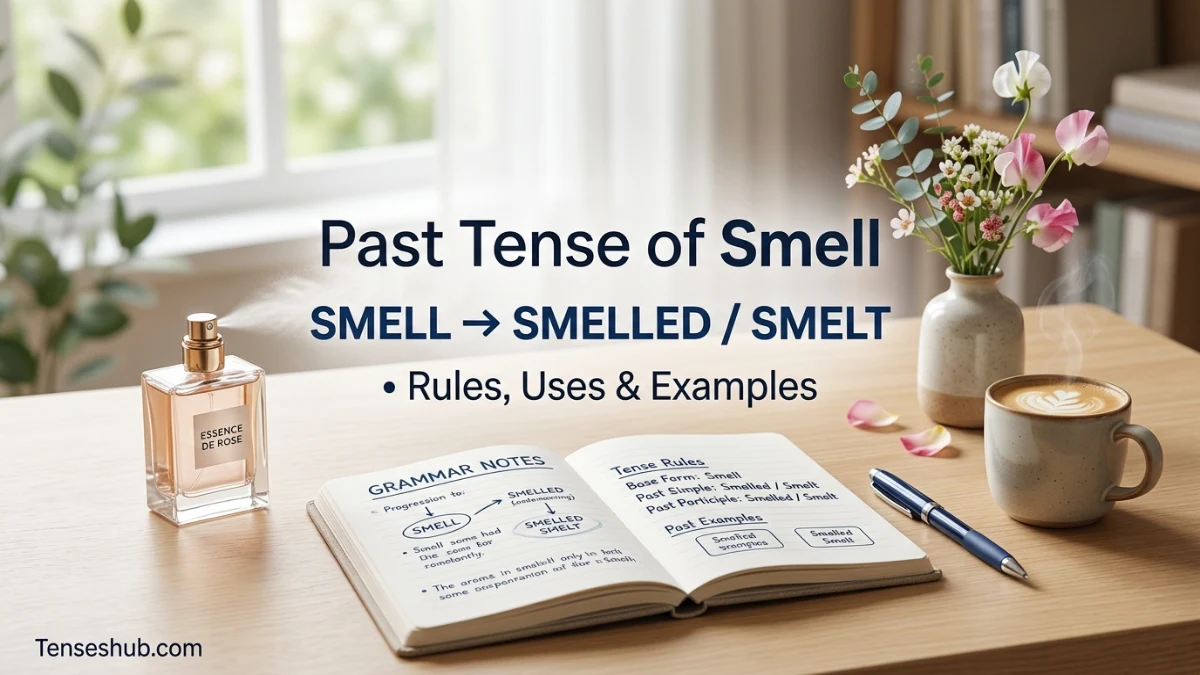
The past tense of smell can be smelled or smelt.
| Form | Past Tense | Past Participle |
|---|---|---|
| smell | smelled / smelt | smelled / smelt |
Smelled is very common in American English, while smelt is common in British English. Both can mean that someone noticed an odor in the past.
Examples:
- I smelled fresh bread this morning.
- I smelt fresh bread this morning.
- She smelled the flowers yesterday.
- She smelt the flowers yesterday.
What Is the Past Tense of Smell?
The past tense of smell is smelled or smelt. Both forms describe an action or experience involving smell that happened in the past.
The verb smell means to notice an odor with your nose or to produce a particular odor.
For example:
- The soup smelled delicious.
- The soup smelt delicious.
- I smelled smoke in the kitchen.
- We smelt fresh flowers in the garden.
The verb smell is interesting because it can be used in two ways.
First, it can describe using your sense of smell:
I smelled the perfume.
Second, it can describe having a particular odor:
The perfume smelled wonderful.
In the simple past, both meanings can use smelled or smelt.
Smell: V1, V2, and V3
The main forms are:
- V1: smell
- V2: smelled / smelt
- V3: smelled / smelt
- V ing: smelling
Examples:
- I smell the flowers.
- I smelled the flowers yesterday.
- I have smelled this perfume before.
- She is smelling the flowers.
Because smelled and smelt can both function as the past tense and past participle, the correct choice often depends on the variety of English being used.
Structure of Sentences of the Past Tense of Smell
The simple past uses different sentence patterns depending on if the sentence is affirmative, negative, or interrogative.
Affirmative Sentences
For a positive sentence, use:
Subject + smelled/smelt + object or complement
Examples:
- I smelled the flowers.
- She smelt the smoke.
- They smelled something unusual.
- The room smelt fresh.
Negative Sentences
For a negative sentence, use:
Subject + did not + smell + object or complement
The important point is that after did not, use the base form smell, not smelled or smelt.
Examples:
- I did not smell anything.
- She didn’t smell the smoke.
- They did not smell the flowers.
- He didn’t smell anything strange.
Interrogative Sentences
For a question, use:
Did + subject + smell + object or complement?
Examples:
- Did you smell the smoke?
- Did she smell the perfume?
- Did they smell anything unusual?
- Did he smell the flowers?
Notice that the main verb returns to smell after did.
Formation of the Past Tense of Smell
The verb smell has two accepted past forms: smelled and smelt.
Smelled
Smelled is formed by adding ed to smell.
smell → smelled
Examples:
- smell → smelled
- smell → smelled
- smell → smelled
It is especially common in American English.
Smelt
Smelt is an alternative past form of smell.
smell → smelt
It is particularly common in British English and is also used in other varieties of English.
V1, V2, V3, and V ing Forms
| Verb Form | Word |
|---|---|
| V1 – Base form | smell |
| V2 – Past tense | smelled / smelt |
| V3 – Past participle | smelled / smelt |
| V ing – Present participle | smelling |
Examples:
- I smell the coffee.
- I smelled the coffee yesterday.
- I have smelt the coffee before.
- I am smelling the coffee.
Contractions
Negative simple past sentences commonly use didn’t.
Examples:
- I didn’t smell anything.
- She didn’t smell the smoke.
- We didn’t smell the food.
Remember that didn’t already carries the past tense. Therefore, use smell, not smelled or smelt, after it.
How to Use the Past Tense of Smell
The past tense of smell is used when the smelling action, experience, or condition happened in the past.
1. To Describe Something You Detected by Smell
Use smelled or smelt when you noticed an odor in the past.
Examples:
- I smelled smoke last night.
- We smelt fresh bread when we entered the bakery.
- She smelled perfume in the hallway.
- They smelt something burning.
2. To Describe How Something Seemed by Its Odor
Smell can also describe the quality of an odor.
Examples:
- The cake smelled delicious.
- The milk smelt sour.
- The flowers smelled wonderful.
- The room smelt clean.
Here, the subject is the thing producing the smell.
3. To Talk About a Past Experience
You can use the past tense when talking about something you experienced earlier.
Examples:
- I smelled that perfume at the store yesterday.
- We smelt the ocean air during our trip.
- She smelled fresh roses for the first time.
- He smelled something unusual on his way home.
4. With Time Expressions
Past time expressions often appear with smelled or smelt.
Common expressions include:
- yesterday
- last night
- last week
- this morning
- an hour ago
- a few minutes ago
- when I arrived
- when we entered
Examples:
- I smelled smoke last night.
- She smelt something strange when she arrived.
- We smelled fresh bread this morning.
5. With “Did” in Questions
When asking about a past smell, use did + smell.
Correct:
Did you smell the flowers?
Incorrect:
Did you smelled the flowers?
The first verb, did, already marks the sentence as past tense.
Structure or Verb Pattern Table
| Sentence Type | Pattern | Example |
|---|---|---|
| Affirmative | Subject + smelled/smelt | She smelled smoke. |
| Negative | Subject + did not + smell | She did not smell smoke. |
| Question | Did + subject + smell? | Did she smell smoke? |
| Short negative | Subject + didn’t + smell | She didn’t smell smoke. |
| Past participle | have/has/had + smelled/smelt | She had smelled the perfume before. |
Real Life Examples
Here are practical examples showing how the past forms of smell work in everyday English.
Affirmative Examples
- I smelled fresh coffee when I entered the kitchen.
- She smelt smoke coming from the garage.
- The bread smelled wonderful.
- The flowers smelt sweet.
- We smelled something burning.
- He smelt the perfume on her jacket.
- The room smelled clean after the windows were opened.
- They smelt fresh grass after the rain.
Negative Examples
- I didn’t smell anything unusual.
- She didn’t smell the smoke at first.
- We did not smell the flowers from outside.
- He didn’t smell the spoiled milk.
Interrogative Examples
- Did you smell the coffee?
- Did she smell something strange?
- Did they smell smoke?
- Did he smell the roses?
Formal Examples
- The inspector smelled a strong chemical odor in the room.
- The technician smelt something unusual near the equipment.
- The investigators smelled smoke before entering the building.
Informal Examples
- I smelled something weird in the fridge.
- Did you smell that?
- The kitchen smelt amazing!
Both smelled and smelt can be used correctly. Your choice may depend on the variety of English you are writing in.
Common Mistakes
Mistake 1: Using “smelled” after “did”
Incorrect:
Did you smelled the smoke?
Correct:
Did you smell the smoke?
After did, always use the base form of the main verb.
Mistake 2: Using “smelt” after “didn’t”
Incorrect:
I didn’t smelt anything.
Correct:
I didn’t smell anything.
The correct structure is:
didn’t + smell
Mistake 3: Thinking “smelt” is always wrong
Some learners believe that smelt is incorrect because they are more familiar with smelled.
That is not true. Smelt is a recognized past form of smell, particularly common in British English.
Mistake 4: Thinking only “smelt” is correct
The opposite mistake also happens.
Incorrect assumption:
“Smelled” is not a real past tense.
In fact, smelled is a standard past form and is especially common in American English.
Mistake 5: Confusing “smell” with “smelling”
Incorrect:
Yesterday, I am smelling smoke.
Correct:
Yesterday, I smelled smoke.
Use the simple past when describing a completed smelling experience in the past.
Mistake 6: Using “smelled” and “smelt” randomly in formal writing
Although both are correct, consistency is helpful. If your article, assignment, or publication follows American English, smelled may be the more natural choice. If it follows British English, smelt may be more natural.
Key Grammar Rules
Rule 1: Both “smelled” and “smelt” are past forms of smell
Examples:
- I smelled smoke.
- I smelt smoke.
Both are grammatically possible.
Rule 2: “Smelled” is especially common in American English
If you are following American English conventions, smelled is generally the form you will see more often.
Example:
She smelled the flowers.
Rule 3: “Smelt” is especially common in British English
British English frequently uses smelt as the past form.
Example:
She smelt the flowers.
Rule 4: Use “smell” after did or didn’t
Examples:
- Did you smell it?
- I didn’t smell it.
- She did not smell the smoke.
Do not use smelled or smelt immediately after did or didn’t.
Rule 5: The past participle can also be smelled or smelt
Both forms can appear after auxiliary verbs such as have, has, and had.
Examples:
- I have smelled this perfume before.
- She has smelt the flowers.
- We had smelled something unusual.
Rule 6: The pronunciation of “smelled” is usually one syllable
Smelled is generally pronounced like “smeld.”
Smelt is also one syllable.
This makes both forms short and easy to use in conversation.
Comparisons with Similar Grammar Forms
Smell vs. Smelled vs. Smelt
| Form | Tense/Form | Example |
|---|---|---|
| smell | Base form | I smell smoke. |
| smelled | Past / past participle | I smelled smoke. |
| smelt | Past / past participle | I smelt smoke. |
| smelling | ing form | I am smelling smoke. |
Smelled vs. Smelt
The main difference is usually regional preference, not meaning.
Smelled:
I smelled something strange.
Smelt:
I smelt something strange.
Both sentences mean that the speaker detected something by smell.
In general, smelled is strongly associated with American English, while smelt is common in British English.
Smell vs. Stink
These verbs are related but are not interchangeable.
Smell is neutral:
The flowers smelled nice.
Stink usually means to have a very unpleasant smell:
The garbage stank.
The past tense of stink is stank, while the past participle is commonly stunk.
Smell vs. Sniff
Smell can mean detecting an odor naturally or intentionally.
I smelled smoke.
Sniff usually means deliberately breathing in through your nose to detect an odor.
I sniffed the perfume.
So, smell and sniff are related, but they describe slightly different actions.
Simple Past vs. Present Perfect
Use the simple past for a completed past event, often with a finished time.
I smelled smoke yesterday.
Use the present perfect when the past experience is connected to the present or when the exact time is not stated.
I have smelled this perfume before.
This distinction is useful when learning other English past tense forms as well.
Exercises
Practice using smell, smelled, and smelt in the sentences below.
Exercise 1: Fill in the Blanks
Complete each sentence with the correct form.
- I ______ smoke yesterday.
- She didn’t ______ anything unusual.
- We ______ fresh bread when we entered the bakery.
- Did you ______ the flowers?
- The room ______ wonderful after cleaning.
- He has ______ that perfume before.
- They ______ something burning last night.
- The milk ______ sour.
Exercise 2: Choose the Correct Answer
What is the past tense of smell?
A. Smelling
B. Smelled or smelt
C. Smell
D. Smells
Which sentence is correct?
A. Did you smelled smoke?
B. Did you smelt smoke?
C. Did you smell smoke?
D. Did you smelling smoke?
Which form is especially common in American English?
A. Smelt
B. Smelled
C. Smelling
D. Smell
Which sentence is correct?
A. I didn’t smelled anything.
B. I didn’t smelt anything.
C. I didn’t smell anything.
D. I don’t smelled anything.
Exercise 3: Correct the Sentences
- Did she smelled the perfume?
- I didn’t smelt anything strange.
- Yesterday, we smell smoke in the kitchen.
- He have smelled that flower before.
Exercise 4: Rewrite the Sentences
Change each sentence into the simple past.
- I smell fresh coffee.
- She smells smoke.
- They smell something unusual.
- The flowers smell wonderful.
Answer Key
Exercise 1
- smelled / smelt
- smell
- smelled / smelt
- smell
- smelled / smelt
- smelled / smelt
- smelled / smelt
- smelled / smelt
Exercise 2
- B. Smelled or smelt
- C. Did you smell smoke?
- B. Smelled
- C. I didn’t smell anything.
Exercise 3
- Did she smell the perfume?
- I didn’t smell anything strange.
- Yesterday, we smelled/smelt smoke in the kitchen.
- He has smelled/smelt that flower before.
Exercise 4
- I smelled/smelt fresh coffee.
- She smelled/smelt smoke.
- They smelled/smelt something unusual.
- The flowers smelled/smelt wonderful.
FAQs
What is the past tense of smell?
The past tense of smell is smelled or smelt. Both forms are correct.
Is “smelled” or “smelt” correct?
Both are correct. Smelled is especially common in American English, while smelt is common in British English.
Is “smelt” the past tense of smell?
Yes. Smelt is a standard past tense and past participle form of smell.
Is “smelled” a correct word?
Yes. Smelled is a correct past tense and past participle form of smell and is particularly common in American English.
What is the past tense of smell in American English?
Smelled is the common choice in American English.
What is the past tense of smell in British English?
Smelt is commonly used in British English, although smelled is also understood and used.
Should I say “Did you smell” or “Did you smelled”?
Say “Did you smell?”
After did, use the base form of the verb.
Correct:
Did you smell the smoke?
Incorrect:
Did you smelled the smoke?
What is the past participle of smell?
The past participle can be smelled or smelt.
Examples:
- I have smelled this perfume before.
- I have smelt this perfume before.
What is the V2 form of smell?
The V2, or simple past, form is smelled or smelt.
What is the V3 form of smell?
The V3, or past participle, form is also smelled or smelt.
Is “smelt” more British than “smelled”?
Yes. Smelt is particularly associated with British English, while smelled is especially common in American English.
Conclusion
The past tense of smell has two accepted forms: smelled and smelt. Both forms can describe an odor that someone noticed in the past or describe how something seemed by its smell.
The main difference is regional preference, with smelled especially common in American English and smelt common in British English.
The most important grammar rule to remember is that after did or didn’t, you should use the base form smell. For example, say “Did you smell the smoke?” and “I didn’t smell anything,” not “Did you smelled” or “didn’t smelt.”
Once you understand this simple pattern, using smell, smelled, and smelt becomes much easier. Practice with everyday examples involving food, flowers, smoke, perfume, and other odors, and you will quickly become more confident using these forms in both speaking and writing.

Hi, I’m Robert Lowth, a passionate expert in English tenses and grammar. I specialize in simplifying complex tense rules to help learners understand and use English with confidence. My goal is to make grammar clear, practical, and easy for everyday communication. tenseshub.com