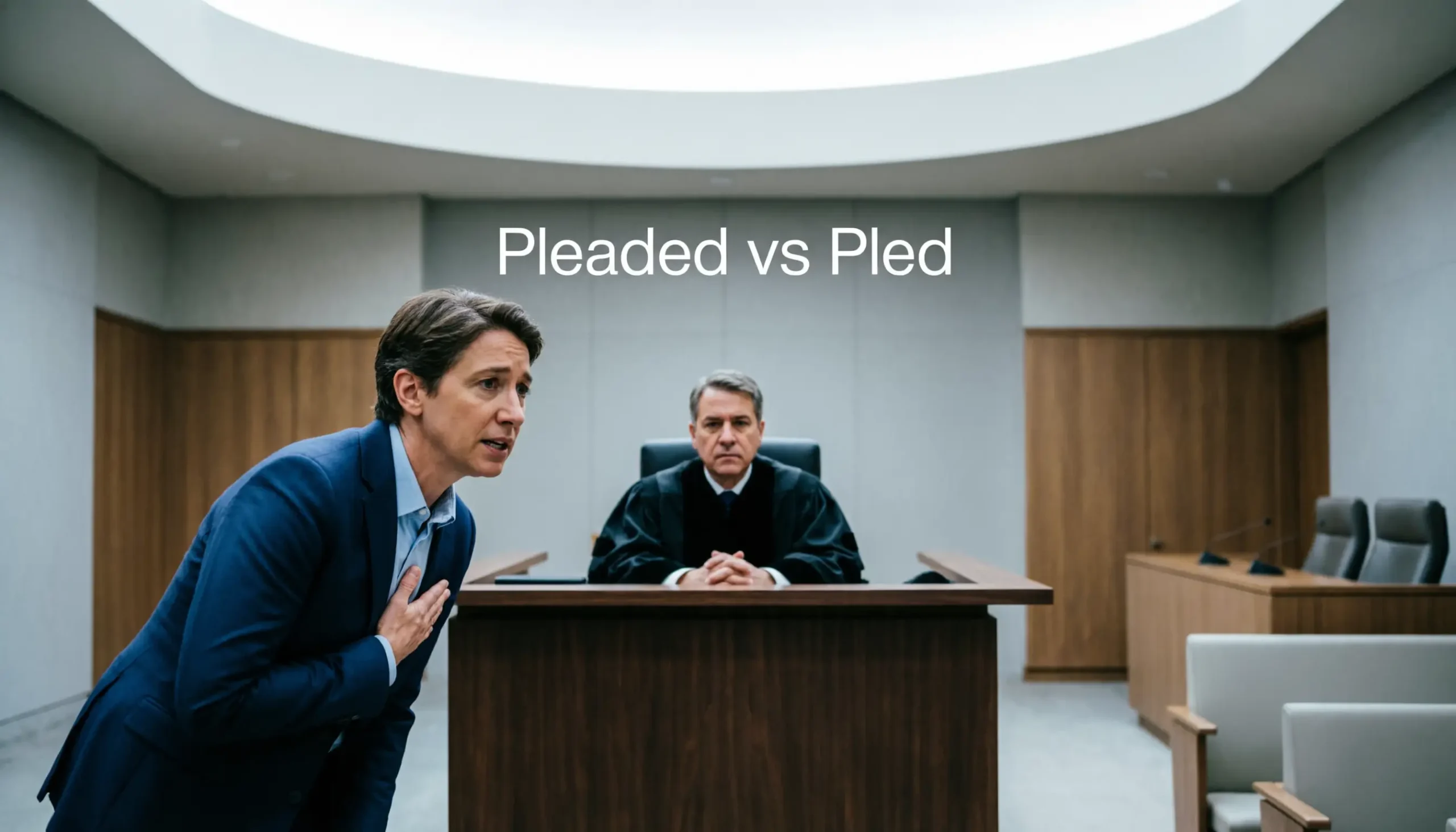
Have you ever wondered whether the past tense of plead is pleaded or pled?
You’re not alone this is one of the most confusing verbs in English grammar.
The phrase plead past tense often causes mistakes for students, writers, and even native speakers. Some people use pleaded,
while others prefer pled. So, which one is correct?
In simple words, plead means to ask for something in a serious or emotional way, often in court or when requesting help.
Knowing the correct plead past tense helps you write clearly and sound more natural in both formal and informal situations.
If you’re a student, blogger, or English learner, mastering this verb will improve your grammar and confidence.
FEATURED SNIPPET
Base Forms – Plead
| Form | Example |
|---|---|
| Base | plead |
| Past | pleaded / pled |
| Past Participle | pleaded / pled |
DETAILED EXPLANATION
Basic Meaning
Plead means:
- To strongly ask for something
- To make a legal statement in court
👉 Example:
She pleaded for help.
Why Two Past Forms?
English has both:
- Regular form: pleaded
- Irregular variant: pled
👉 Both are correct, but usage depends on context.
When to Use Each
- Pleaded → formal writing, exams, international English
- Pled → informal speech, American English
👉 Tip: Use pleaded if unsure it’s always safe.
FORMS / CONJUGATION TABLES
Basic Verb Forms – Plead
| Tense | Form |
|---|---|
| Base Form | plead |
| Past Tense | pleaded / pled |
| Past Participle | pleaded / pled |
| Present Participle | pleading |
Tense Usage Table
| Tense | Example |
|---|---|
| Present | I plead for justice. |
| Past | She pleaded for mercy. |
| Future | They will plead their case. |
| Present Perfect | He has pleaded before. |
| Past Perfect | She had pleaded earlier. |
COMPARISON SECTION
Plead Past vs Present
Past shows completed action; present shows current action
- She pleaded yesterday.
- She pleads every day.
Plead Past vs Past Participle
Past = simple past; participle used with has/had
- He pled in court.
- He has pleaded before.
Pleaded vs Pled
Formal vs informal usage
- She pleaded for help.
- He pled guilty
Plead vs Beg
Plead is stronger and more serious
- He pleaded for mercy.
- He begged for food.
Legal vs Everyday Use
Legal = courtroom; everyday = emotional request
- He pled guilty in court.
- She pleaded with her friend.
SENTENCE STRUCTURE
1. Simple Sentence Formula
Subject + Verb (Past) + Object
Examples:
- She pleaded for help.
- He pled guilty.
- They pleaded for mercy.
- I pleaded with him.
- We pled our case.
2. Negative Sentence Formula
Subject + did not + base verb
Examples:
- She did not plead guilty.
- He didn’t plead for help.
- They did not plead their case.
- I didn’t plead with her.
- We did not plead innocence.
3. Interrogative Formula
Did + subject + base verb?
Examples:
- Did she plead for help?
- Did he plead guilty?
- Did they plead in court?
- Did you plead your case?
- Did we plead correctly?
REAL LIFE EXAMPLES
- She pleaded for forgiveness.
- He pled guilty in court.
- They pleaded with the teacher.
- I pleaded for another chance.
- We pled our case strongly.
- She did not plead guilty.
- He didn’t plead for help.
- Did you plead your case?
- Why did she plead like that?
- They pleaded for mercy loudly.
- He pled innocence.
- I pleaded with my parents.
- She pleaded emotionally.
- He pled in front of the judge.
- Did they plead yesterday?
- She did not plead again.
- We pleaded together.
- He pled quietly.
- I pleaded many times.
- Did he plead guilty?
DAILY USE + DIALOGUE
Conversation 1:
- A: What happened in court?
- B: He pled guilty.
- A: Really?
- B: Yes, he didn’t fight the case.
Conversation 2:
- A: Why were you crying?
- B: I pleaded with him to stay.
- A: Did he listen?
- B: No, he left anyway.
COMMON MISTAKES
❌ She plead for help yesterday
✅ She pleaded for help
👉 Mistake: forgetting past tense form
❌ He pleadeded loudly
✅ He pleaded loudly
👉 Mistake: adding extra “ ed”
❌ He has pled (in formal writing)
✅ He has pleaded
👉 Mistake: using informal form in formal context
GRAMMAR RULES
- Use pleaded in formal writing
- Pled is acceptable in informal American English
- Past participle = pleaded/pled
- Use base form after did
- Avoid mixing forms in the same sentence
ADVANCED USAGE
Continuous Form
- She was pleading for help
Perfect Form
- He has pleaded before
- They had pled earlier
Future Form
- She will plead her case
PRACTICE SECTION
Fill in the Blanks
- She for help yesterday.
- He has guilty.
- They with the teacher.
- I did not for mercy.
- Did she her case?
MCQs
- Correct past tense?
a) plead
b) pleaded
c) pleading - Informal past form?
a) pled
b) pleading
c) pleads - Formal choice?
a) pled
b) pleaded
c) plead - Past participle?
a) pleading
b) pleaded
c) plead - Correct sentence?
a) He plead yesterday
b) He pleaded yesterday
c) He pleading yesterday
Error Correction
- She plead for help →
- He pleadeded loudly →
- Did she pleaded? →
- He has plead →
- They didn’t pleaded →
Answers
Fill in the blanks:
- pleaded
- pleaded
- pleaded
- plead
- plead
MCQs:
- b
- a
- b
- b
- b
Corrections:
- pleaded
- pleaded
- plead
- pleaded
- plead
FAQs
What is the past tense of plead?
It is pleaded or pled.
Which is correct: pled or pleaded?
Both are correct; pleaded is more formal.
When should I use pleaded?
Use it in writing, exams, and formal English.
Is pled wrong?
No, but it’s informal.
What is the past participle?
Pleaded or pled.
Can I use pled in academic writing?
Better to use pleaded.
Example sentence?
She pleaded for help.
CONCLUSION
Understanding the plead past tense is essential for clear and confident communication.
While both pleaded and pled are correct, choosing the right one depends on your context.
For formal writing, exams, or professional communication, pleaded is the safest and most widely accepted option.
On the other hand, pled is commonly used in informal American English, especially in spoken language.
By learning the rules, practicing sentence structures, and avoiding common mistakes, you can easily master this verb.
The key is consistency and real world usage.
Try using plead in your daily conversations or writing exercises to build confidence.