Have you ever tried to talk about something you did yesterday in Spanish and got confused about which verb form to use? You’re not alon.
Many learners struggle with past tenses, especially when deciding between different forms.
So, what is preterite tense in Spanish? In simple words, it’s the tense used to talk about actions that were completed in the past.
If something started and finished, the preterite tense is usually the right choice.
Understanding what is preterite tense in Spanish is essential for students, bloggers, and writers because it helps you describe real life events clearly and correctly.
If you’re telling a story, writing content, or speaking with someone, mastering this tense will make your Spanish sound natural and confident.
FEATURED SNIPPET
Preterite Tense
| Tense | Usage | Example |
|---|---|---|
| Preterite | Completed past actions | Comí (I ate) |
DETAILED EXPLANATION (Simple → Advanced)
Basic Meaning
The preterite tense describes actions that:
- Happened in the past
- Are completely finished
👉 Example:
- Ayer comí pizza. (Yesterday, I ate pizza.)
Rules (Simple)
- Use it for finished actions
- Use it with specific time words like yesterday, last night
Usage (Deeper Understanding)
Use preterite when:
- Telling a story
- Listing completed events
- Saying what happened once
👉 Example:
- Fui al mercado. (I went to the market.)
Avoid using it for ongoing or repeated actions (that’s for imperfect tense).
FORMS / CONJUGATION TABLES
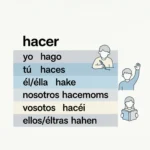
Verb:
| Pronoun | Preterite |
|---|---|
| Yo | hablé |
| Tú | hablaste |
| Él/Ella | habló |
| Nosotros | hablamos |
| Vosotros | hablasteis |
| Ellos | hablaron |
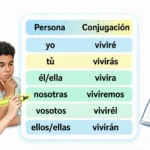
Verb: Comer
| Pronoun | Preterite |
|---|---|
| Yo | comí |
| Tú | comiste |
| Él | comió |
| Nosotros | comimos |
| Ellos | comieron |
Verb: Ir
| Pronoun | Preterite |
|---|---|
| Yo | fui |
| Tú | fuiste |
| Él | fue |
| Nosotros | fuimos |
| Ellos | fueron |
Base Form Overview – Hablar
| Form | Example |
|---|---|
| Base | hablar |
| Present | hablo |
| Preterite | hablé |
| Future | hablaré |
| Past Participle | hablado |
COMPARISON SECTION
TRICT FORMAT)Preterite vs Present – short difference
Preterite = completed past
Present = happening now
- Comí ayer.
- Como ahora.
Preterite vs Past Participle – short difference
Preterite = action done
Past participle = used with “have”
- Comí pizza.
- He comido pizza.
Preterite vs Imperfect – short difference
Preterite = finished action
Imperfect = ongoing/repeated
- Ayer estudié.
- Estudiaba todos los días.
Preterite vs Future – short difference
Preterite = already happened
Future = will happen
- Fui al cine.
- Iré al cine.
Preterite vs Present Perfect – short difference
Preterite = specific time
Present perfect = unspecified time
- Ayer comí.
- He comido.
SENTENCE STRUCTURE
Simple Formula
Subject + Verb (preterite) + Object
Examples:
- Yo comí arroz.
- Ella estudió mucho.
- Nosotros fuimos al parque.
- Tú hablaste rápido.
- Ellos jugaron fútbol.
Negative Formula
Subject + No + Verb + Object
Examples:
- No comí arroz.
- Ella no estudió.
- No fuimos allí.
- Tú no hablaste.
- Ellos no vinieron.
Interrogative Formula
¿Verb + Subject + Object?
Examples:
- ¿Comiste arroz?
- ¿Fue ella al mercado?
- ¿Estudiaron mucho?
- ¿Hablaste con él?
- ¿Vinieron temprano?
REAL LIFE EXAMPLES
- Ayer fui al colegio.
- Comí una manzana.
- Ella compró un vestido.
- ¿Viste la película?
- No terminé mi tarea.
- Llegué tarde.
- Ellos salieron temprano.
- Estudié toda la noche.
- ¿Hablaste con tu amigo?
- No entendí la lección.
- Caminamos juntos.
- Bebí agua.
- ¿Comieron pizza?
- No fui al trabajo.
- Ganamos el juego.
- Perdí mi llave.
- Compraste comida.
- Viví en Madrid.
- Escribí una carta.
- Viajaron a España.
DAILY USE + DIALOGUE
Conversation:
- A: ¿Qué hiciste ayer?
- B: Fui al mercado y compré frutas.
- A: ¿Comiste algo especial?
- B: Sí, comí pizza.
COMMON MISTAKES
❌ Yo comía ayer
✔️ Yo comí ayer
👉 Mistake: using imperfect instead of preterite
❌ He comí pizza
✔️ Comí pizza
👉 Mistake: mixing tenses
❌ Yo comiste
✔️ Yo comí
👉 Mistake: wrong conjugation
GRAMMAR RULES
- Use preterite for completed actions
- Use specific time expressions (ayer, anoche)
- Each subject has a unique verb ending
- Irregular verbs must be memorized
- Do not mix with imperfect unnecessarily
ADVANCED USAGE
Continuous (Past context)
- Estuve estudiando (I was studying briefly)
Perfect
- He comido (I have eaten)
Future
- Comeré mañana (I will eat tomorrow)
PRACTICE SECTION
Fill in the blanks
- Yo ___ (comer) pizza
- Ella ___ (ir) al mercado
- Nosotros ___ (hablar) mucho
- Tú ___ (ver) la película
- Ellos ___ (vivir) aquí
MCQs
- “I ate” =
a) como
b) comí ✔️
c) comeré - “We went” =
a) vamos
b) fuimos ✔️
c) iremos - Preterite is used for:
a) future
b) completed past ✔️
c) present - “She spoke” =
a) habló ✔️
b) habla
c) hablará - “They ate” =
a) comieron ✔️
b) comen
c) comerán
Error Correction
- Yo comiste → Yo comí
- Ella comía ayer → Ella comió ayer
- Nosotros fue → Nosotros fuimos
- Tú comió → Tú comiste
- Ellos fui → Ellos fueron
Answers
Fill blanks: comí, fue, hablamos, viste, vivieron
FAQs
1. What is preterite tense in Spanish?
A tense used for completed past actions.
2. When to use it?
For actions that started and finished in the past.
3. Is it the same as imperfect?
No, imperfect is for ongoing or repeated actions.
4. Example?
Comí pizza ayer.
5. Why is it important?
It helps describe past events clearly.
6. Is it hard to learn?
Not if you practice regularly..
CONCLUSION
Learning what is preterite tense in Spanish is a major step toward fluency.
It allows you to describe past events with clarity, confidence, and accuracy.
From simple daily conversations to professional writing, this tense plays a vital role in expressing completed actions.
While it may seem tricky at first especially with irregular verbs and comparisons like preterite vs imperfect consistent practice makes it much easier.
Focus on patterns, memorize common verb forms, and try using the tense in real life sentences.
The best way to improve is by applying what you’ve learned.
Write short paragraphs, speak with others, or even use a grammar checker to test your sentence