Have you ever wondered if the past tense of swing is “swang,” “swinged,” or something else? This is a common question because swing is an irregular English verb, so it does not follow the usual rule of adding ed to make the past tense.
The correct past tense of swing is swung. Its past participle is also swung.
For example:
- Present: The children swing on the playground.
- Past: The children swung on the playground.
- Past participle: They have swung on the swing.
Learning the forms of swing is useful because the verb can describe physical movement, changes in direction, movement from side to side, and even changes in opinions, prices, or moods. You may also see it in expressions such as swing by, swing around, and swing into action.
This guide explains the swing past tense, its forms, sentence patterns, common mistakes, examples, and practical usage.
Quick Answer
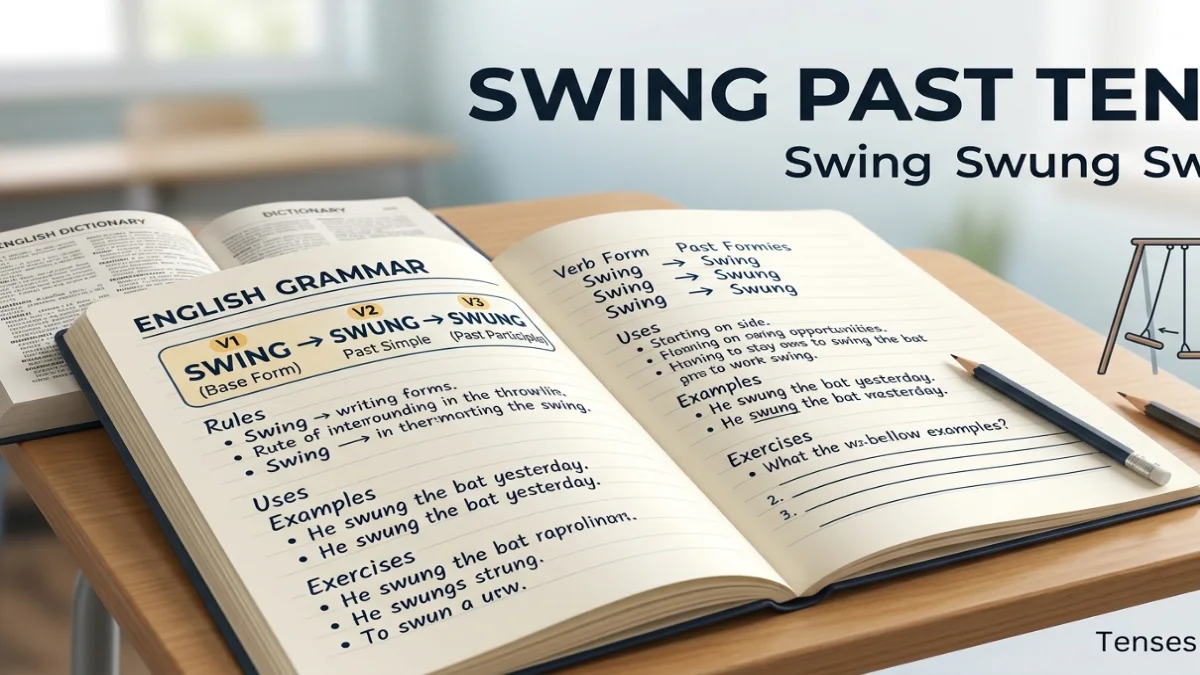
The past tense of swing is swung. The past participle is also swung.
| Verb Form | Swing |
|---|---|
| V1 (Present) | swing |
| V2 (Past) | swung |
| V3 (Past Participle) | swung |
| V-ing | swinging |
Example: She swung the door open yesterday.
What Is the Swing Past Tense?
The swing past tense refers to the past form of the irregular verb swing. The correct simple past form is swung, not “swinged” or “swang” in standard modern English.
Swing can mean to move backward and forward, move from one side to another, or cause something to move in this way.
Basic forms of swing
- Present: swing
- Past: swung
- Past participle: swung
- Present participle: swinging
Examples:
- I swing the bat before hitting the ball.
- I swung the bat yesterday.
- She has swung the bat several times.
- The child is swinging in the park.
The verb swing is irregular because its simple past does not use the regular ed ending.
Swing as a physical movement
The verb can describe movement from one side to another.
The gate swung open.
Swinging on playground equipment
It is also commonly used when someone moves backward and forward on a swing.
The children swung on the playground.
Swinging an object
Someone can also swing an object through the air.
The player swung the bat quickly.
Swing as a change
Swing can describe a change in direction, opinion, mood, or another condition.
Public opinion swung in favor of the new plan.
Structure of Sentences of Swing Past Tense
When swung is used as the simple past form of swing, the sentence structure is straightforward.
Affirmative sentences
Subject + swung + object/complement
Examples:
- She swung the door open.
- He swung the bat.
- The children swung on the playground.
- The pendulum swung from side to side.
The past form swung stays the same with all subjects.
I swung.
You swung.
He swung.
She swung.
They swung.
Negative sentences
Subject + did not + swing + object/complement
Use did not or the contraction didn’t, followed by the base form swing.
Examples:
- She did not swing the bat.
- He didn’t swing at the ball.
- They didn’t swing on the playground.
Notice that we do not say:
She didn’t swung the bat. ❌
The correct sentence is:
She didn’t swing the bat. ✅
Interrogative sentences
Did + subject + swing + object/complement?
Examples:
- Did she swing the bat?
- Did they swing on the playground?
- Did the door swing open?
- Did he swing the rope?
After did, always use the base form swing, not swung.
Formation of Swing Past Tense
The simple past form of swing is swung.
Because swing is an irregular verb, you cannot form its past tense by simply adding ed.
Verb forms
| Form | Verb |
|---|---|
| V1 | swing |
| V2 | swung |
| V3 | swung |
| V-ing | swinging |
The important pattern is:
swing → swung → swung
Why is it “swung”?
Swing belongs to a group of irregular verbs whose vowel changes in the past form.
For example:
- sing → sang → sung
- ring → rang → rung
- begin → began → begun
- swing → swung → swung
Although these verbs have some similarities, their exact forms must be learned individually.
The ing form
The present participle of swing is swinging.
The final g remains, and the word does not become “swunging.”
The child is swinging on the swing.
Using helping verbs
With did, use the base verb:
Did you swing the bat? ✅
With have, has, or had, use the past participle:
She has swung the bat before. ✅
They had swung across the gap. ✅
This distinction is important because the same word, swung, functions as both the simple past form and past participle.
How to Use Swing Past Tense
Use swung when talking about an action or movement that happened in the past.
1. Talking about physical movement
Use swung when something moved from one side to another.
The door swung open.
The gate swung shut behind us.
The pendulum swung slowly.
2. Talking about using a swing
Use swung to describe someone moving on a playground swing.
The children swung for an hour.
My daughter swung on the playground yesterday.
3. Talking about sports
Swing is common when discussing sports such as baseball, cricket, golf, and tennis.
The batter swung at the ball.
He swung the bat too early.
She swung her racket and hit the ball.
4. Talking about hitting or moving an object
Someone can swing an object through the air.
He swung the hammer carefully.
The player swung the bat with both hands.
5. Talking about a change
Swing can also mean to move or change toward another position, opinion, or condition.
The vote swung in their favor.
The mood swung from excitement to disappointment.
The market swung sharply during the afternoon.
6. Using “swing by”
Swing by is an informal expression meaning visit briefly or stop somewhere for a short time.
I swung by the store after work.
She swung by my office yesterday.
Here, swung is still the past tense of swing.
7. Using “swing around”
Swing around can describe turning or moving around.
He swung around when he heard his name.
8. Using “swing into action”
The expression swing into action means to begin working or responding actively.
The emergency team swung into action immediately.
This expression is often used in news reports and formal writing.
Structure or Verb Pattern Table
| Usage | Verb Pattern | Example |
|---|---|---|
| Present | swing | I swing the bat. |
| Simple past | swung | I swung the bat. |
| Past participle | have/has/had + swung | She has swung the bat. |
| Continuous | am/is/are/was/were + swinging | He was swinging the bat. |
| Negative past | did not + swing | He did not swing. |
| Past question | Did + subject + swing? | Did he swing? |
Real Life Examples
Here are practical examples showing how swung works in different situations.
Affirmative examples
- The door swung open in the wind.
- She swung the bat and missed the ball.
- The children swung on the playground.
- He swung his backpack over his shoulder.
- The gate swung shut behind them.
- The pendulum swung from side to side.
- I swung by the supermarket after work.
- The mood swung from excitement to disappointment.
Negative examples
- He didn’t swing at the first pitch.
- She did not swing the door open.
- The child didn’t swing very high.
- They didn’t swing by the office yesterday.
- The gate didn’t swing shut completely.
Interrogative examples
- Did you swing the bat?
- Did she swing on the playground?
- Did the door swing open?
- Did he swing by your house?
- Did the mood swing suddenly?
Formal examples
- The committee’s opinion swung toward the proposed solution.
- The indicator swung sharply during the test.
- The gate swung open after the mechanism was released.
Informal examples
- I swung by your place yesterday.
- He swung at the ball but missed.
- We swung by the café after class.
Common Mistakes
Mistake 1: Using “swinged” as the past tense
She swinged the bat. ❌
She swung the bat. ✅
Why?
Swing is an irregular verb, so its past form is swung.
Mistake 2: Using “swang”
He swang the bat yesterday. ❌
He swung the bat yesterday. ✅
For standard modern English, use swung as the past form.
Mistake 3: Using “swung” after “did”
Did she swung the bat? ❌
Did she swing the bat? ✅
After did, use the base form of the verb.
Mistake 4: Using “swung” after “didn’t”
They didn’t swung on the swing. ❌
They didn’t swing on the swing. ✅
The word didn’t already marks the past tense.
Mistake 5: Confusing “swing” and “swinging”
He was swung the bat. ❌
He was swinging the bat. ✅
After was/were for a continuous action, use the ing form.
Mistake 6: Confusing “swung” with “swinging”
She is swung on the playground. ❌
She is swinging on the playground. ✅
Swung is the past form, while swinging is the present participle.
Key Grammar Rules
Rule 1: The simple past of swing is swung
We swung the rope yesterday.
Rule 2: The past participle is also swung
Use swung after has, have, or had.
She has swung the bat before.
They had swung across the river.
Rule 3: Do not add ed
The standard past form is swung, not swinged.
He swung the door open. ✅
Rule 4: Use swing after did
Did you swing the bat? ✅
Not:
Did you swung the bat? ❌
Rule 5: Use swinging for continuous actions
The children were swinging in the park.
Rule 6: “Swung” works with every subject
The past form does not change according to the subject.
I swung.
She swung.
We swung.
They swung.
Comparisons with Similar Grammar Forms
Understanding swing, swung, and swinging becomes easier when you compare them directly.
Swing vs. Swung
Swing is the base or present form.
I swing the bat every Saturday.
Swung is the simple past form.
I swung the bat yesterday.
Swung vs. Swinging
Swung describes a completed past action.
The door swung open.
Swinging is used for an action in progress or as a participle.
The door was swinging in the wind.
Swung vs. Swinged
In standard English, swung is the normal past tense and past participle of swing.
She swung the bat. ✅
She swinged the bat. ❌
Swing vs. Sway
These verbs can both describe movement, but they are not always interchangeable.
Swing often suggests movement through an arc or from one side to another.
The door swung open.
Sway often suggests gentle movement from side to side.
The trees swayed in the wind.
Swing vs. Turn
Swing can describe a movement that changes direction, but turn is the more general word.
He turned around.
He swung around to face me.
The expression swung around emphasizes a quick or sweeping movement.
Exercises
Practice the past tense of swing with these exercises.
Exercise 1: Fill in the blanks
Complete each sentence with the correct form of swing.
- She ______ the bat yesterday.
- The door ______ open suddenly.
- They ______ on the playground after school.
- He did not ______ at the ball.
- The gate ______ shut behind us.
- I ______ by the store yesterday.
- The children were ______ on the swings.
- Have you ever ______ a baseball bat?
Exercise 2: Correct the mistakes
Rewrite each sentence correctly.
- He swinged the bat yesterday.
- Did she swung the rope?
- They didn’t swung on the playground.
- The door was swung in the wind.
- She swang by my office yesterday.
Exercise 3: Rewrite the sentences
Change each sentence into the form requested.
- She swung the bat.
Make it negative. - He swung the door open.
Make it a question. - They swung on the playground.
Make it negative. - She swings the bat every day.
Change it to the simple past.
Exercise 4: Multiple choice questions
1. What is the past tense of “swing”?
a) Swinged
b) Swang
c) Swung
d) Swinging
2. Which sentence is correct?
a) She did swung the bat.
b) She did swing the bat.
c) She did swinged the bat.
d) She did swinging the bat.
3. Which sentence uses the past participle correctly?
a) He has swing the bat.
b) He has swung the bat.
c) He has swinged the bat.
d) He has swinging the bat.
4. Which form is used after “didn’t”?
a) swing
b) swung
c) swinging
d) swinged
Answer Key
Exercise 1
- swung
- swung
- swung
- swing
- swung
- swung
- swinging
- swung
Exercise 2
- He swung the bat yesterday.
- Did she swing the rope?
- They didn’t swing on the playground.
- The door was swinging in the wind.
- She swung by my office yesterday.
Exercise 3
- She didn’t swing the bat.
- Did he swing the door open?
- They didn’t swing on the playground.
- She swung the bat every day.
Exercise 4
- c) Swung
- b) She did swing the bat.
- b) He has swung the bat.
- a) swing
FAQs
What is the past tense of swing?
The past tense of swing is swung.
She swung the bat.
Is swing a regular or irregular verb?
Swing is an irregular verb because its past form is swung, rather than a form ending in ed.
Is “swinged” correct?
In standard English, the usual past tense and past participle of swing are swung. Use swung in normal English writing and speech.
Is “swang” the past tense of swing?
Swang is not the standard modern English past form. The standard form is swung.
What is the past participle of swing?
The past participle is swung.
He has swung the bat before.
What are the three forms of swing?
The three main forms are:
swing swung swung
What is the ing form of swing?
The ing form is swinging.
The child is swinging on the playground.
What is the difference between swing and swung?
Swing is the base or present form, while swung is the simple past and past participle.
I swing the bat every week.
I swung the bat yesterday.
Is “swung” used with did?
No. After did, use the base form swing.
Did you swing the bat? ✅
Not:
Did you swung the bat? ❌
What is the past tense of “swing by”?
The past tense is swung by.
I swung by the store yesterday.
Conclusion
The past tense of swing is swung, and its past participle is also swung. The basic verb pattern is swing swung swung, while the ing form is swinging.
Remember that swing is an irregular verb, so forms such as swinged are not the standard choice in ordinary English. When using did or didn’t, return to the base form: Did you swing? and They didn’t swing. When using has, have, or had, use swung: She has swung the bat.
With a little practice, these forms become easy to recognize and use. Try making your own sentences about sports, playgrounds, doors, gates, or everyday movements to remember the pattern naturally.
Swing swung swung.