You’ve noticed something is wrong. Maybe a friend skips meals more often, maybe your teenager flinches at any mention of food, or maybe someone you love finally told you what they’ve been hiding.
Now you’re searching for what to say to someone with an eating disorder, and you want to get it right, because you know the wrong words could push them further away.
This is one of the hardest conversations a person can have. Eating disorders are complex mental health conditions, not simply habits or choices, and the words you use can either open the door to trust or shut it. Comments about food, weight, or appearance even ones meant as compliments can unintentionally cause harm.
This guide focuses on what actually helps: how to express concern, how to respond if someone opens up to you, and how to encourage professional support. It also covers common phrases to avoid, so you can be a source of safety rather than added pressure.
QUICK ANSWER
Say something honest and non judgmental, such as “I’ve noticed you seem to be struggling, and I care about you. I’m here to listen, and I want to help you find support.” Avoid any comments about their weight, appearance, or food choices, and avoid trying to fix things yourself. Instead, gently encourage professional help.
Why Eating Disorders Are More Than Just Food
An eating disorder isn’t simply about food, dieting, or body weight. It’s a serious mental health condition that affects the way a person thinks, feels, and behaves around eating, body image, and self worth.
For many people, food becomes a way to cope with overwhelming emotions, anxiety, trauma, perfectionism, or a need for control. Because of this, telling someone to “just eat” or “stop worrying about your weight” rarely helps and may actually increase feelings of guilt or shame.
Eating disorders can affect people of every age, gender, body size, and background. Someone doesn’t have to look underweight or visibly ill to be struggling. That’s why compassionate, non judgmental communication is often one of the most important first steps in supporting recovery.
How to Start the Conversation If You’re Concerned

Bring up your concern privately, calmly, and without judgment. Focus on what you’ve observed emotionally, not on food or body related details.
- “I care about you, and I’ve noticed you seem to be going through something hard. Can we talk?”
- “I’m not here to judge or fix anything. I just want to understand how you’re doing.”
- “You don’t have to explain everything right now, but I want you to know I’m paying attention and I care.”
Why these work:
Leading with care instead of accusation lowers defensiveness. Avoiding specific mentions of food, weight, or appearance keeps the focus on the person’s wellbeing rather than their body, which reduces shame.
In practice:
If you’re worried about a sibling, instead of saying “You barely eat anymore,” you might say, “I’ve noticed you seem really stressed lately, and I want to check in. How are you really doing?” This opens the door without focusing on eating behavior directly.
What to Say When Someone Opens Up to You

If someone tells you they’re struggling with an eating disorder, respond with belief and calm support rather than shock or advice.
- “Thank you for trusting me with this. I believe you, and I’m here.”
- “That sounds really difficult. You don’t have to go through this alone.”
- “I don’t fully understand what this feels like, but I want to support you however I can.”
Why these work: Disclosure often takes significant courage. A calm, validating response reassures the person that opening up was safe, which makes them more likely to keep communicating rather than shutting down.
Helpful Things to Say That Don’t Focus on Food or Weight

Center the person, not their symptoms. Avoid any comments about their body, meals, or weight, even if intended as reassurance.
- “You matter to me, regardless of anything else.”
- “I’m proud of you for talking about this. That takes real courage.”
- “I’m here for the hard days and the good ones.”
Why these work: Eating disorders often involve intense focus on body and food already. Removing those topics from your language gives the person space to feel valued as a whole person, not evaluated on appearance or eating.
Quick Take:
Avoid commenting on someone’s body at all, even positively statements like “you look healthy” can be misread as a comment on weight and may cause distress.
What to Say Over Text
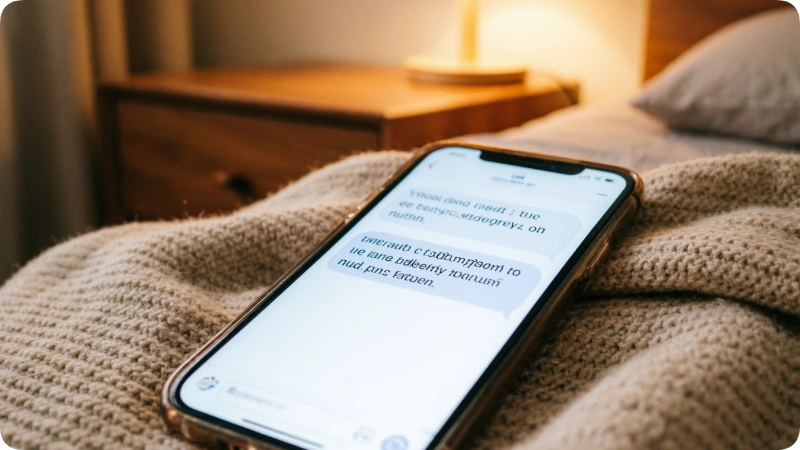
Texting works well for low pressure, ongoing support that doesn’t require an immediate emotional response.
- “Thinking of you today. No pressure to reply.”
- “I’m here whenever you want to talk about anything, or nothing at all.”
- “You don’t have to carry this by yourself.”
Why these work: Short, warm texts show consistent care without demanding an in depth conversation, which can feel more manageable for someone who is emotionally exhausted.
In practice:
After a hard conversation, a simple follow up text like “I’ve been thinking about you. I’m proud of you” can reinforce your support without reopening a heavy discussion.
What to Say If They’re Not Ready to Talk
Respect their pace, and let them know your support doesn’t have a deadline.
- “I’m not going to push you, but I’m here whenever you’re ready.”
- “You don’t owe me an explanation. I just want you to know I care.”
- “Take whatever time you need. I’m not going anywhere.”
Why these work:
Eating disorders often involve control and fear of judgment. Respecting someone’s timeline, rather than pressuring disclosure, helps preserve trust.
How to Respond If They Get Defensive or Deny It
Stay calm and avoid arguing about whether a problem exists. Keep the focus on care, not diagnosis.
- “I hear you. I just want you to know I’m here if that ever changes.”
- “I’m not trying to label anything. I just care about how you’re doing.”
- “Okay, I trust you know yourself best. My door is always open.”
Why these work:
Denial is common with eating disorders, and pushing too hard can damage trust. Leaving the door open without insisting you’re right allows the person to come back to you later without fear of judgment.
Supporting a Family Member vs. a Friend
The right tone can shift slightly depending on the relationship, though the core principles of care and non judgment stay the same.
With a family member, especially a child or teen, you may need to be more directly involved in encouraging treatment:
- “As your parent, I need you to know I’m worried, and I want to get you support, together.”
With a friend or peer, the approach can be more collaborative:
- “I’m not trying to overstep. I just want to walk through this with you if you’ll let me.”
Why this matters: A parent may need to take a more active role in facilitating care, especially for a minor, while a peer relationship often works best with a more equal, supportive tone.
What to Say About Getting Professional Help
Gently encourage professional support without framing it as a punishment or an ultimatum.
- “Talking to a specialist could really help, and I’d love to help you find someone if you’re open to it.”
- “You deserve support from people who understand this well. I can help you look into it.”
- “This isn’t something you have to figure out on your own. There are people trained to help with exactly this.”
Why these work: Eating disorders often require specialized medical and psychological care. Framing professional help as a form of support, rather than a consequence, reduces resistance and shame.
If You’re Worried About Immediate Health or Safety
If someone shows signs of a medical emergency such as fainting, chest pain, extreme weakness, or other severe physical symptoms treat it as urgent and seek emergency medical care right away. Eating disorders carry serious health risks, and professional medical guidance is essential; this article can’t replace that care.
If you’re supporting someone with an eating disorder, connecting them with a specialized provider matters. In the U.S., the National Alliance for Eating Disorders Helpline offers support and can help you find treatment options.
Quick Take:
You are not responsible for treating an eating disorder yourself your role is to offer care and help the person connect with the right professional support.
WHAT NOT TO SAY
- “You don’t even look like you have an eating disorder.” This implies eating disorders have a specific appearance, which isn’t true and can invalidate someone’s experience or make them feel unseen. Instead, say: “I believe you, regardless of what you look like.”
- “Just eat something.” This oversimplifies a complex mental health condition as a matter of willpower. A better response: “I know this is so much more complicated than just eating. I’m here to support you.”
- Any comment about their weight or appearance, even compliments like “you look great” or “you’ve lost weight.” These comments can reinforce disordered thoughts about body image, regardless of intent. Instead, compliment things unrelated to appearance: “You handled that so thoughtfully.”
- “I wish I had your self control.” This romanticizes disordered eating behavior and can feel deeply harmful. Instead, avoid any comparison and say: “I care about your health and wellbeing, not your eating habits.”
- “Everyone has body image issues sometimes.” This minimizes a serious condition by comparing it to common insecurity. Try instead: “This sounds like it’s affecting you in a much deeper way, and I want to understand that.”
Quick Reference Table
| Situation | Best Response | When to Use & Tone |
|---|---|---|
| Starting the conversation | “I’ve noticed you seem to be struggling. Can we talk?” | Private, calm, non-judgmental |
| They open up to you | “Thank you for trusting me. I believe you.” | Validating, present |
| General support (no food/weight focus) | “You matter to me, regardless of anything else.” | Warm, person-centered |
| Texting | “Thinking of you today. No pressure to reply.” | Low pressure, ongoing support |
| Not ready to talk | “I’m here whenever you’re ready. No rush.” | Patient, respectful of their pace |
| They deny or get defensive | “I trust you know yourself best. My door is open.” | Calm, non-confrontational |
| Encouraging professional help | “I’d love to help you find a specialist, if you’re open to it.” | Supportive, not an ultimatum |
| Signs of a medical emergency | Seek emergency medical care immediately. | Urgent, safety first |
Mistakes People Make When Trying to Help Someone With an Eating Disorder
Even when your intentions are good, certain behaviors can unintentionally make someone feel more isolated or ashamed.
Common mistakes include:
Commenting on their weight or appearance
Pressuring them to eat
Comparing their recovery to someone else’s
Assuming they can recover through willpower alone
Giving diet or exercise advice
Becoming frustrated if they aren’t ready to talk
Trying to diagnose them yourself
Instead of trying to fix the problem immediately, focus on listening, showing empathy, and encouraging professional support when appropriate.
FAQs
What not to say to someone with an eating disorder?
Avoid any comments about their weight, appearance, or food intake, even ones meant as compliments, since these can reinforce disordered thinking. Also avoid phrases like “just eat something,” which oversimplify a complex mental health condition.
What do you say to someone with an eating disorder?
Focus on validating their experience without judgment, such as “I believe you, and I’m here for you.” Avoid discussing food, weight, or appearance, and gently encourage professional support when appropriate.
What are the worst things to say to someone with an eating disorder?
The most harmful comments involve appearance or willpower, such as “you don’t look like you have an eating disorder” or “I wish I had your self control.” These statements can deepen shame or unintentionally romanticize disordered eating.
What are helpful things to say to someone with an eating disorder?
Helpful phrases center the person, not their symptoms, like “You matter to me, regardless of anything else” or “I’m proud of you for talking about this.” Avoiding any food or body related commentary is key.
How to compliment a person with an eating disorder?
Keep compliments focused on character, effort, or personality rather than appearance or body for example, “You handled that so thoughtfully” or “I really admire how you show up for people.” Appearance based compliments, even positive ones, can unintentionally reinforce focus on body image.
How to help someone start eating again?
This is a medical and psychological process best guided by a doctor, therapist, or registered dietitian who specializes in eating disorders, since recovery involves both physical and emotional care. Your role as a supportive person is to encourage professional treatment and offer steady, non judgmental presence rather than directing their eating yourself.
What to say to someone who is eating, if I’m trying to be supportive?
Avoid commenting on the food itself, the amount, or their body instead, keep the moment neutral and low pressure, such as talking about something unrelated or simply sitting with them. Drawing attention to the act of eating can increase anxiety for someone with an eating disorder.
What to say to someone with an eating disorder over text?
Send short, warm messages that don’t require an immediate reply and avoid any references to food or appearance, like “Thinking of you today, no need to respond.” Consistency matters more than lengthy messages.
How do I know if someone needs emergency help for an eating disorder?
Signs like fainting, chest pain, extreme weakness, or other severe physical symptoms are medical emergencies and require immediate care. Contact emergency services or go to an emergency room right away if you’re concerned about someone’s immediate physical safety.
Where can someone find professional support for an eating disorder?
In the U.S., the National Alliance for Eating Disorders Helpline can connect people with treatment options and specialized providers. A primary care doctor or therapist can also provide a referral to eating disorder specialists.
Can you accidentally say something triggering to someone with an eating disorder?
Yes. Even comments that seem positive such as complimenting someone’s weight loss or saying they “look healthier” can unintentionally reinforce harmful thoughts. When you’re unsure what to say, focus on their emotions, personality, or wellbeing instead of their appearance.
Should I talk about food if someone has an eating disorder?
Generally, it’s best to avoid discussing what they’re eating, how much they’re eating, or how they look unless they bring it up themselves. Supportive conversations should center on how they’re feeling emotionally rather than their meals or body.
Can someone recover from an eating disorder?
Yes. Recovery is possible with the right combination of medical care, therapy, nutritional support, and encouragement from trusted family and friends. Recovery often takes time, and everyone’s journey is different.
CONCLUSION
Knowing what to say to someone with an eating disorder isn’t about finding perfect words it’s about creating a space where they feel safe, heard, and supported.
Small acts of empathy, patient listening, and avoiding comments about food or appearance can make a meaningful difference in how someone experiences your support.Remember that eating disorders are serious mental health conditions that usually require professional treatment.
While you can’t recover for someone else, your compassion can encourage them to take the next step toward getting help. By focusing on kindness, validation, and consistent support, you can become an important part of their recovery journey while reminding them they don’t have to face it alone.

Hi, I’m Robert Lowth, a passionate expert in English tenses and grammar. I specialize in simplifying complex tense rules to help learners understand and use English with confidence. My goal is to make grammar clear, practical, and easy for everyday communication. tenseshub.com