Have you ever written a sentence like “I sing a song yesterday” and wondered if it was correct? Many English learners get confused about the sing past tense because the verb sing is irregular. Unlike regular verbs that simply add ed, the verb sing changes its form completely.
Understanding the past tense of sing is important because we often talk about songs, performances, celebrations, school events, and memorable moments from the past.
If you are a student, writer, blogger, freelancer, or English learner, using the correct form of sing helps you communicate clearly and confidently.
In this guide, you will learn the correct past tense of sing, how it is formed, sentence structures, common mistakes, grammar rules, comparisons with similar forms, real life examples, and practice exercises. By the end, you’ll know exactly when to use sing, sang, and sung correctly.
Quick Answer (Featured Snippet)
The past tense of sing is sang.
| Verb Form | Word |
|---|---|
| Base Form (V1) | Sing |
| Past Tense (V2) | Sang |
| Past Participle (V3) | Sung |
Examples:
- I sang at the school concert yesterday.
- She sang beautifully during the event.
What Is Sing Past Tense?
The sing past tense refers to the form of the verb sing that describes an action completed in the past.
The verb sing is an irregular verb, meaning it does not follow the regular pattern of adding ed.
Verb Forms of Sing
| Form | Verb |
|---|---|
| Base Form (V1) | Sing |
| Past Tense (V2) | Sang |
| Past Participle (V3) | Sung |
| Present Participle | Singing |
Examples
- I sing every morning.
- I sang yesterday.
- I have sung many songs.
- I am singing now.
The word sang is used when talking about a completed action in the past.
Structure of Sentences of Sing Past Tense
Affirmative Sentences
Subject + sang + object
Examples:
- I sang a song.
- She sang beautifully.
- They sang the national anthem.
Negative Sentences
Subject + did not + sing + object
Examples:
- I did not sing yesterday.
- She didn’t sing at the concert.
- They did not sing the final song.
Interrogative Sentences
Did + subject + sing + object?
Examples:
- Did you sing last night?
- Did she sing at the event?
- Did they sing together?
Formation of Sing Past Tense
The verb sing is irregular.
It changes like this:
| Verb Form | Example |
|---|---|
| V1 (Base Form) | Sing |
| V2 (Past Tense) | Sang |
| V3 (Past Participle) | Sung |
How It Is Formed
Unlike regular verbs:
- Walk → Walked
- Play → Played
The verb sing changes internally:
- Sing → Sang → Sung
Important Note
After did, always use the base form sing, not sang.
✅ Did you sing?
❌ Did you sang?
Contractions
Negative forms are often contracted in everyday English:
- Did not sing → Didn’t sing
- Has not sung → Hasn’t sung
- Have not sung → Haven’t sung
How to Use Sing Past Tense
The past tense sang is used when an action happened and finished in the past.
1. Completed Past Actions
- I sang at the wedding.
- She sang her favorite song.
2. Specific Time in the Past
- We sang yesterday.
- He sang last night.
3. Past Events and Performances
- The choir sang during the ceremony.
- The students sang at the school function.
4. Storytelling
- The bird sang from the tree.
- The crowd cheered while the singer sang.
Pronunciation Tip
- Sing = /sɪŋ/
- Sang = /sæŋ/
- Sung = /sʌŋ/
Pay attention to the vowel sound because many learners mix them up.
Structure / Verb Pattern Table (Sing)
| Sentence Type | Structure | Example |
|---|---|---|
| Affirmative | Subject + sang + object | She sang a song. |
| Negative | Subject + did not + sing + object | She did not sing a song. |
| Interrogative | Did + subject + sing + object? | Did she sing a song? |
| Present Perfect | Subject + has/have + sung | She has sung a song. |
| Past Perfect | Subject + had + sung | She had sung a song. |
| Continuous | Subject + was/were + singing | She was singing a song. |
Real Life Examples
Affirmative Examples
- I sang at my friend’s birthday party.
- She sang a beautiful song.
- We sang together after dinner.
- The children sang happily.
- He sang in the church choir.
Negative Examples
- I did not sing yesterday.
- She didn’t sing during the show.
- They did not sing the final verse.
Interrogative Examples
- Did you sing at the competition?
- Did she sing your favorite song?
- Did they sing well?
Formal Examples
- The artist sang several classical pieces during the event.
- The choir sang with remarkable skill.
Informal Examples
- We sang karaoke all night.
- My brother sang loudly in the car.
Common Mistakes
Many learners make these mistakes when using sing.
| Wrong | Correct | Why? |
|---|---|---|
| I sing yesterday. | I sang yesterday. | Use V2 for past actions. |
| She sung yesterday. | She sang yesterday. | Sung is V3, not V2. |
| Did you sang? | Did you sing? | After did, use base verb (V1). |
| I have sang before. | I have sung before. | After have/has, use V3. |
| He didn’t sang. | He didn’t sing. | After didn’t, use base verb (V1). |
Remember
- Sang = Past Tense (V2)
- Sung = Past Participle (V3)
Key Grammar Rules
Rule 1: Use “sang” for simple past tense
- I sang yesterday.
- She sang at the concert.
Rule 2: Use “sung” with helping verbs
- I have sung that song before.
- She had sung beautifully.
Rule 3: Use “sing” after did
- Did you sing?
- They didn’t sing.
Rule 4: Sing Is an Irregular Verb
It does not become singed when referring to music.
- Sing → Sang → Sung
Rule 5: Use Time Expressions Naturally
- yesterday
- last week
- last night
- two days ago
Examples:
- We sang last night.
- He sang two days ago.
Comparisons with Similar Grammar Forms
Sing vs Sang
| Form | Usage |
| Sing | Present tense |
| Sang | Past tense |
Examples:
- I sing every day.
- I sang yesterday.
Sang vs Sung
| Form | Usage |
| Sang | Past tense (V2) |
| Sung | Past participle (V3) |
Examples:
- She sang at the event.
- She has sung at many events.
Sing vs Singing
| Form | Usage |
| Sing | Base form |
| Singing | Continuous form |
Examples:
- I sing every morning.
- I am singing now.
Related grammar topics learners often study include irregular verbs, past tense verbs, past participles, present perfect tense, and continuous tenses.
Exercises
Exercise 1: Fill in the Blanks
Choose the correct form.
- I _____ at the concert yesterday.
- She has _____ that song many times.
- Did you _____ at the party?
- We _____ together last night.
- They had _____ before the show started.
Exercise 2: Correct the Sentences
- I sung yesterday.
- Did she sang well?
- He have sung that song.
- We didn’t sang at school.
- They sing at the event last week.
Exercise 3: Rewrite in Past Tense
- I sing every day.
- She sings beautifully.
- They sing in the choir.
- We sing together.
- He sings on stage.
Exercise 4: Multiple Choice
1. What is the past tense of sing?
A) Singed
B) Sung
C) Sang
D) Singing
2. Which sentence is correct?
A) She sung yesterday.
B) She sang yesterday.
C) She sing yesterday.
D) She singing yesterday.
3. Which form is the past participle?
A) Sing
B) Sang
C) Singing
D) Sung
Answer Key
Exercise 1
- sang
- sung
- sing
- sang
- sung
Exercise 2
- I sang yesterday.
- Did she sing well?
- He has sung that song.
- We didn’t sing at school.
- They sang at the event last week.
Exercise 3
- I sang every day.
- She sang beautifully.
- They sang in the choir.
- We sang together.
- He sang on stage.
Exercise 4
- C
- B
- D
FAQs
What is the past tense of sing?
The past tense of sing is sang.
Is sing a regular or irregular verb?
It is an irregular verb.
What is the past participle of sing?
The past participle is sung.
Is “I sung yesterday” correct?
No. The correct sentence is:
I sang yesterday.
When do we use sung?
Use sung with helping verbs such as has, have, had, and been.
- I have sung before.
- She had sung beautifully.
What is the difference between sang and sung?
Sang is the past tense.
Sung is the past participle.
Can I say “Did you sang?”
No.
Correct:
Conclusion
The sing past tense is sang, while the past participle is sung. Since sing is an irregular verb, it does not follow the normal ed pattern used by regular verbs.
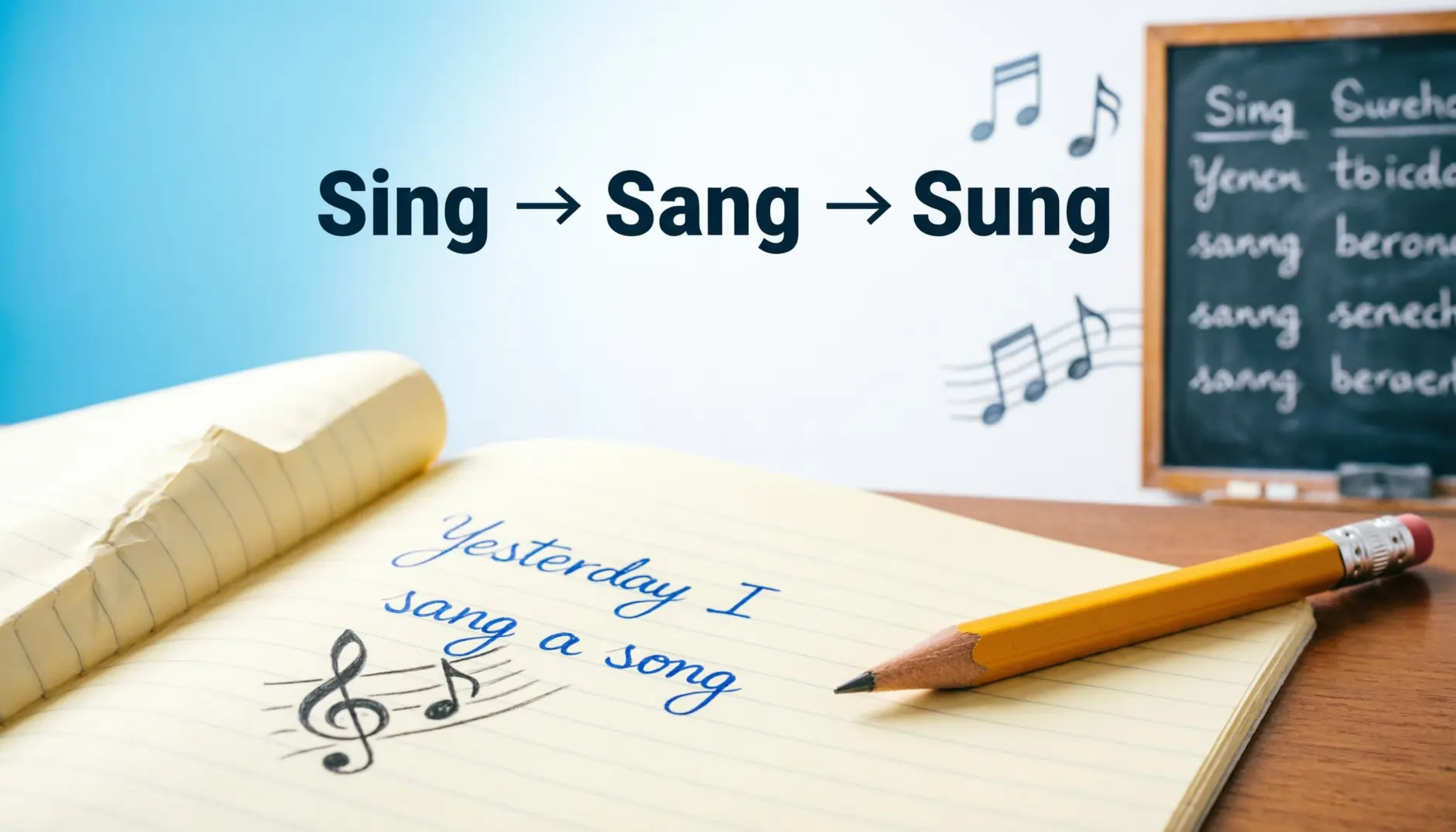
Remember the simple sequence: Sing → Sang → Sung. Use sang for completed actions in the past, sung with helping verbs such as have, has, and had, and sing after did in questions and negative sentences.
Learning these forms will help you speak and write more accurately in everyday English. Practice using sing, sang, and sung in your own sentences, conversations, and writing exercises. With regular practice, the correct forms will become natural and easy to remember.

Hi, I’m Robert Lowth, a passionate expert in English tenses and grammar. I specialize in simplifying complex tense rules to help learners understand and use English with confidence. My goal is to make grammar clear, practical, and easy for everyday communication. tenseshub.com