Have you ever wondered if the past tense of dream is “dreamed” or “dreamt”? Both forms can be correct, which often confuses English learners. Unlike many verbs that have only one accepted past form, dream has two common past tense forms: dreamed and dreamt.
The verb dream can describe what happens in your mind while sleeping, or it can express a hope, goal, or ambition. For example, you might say, “I dreamed about flying,” or “She dreamt of becoming a doctor.” Both sentences are grammatically correct.
Understanding the difference between dreamed and dreamt helps students, writers, bloggers, and English learners choose the right form for different situations.
This guide explains the dream past tense, its verb forms, sentence patterns, usage rules, common mistakes, real life examples, and related grammar forms in simple English.
Quick Answer
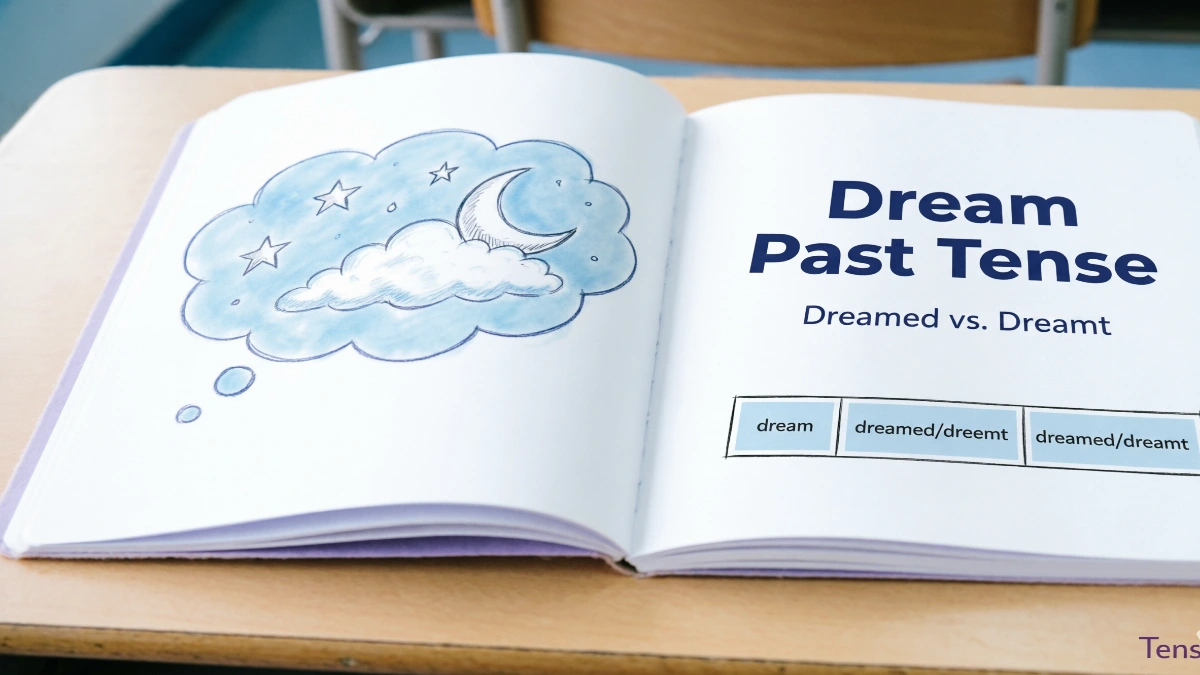
The past tense of dream can be dreamed or dreamt. Both forms are correct, but dreamed is more common in American English, while dreamt is especially common in British English.\
| Verb Form | Correct Forms | Example |
|---|---|---|
| Base Form | dream | I dream about the future. |
| Past Tense | dreamed / dreamt | She dreamed about flying. |
| Past Participle | dreamed / dreamt | He has dreamt of success. |
| -ing Form | dreaming | They are dreaming of a better life. |
What Is the Dream Past Tense?
The dream past tense refers to the past forms of the verb dream. The verb dream means to experience thoughts or images while sleeping. It can also mean to imagine or hope for something in the future.
The two accepted past tense forms are:
- Dreamed
- Dreamt
Examples:
- I dreamed about my childhood home.
- I dreamt about my childhood home.
- She dreamed of becoming a writer.
- She dreamt of becoming a writer.
Both forms express a past action or thought.
Dream as a Verb
As a verb, dream can have two main meanings.
1. To See Images While Sleeping
- I dreamed about a beautiful garden.
- He dreamt that he was flying.
- She dreamed of her old school.
2. To Hope for or Imagine Something
- They dreamed of owning a house.
- He dreamt of becoming a professional athlete.
- We dreamed about traveling around the world.
Dream as a Noun
The word dream can also be used as a noun.
- I had a strange dream last night.
- Her dream is to become a doctor.
- Winning the competition was a dream come true.
When used as a noun, dream does not have a past tense form. The surrounding verb changes instead.
- I had a dream last night.
- She remembered her dream.
Structure of Sentences of the Dream Past Tense
The simple past tense of dream follows the usual sentence patterns. The verb may appear as dreamed or dreamt.
Affirmative Sentences
Pattern:
Subject + dreamed/dreamt + object or complement
Examples:
- I dreamed about my old house.
- She dreamt of becoming a singer.
- They dreamed about traveling abroad.
- He dreamed a strange dream.
Negative Sentences
Pattern:
Subject + did not + dream + object or complement
After did not, use the base form dream, not dreamed or dreamt.
Examples:
- I did not dream about the accident.
- She didn’t dream of becoming famous.
- They did not dream about the future.
- He didn’t dream that he was flying.
Interrogative Sentences
Pattern:
Did + subject + dream + object or complement?
Examples:
- Did you dream about me?
- Did she dream of becoming a writer?
- Did they dream about the trip?
- Did he dream that he was falling?
Short answers:
- Yes, I did.
- No, I didn’t.
- Yes, she did.
- No, they didn’t.
Formation of the Dream Past Tense
The verb dream has two accepted past tense and past participle forms:
dream → dreamed
dream → dreamt
Main Verb Forms
| Form | American English | British English |
|---|---|---|
| V1: Base Form | dream | dream |
| V2: Simple Past | dreamed | dreamed / dreamt |
| V3: Past Participle | dreamed | dreamed / dreamt |
| V4: Present Participle | dreaming | dreaming |
| V5: Third Person Singular | dreams | dreams |
Both dreamed and dreamt are correct. However, their frequency can vary by region and writing style.
Dreamed
Dreamed follows the regular verb pattern by adding ed.
dream + ed = dreamed
Examples:
- She dreamed about the ocean.
- He dreamed of becoming rich.
- We have dreamed about this opportunity.
Dreamt
Dreamt is an irregular or shortened past form commonly used in British English and other varieties of English.
Examples:
- I dreamt about my grandparents.
- She dreamt of visiting Paris.
- They had dreamt of success for many years.
The ing Form
The present participle of dream is dreaming.
dream + ing = dreaming
Examples:
- I am dreaming about my vacation.
- She was dreaming of a better future.
- They are dreaming about buying a new home.
Helping Verbs
Different helping verbs are used with the verb forms:
- Did you dream about the event?
- She has dreamed of becoming a teacher.
- He had dreamt about the same place.
- They were dreaming about their plans.
- The goal was dreamed of by many people.
The passive construction with dream is less common, but it may appear in formal or literary writing.
How to Use the Dream Past Tense
Use dreamed or dreamt to describe a dream, hope, or imagined experience that happened in the past.
1. Talking About Dreams During Sleep
Use the past tense when describing something you saw or experienced in a dream.
- I dreamed about a talking dog last night.
- She dreamt that she was flying.
- He dreamed about his childhood friends.
- We dreamed of walking through a strange city.
Both forms are correct:
- I dreamed about the ocean.
- I dreamt about the ocean.
2. Talking About Past Hopes or Goals
The verb can describe an ambition someone had in the past.
- She dreamed of becoming a doctor.
- He dreamt of playing for the national team.
- They dreamed about starting a business.
- I dreamed of visiting many countries.
In this meaning, dream of and dream about are both possible, although dream of often sounds more natural when discussing goals.
3. Talking About an Unreal or Imagined Situation
Dream can describe something that seemed impossible or imaginary.
- I never dreamed that I would meet my favorite author.
- She never dreamt that she would win the prize.
- We dreamed that the small team could defeat the champions.
The phrase never dreamed is common in English.
Example:
I never dreamed that I would become a teacher.
This means the speaker never imagined that the event would happen.
4. Using Dream in the Past Perfect Tense
Use had dreamed or had dreamt to describe a dream or hope that happened before another past event.
- She had dreamed of becoming a writer before she published her first book.
- He had dreamt about the place before visiting it.
- They had dreamed of success for many years before opening the company.
5. Using Dream in the Present Perfect Tense
Use has dreamed, have dreamed, has dreamt, or have dreamt when connecting a past dream or ambition to the present.
- She has dreamed of this moment for years.
- He has dreamt about traveling since childhood.
- We have dreamed of owning a home.
6. Dreamed vs. Dreamt in Different Varieties of English
Both forms are correct, but usage differs slightly.
- Dreamed is very common in American English.
- Dreamt is especially common in British English.
- Dreamed may sound more natural in international or formal writing because it is easily understood everywhere.
- Dreamt is shorter and often appears in literature, poetry, and British writing.
Choose one form and use it consistently in the same piece of writing.
Structure or Verb Pattern Table
| Grammar Use | Pattern | Example |
|---|---|---|
| Simple Present | Subject + dream/dreams | She dreams of success. |
| Simple Past | Subject + dreamed/dreamt | She dreamed of success. |
| Negative Past | Subject + did not + dream | She did not dream of success. |
| Past Question | Did + subject + dream? | Did she dream of success? |
| Present Perfect | Subject + has/have + dreamed/dreamt | She has dreamed of success. |
| Past Perfect | Subject + had + dreamed/dreamt | She had dreamt of success. |
| Past Continuous | Subject + was/were + dreaming | She was dreaming of success. |
| Future Form | Subject + will + dream | She will dream of success. |
Real Life Examples
Affirmative Examples
- I dreamed about my childhood home last night.
- She dreamt of becoming a scientist.
- He dreamed that he was flying over the mountains.
- They dreamed about opening a small café.
- We dreamt of visiting another country.
- The child dreamed about a magical castle.
- She dreamed of winning the competition.
- He dreamt about meeting his favorite actor.
Negative Examples
- I did not dream about anything last night.
- She didn’t dream of becoming famous.
- He did not dream that the plan would succeed.
- They didn’t dream about moving abroad.
- We did not dream of such a wonderful opportunity.
Interrogative Examples
- Did you dream about the trip?
- Did she dream of becoming a doctor?
- Did he dream that he was falling?
- Did they dream about their future?
- Did you dream of meeting your favorite writer?
Formal Examples
- The organization had dreamed of expanding its services worldwide.
- The young researcher dreamt of making an important discovery.
- The team had dreamed of achieving international recognition.
Informal Examples
- I dreamed about pizza last night.
- She dreamt she was late for school.
- We dreamed of taking a long vacation.
- I never dreamed this would happen.
Examples with “Dream Come True”
- Her dream came true after many years of hard work.
- He had dreamed of becoming a pilot, and his dream finally came true.
- Winning the award was a dream come true for her.
Common Mistakes
Mistake 1: Thinking Only “Dreamed” Is Correct
Incorrect:
Dreamt is always wrong.
Correct:
Dreamed and dreamt are both correct.
Explanation: Both forms are accepted. Dreamed is more common in American English, while dreamt is especially common in British English.
Mistake 2: Using the Past Form After Did
Incorrect:
Did you dreamed about me?
Correct:
Did you dream about me?
Explanation: After did, use the base form of the verb.
Mistake 3: Using “Dreamed” After Did Not
Incorrect:
She did not dreamt about the trip.
Correct:
She did not dream about the trip.
Explanation: The correct pattern is did not + dream.
Mistake 4: Confusing Dreamed with Dreaming
Incorrect:
I was dreamed about my vacation.
Correct:
I was dreaming about my vacation.
Explanation: Use the ing form after was or were in the past continuous tense.
Mistake 5: Using “Dreamt” in Every Context Without Considering Style
This is not grammatically incorrect, but it may not match the style of your audience.
- American audience: dreamed may sound more natural.
- British audience: dreamt is common and natural.
- International audience: Either form is acceptable.
Mistake 6: Confusing “Dream Of” and “Dream About”
Both can be correct, but they often have different uses.
- I dreamed about a strange animal.
- She dreamed of becoming a doctor.
Dream about is common for sleep experiences. Dream of often introduces hopes, ambitions, or goals.
Key Grammar Rules
- The past tense of dream is dreamed or dreamt.
- She dreamed of success.
- She dreamt of success.
- Both past forms are grammatically correct.
Choose according to regional preference and writing style. - Use the base form after did or did not.
- Did he dream about it?
- He did not dream about it.
- The past participle can also be dreamed or dreamt.
- She has dreamed of becoming a writer.
- She has dreamt of becoming a writer.
- The ing form is dreaming.
- He was dreaming about the future.
- Use “dream of” often for ambitions and goals.
- They dream of owning a house.
- Use “dream about” often for sleep related experiences.
- I dreamed about my old school.
Comparisons with Similar Grammar Forms
Dreamed vs. Dreamt
| Form | Usage | Example |
|---|---|---|
| Dreamed | Very common in American English | I dreamed about the ocean. |
| Dreamt | Especially common in British English | I dreamt about the ocean. |
Both forms are correct and have the same meaning.
Dream vs. Dreamed
- Dream is the base or present form.
- Dreamed is one past tense form.
Examples:
- I dream about the future.
- I dreamed about the future last night.
Dream vs. Dreaming
- Dream is used for the base or simple present form.
- Dreaming is used for continuous forms.
Examples:
- I dream of becoming a writer.
- I am dreaming of becoming a writer.
Dreamed vs. Had Dreamed
- Dreamed/dreamt describes a past action.
- Had dreamed/had dreamt describes an action that happened before another past action.
Examples:
- She dreamed of becoming a doctor.
- She had dreamed of becoming a doctor before entering medical school.
Dreamed vs. Hoped
Both verbs can describe future wishes, but they are not always interchangeable.
- Dreamed of often suggests a strong ambition or an imagined goal.
- Hoped to often expresses a desired result.
Examples:
- He dreamed of becoming an astronaut.
- He hoped to pass the exam.
Dreamed vs. Imagined
- Dreamed can describe sleep experiences or strong ambitions.
- Imagined means creating a picture or idea in your mind.
Examples:
- I dreamed about flying last night.
- I imagined myself flying over the mountains.
Exercises
Exercise 1: Fill in the Blanks
Complete each sentence with the correct form of dream.
- She ______ of becoming a teacher when she was young.
- I have ______ about this moment for years.
- Did you ______ about the strange house?
- He was ______ of traveling around the world.
- They had ______ of starting a business.
- I did not ______ about the accident.
- She ______ that she was flying.
- We are ______ of buying a new home.
Exercise 2: Choose the Correct Answer
- Which forms are correct past forms of dream?
a) dreamed only
b) dreamt only
c) dreamed and dreamt - Which sentence is correct?
a) Did you dreamed about me?
b) Did you dream about me?
c) Did you dreamt about me? - Which form is used in the past continuous tense?
a) dream
b) dreamed
c) dreaming - Which sentence is correct?
a) She has dreamt of success.
b) She has dream of success.
c) She has dreaming of success. - Which form is often more common in American English?
a) dreamt
b) dreamed
c) dreaming
Exercise 3: Correct the Mistakes
Rewrite each sentence correctly.
- He did not dreamed about the trip.
- Did she dreamt of becoming a doctor?
- I was dreamed about my childhood.
- They had dreamt of success.
- She dreams of becoming a pilot yesterday.
Exercise 4: Rewrite the Sentences
Change each sentence as directed.
- She dreamed of becoming a writer.
Change into a negative sentence. - He dreamt about the ocean.
Change into a question. - They dreamed of owning a house.
Change into the present perfect tense. - I dreamed about my old school.
Change into the past continuous tense. - She dreamed of becoming a doctor.
Replace the past form with the other accepted past form.
Answer Key
Exercise 1
- dreamed/dreamt
- dreamed/dreamt
- dream
- dreaming
- dreamed/dreamt
- dream
- dreamed/dreamt
- dreaming
Exercise 2
- c) dreamed and dreamt
- b) Did you dream about me?
- c) dreaming
- a) She has dreamt of success.
- b) dreamed
Exercise 3
- He did not dream about the trip.
- Did she dream of becoming a doctor?
- I was dreaming about my childhood.
- They had dreamt of success.
This sentence is already correct. - She dreamed/dreamt of becoming a pilot yesterday.
Exercise 4
- She did not dream of becoming a writer.
- Did he dream about the ocean?
- They have dreamed/dreamt of owning a house.
- I was dreaming about my old school.
- She dreamt of becoming a doctor.
FAQs
What is the past tense of dream?
The past tense of dream is dreamed or dreamt. Both are correct.
Is “dreamt” grammatically correct?
Yes. Dreamt is a correct past tense and past participle form of dream. It is especially common in British English.
Is “dreamed” or “dreamt” more common?
Dreamed is generally more common in American English. Dreamt is especially common in British English.
What are the three forms of dream?
The three main forms are:
Dream Dreamed/Dreamt Dreamed/Dreamt
What is the past participle of dream?
The past participle is dreamed or dreamt.
Examples:
- She has dreamed of success.
- She has dreamt of success.
What is the ing form of dream?
The ing form is dreaming.
Example:
He was dreaming about the future.
Should I use dreamed or dreamt in formal writing?
Both are correct. However, dreamed may be a safer choice for international or American audiences. The most important point is to use the form consistently.
What is the difference between dream of and dream about?
Dream about often describes something experienced during sleep. Dream of often describes a hope, ambition, or goal.
- I dreamed about a strange place.
- She dreamed of becoming a doctor.
Is “dreamed” a regular verb form?
Yes. Dreamed is formed by adding ed to the base verb dream.
Can I say “I dreamt last night”?
Yes, but it is usually more natural to say:
I dreamt about something last night.
You can also say:
I had a dream last night.
Conclusion
The past tense of dream has two correct forms: dreamed and dreamt. Both forms can describe a past sleeping experience, hope, ambition, or imagined situation. Dreamed is especially common in American English, while dreamt is widely used in British English.
Remember that the base form comes after did and did not: “Did you dream?” and “She did not dream.” The past participle can also be dreamed or dreamt, while the continuous form is dreaming.
For everyday and international writing, either past form is acceptable. Choose the one that suits your audience and use it consistently. With regular practice, you will be able to use dream, dreamed, dreamt, and dreaming naturally in both speaking and writing.