Have you ever tried to say “I was tired” or “We were at home” in Spanish and felt confused about which form of estar to use? Many Spanish learners struggle with estar past tense conjugation because Spanish has more than one past tense, and the verb estar changes differently in each one.
The verb estar means “to be,” but it is usually used for temporary conditions, emotions, locations, and ongoing states. When talking about the past, learners often wonder whether they should use estuve, estaba, or another form.
Understanding the past tense of estar is important because it appears in everyday conversations. If you want to describe where someone was, how they felt, or what was happening in the past, you will need these conjugations regularly.
In this guide, you will learn the different past tense forms of estar, how they are formed, when to use them, common mistakes to avoid, and plenty of real life examples to help you master them.
Quick Answer (Featured Snippet)
The estar past tense conjugation changes depending on the Spanish past tense being used. The two most common forms are the preterite (estuve, estuviste, estuvo…) and the imperfect (estaba, estabas, estaba…).
| Tense | Example | Meaning |
|---|---|---|
| Preterite | Yo estuve cansado. | I was tired (finished / temporary situation in a specific moment). |
| Imperfect | Yo estaba cansado. | I was tired / I used to be tired (ongoing or background state). |
What Is Estar Past Tense Conjugation?
Estar past tense conjugation refers to changing the verb estar into forms that describe states, conditions, emotions, or locations in the past.
The verb estar is one of the two Spanish verbs that mean “to be.” While ser is used for permanent characteristics, estar is used for temporary situations.
Examples:
- Estoy feliz. (I am happy.)
- Estoy en casa. (I am at home.)
When talking about the past:
- Estaba feliz. (I was happy.)
- Estuve en casa. (I was at home.)
The choice between different past tense forms depends on the meaning you want to express.
Structure of Sentences of Estar Past Tense Conjugation
Affirmative Sentences
Formula:
Subject + estar (past form) + complement
Examples:
- Yo estaba enfermo.
- Nosotros estuvimos en Madrid.
- Ella estaba ocupada.
Negative Sentences
Formula:
Subject + no + estar (past form) + complement
Examples:
- Yo no estaba cansado.
- Ellos no estuvieron aquí.
- Nosotros no estábamos listos.
Interrogative Sentences
Formula:
¿Estar (past form) + subject + complement?
Examples:
- ¿Estabas en casa?
- ¿Estuvieron ustedes allí?
- ¿Estaba ella feliz?
Formation of Estar Past Tense Conjugation
Spanish uses several past tenses, but the most important for estar are the preterite and imperfect.
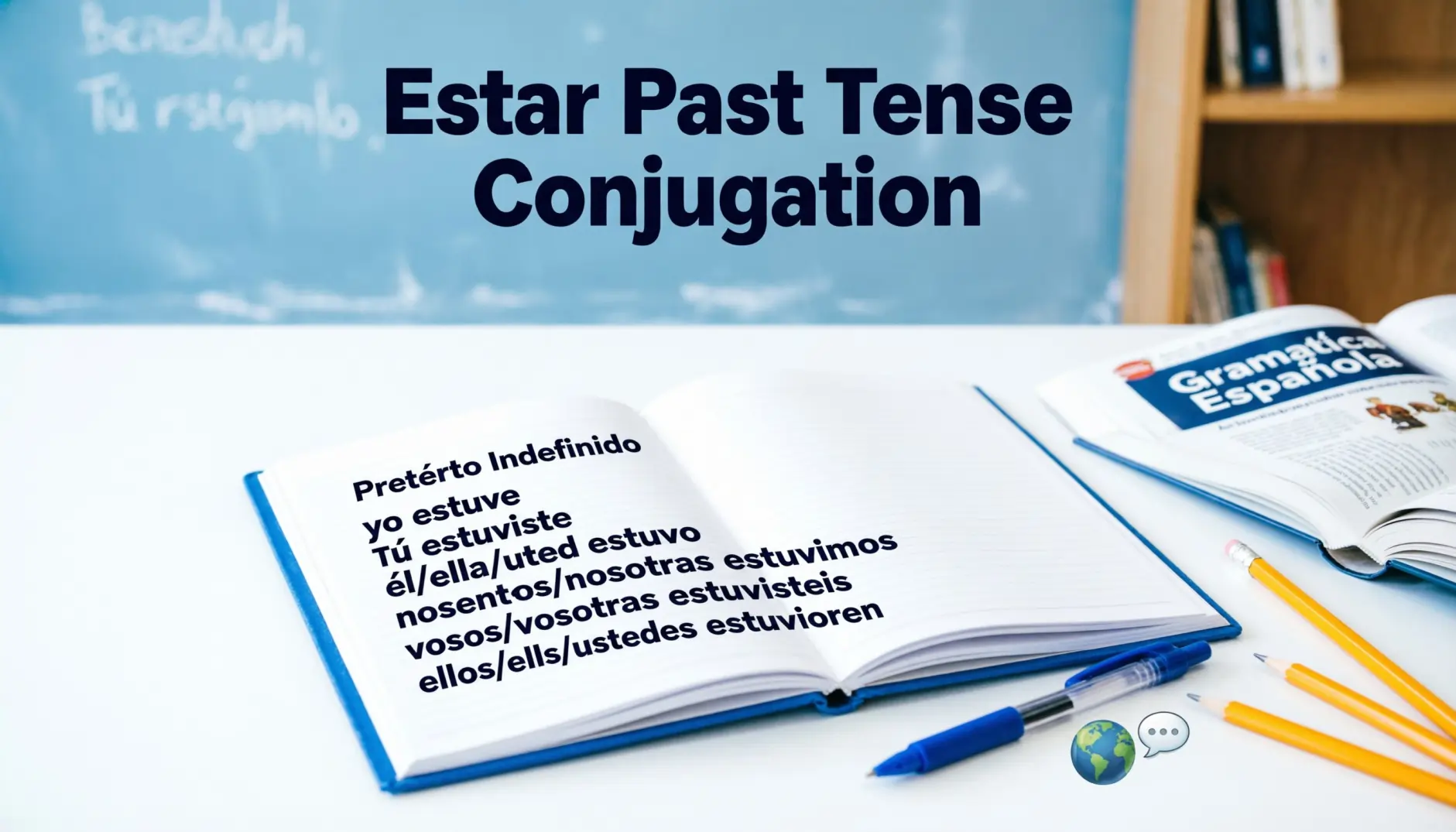
Preterite Conjugation of Estar
The preterite is used for completed actions or states in the past.
| Subject | Conjugation |
|---|---|
| Yo | estuve |
| Tú | estuviste |
| Él / Ella / Usted | estuvo |
| Nosotros / Nosotras | estuvimos |
| Vosotros / Vosotras | estuvisteis |
| Ellos / Ellas / Ustedes | estuvieron |
Examples:
- Estuve en la oficina.
- Estuvieron aquí ayer.
Imperfect Conjugation of Estar
The imperfect describes ongoing, repeated, or background situations in the past.
| Subject | Conjugation |
|---|---|
| Yo | estaba |
| Tú | estabas |
| Él / Ella / Usted | estaba |
| Nosotros / Nosotras | estábamos |
| Vosotros / Vosotras | estabais |
| Ellos / Ellas / Ustedes | estaban |
Examples:
- Estaba cansado.
- Estaban en casa.
Is Estar Regular or Irregular?
Estar is irregular in the preterite tense.
Examples:
- estuve
- estuviste
- estuvo
The imperfect forms are more regular and easier to memorize.
How to Use Estar Past Tense Conjugation
1. To Describe Past Feelings or Emotions
Examples:
- Estaba feliz.
- Estaban preocupados.
- Yo estaba nervioso antes del examen.
2. To Describe Past Locations
Examples:
- Estábamos en el parque.
- Ella estaba en casa.
- Mis amigos estaban aquí.
3. To Describe Ongoing Conditions in the Past
Examples:
- El clima estaba frío.
- La comida estaba deliciosa.
- El coche estaba limpio.
4. To Show a Completed State in the Past
Examples:
- Estuve enfermo durante una semana.
- Estuvieron en México el verano pasado.
- Estuvimos juntos todo el día.
5. To Form the Past Progressive
The imperfect form of estar combines with a gerund ( ando, iendo).
Examples:
- Estaba estudiando.
- Estaban jugando.
- Estábamos trabajando.
Structure / Verb Pattern Table (Past Spanish: Estar)
| Usage | Formula | Example |
|---|---|---|
| Past location | Subject + estaba / estuve + place | Yo estaba en casa. |
| Past emotion | Subject + estaba / estuve + emotion | Ella estaba feliz. |
| Negative form | Subject + no + estaba / estuve | No estaba cansado. |
| Question form | ¿Estaba / estuvo + subject? | ¿Estuvo aquí? |
| Past progressive | Estaba + gerund | Estaba leyendo. |
Real Life Examples
Daily Conversations
- Yo estaba en casa ayer.
- Mi hermano estaba cansado después del trabajo.
- Nosotros estábamos listos para salir.
- Ella estaba muy emocionada.
Completed Situations
- Estuve en España el año pasado.
- Estuvieron en la reunión.
- Estuvimos en el concierto.
Questions
- ¿Estabas ocupado?
- ¿Estuvieron ustedes allí?
- ¿Estaba tu amigo en casa?
Negative Examples
- No estaba enfermo.
- No estuvimos en la oficina.
- No estaban preparados.
Informal Speech
- Estaba súper feliz.
- Estábamos viendo una película.
- ¿Dónde estabas?
Formal Speech
- Usted estuvo presente en la conferencia.
- Los participantes estuvieron satisfechos.
- La reunión estuvo organizada correctamente.
Common Mistakes
Mistake 1: Using Ser Instead of Estar
❌ Era cansado.
✅ Estaba cansado.
Why? Temporary conditions use estar.
Mistake 2: Mixing Preterite and Imperfect
❌ Estuve feliz cuando era niño.
✅ Estaba feliz cuando era niño.
Why? Childhood conditions are ongoing, so imperfect is better.
Mistake 3: Wrong Preterite Form
❌ Estaba ayer en Madrid. (when referring to a completed visit)
✅ Estuve ayer en Madrid.
Mistake 4: Forgetting Agreement
❌ Ella estaba cansado.
✅ Ella estaba cansada.
Why? Adjectives must agree with gender.
Mistake 5: Incorrect Progressive Form
❌ Estaba estudiar.
✅ Estaba estudiando.
Key Grammar Rules
Rule 1: Use Estar for Temporary Conditions
- Estaba enfermo.
- Estaban cansados.
Rule 2: Use Imperfect for Ongoing Past Situations
- Estaba lloviendo.
- Estábamos ocupados.
Rule 3: Use Preterite for Completed Situations
- Estuve allí ayer.
- Estuvieron en París.
Rule 4: Use Estar for Locations
- Estaba en la biblioteca.
- Estuvimos en la playa.
Rule 5: Use Estar + Gerund for Past Progressive
- Estaba trabajando.
- Estaban estudiando.
Comparisons with Similar Grammar Forms
Estar vs Ser in the Past
| Verb | Use | Meaning in Past |
|---|---|---|
| Estar | Temporary state | How someone felt or what was happening at a moment |
| Ser | Permanent characteristic | Identity, traits, or lasting qualities |
Examples:
- Estaba enfermo. (temporary)
- Era médico. (identity/profession)
Preterite vs Imperfect of Estar
| Feature | Preterite (Estuve) | Imperfect (Estaba) |
|---|---|---|
| Meaning | Completed state | Ongoing / past state |
| Usage | Specific, finished moment | Background description or ongoing condition |
| Focus | What happened / changed | What was going on |
| Form | Estuve | Estaba |
Examples:
- Estuve enfermo tres días.
- Estaba enfermo cuando llamaste.
Estar vs Haber
Examples:
- Estaba en casa. (location)
- Había una casa. (existence)
These verbs have very different meanings and should not be confused.
Exercises
Exercise 1: Fill in the Blanks
Choose the correct form of estar.
- Yo ______ cansado.
- Nosotros ______ en casa.
- Ella ______ feliz ayer.
- Ellos ______ estudiando.
- Tú ______ en la oficina.
Exercise 2: Correct the Mistakes
- Yo era cansado.
- Ella estuvo feliz cuando era niña.
- Estaba estudiar.
- Ellos no estuvo aquí.
- Tú estaba ocupado.
Exercise 3: Rewrite the Sentences
- I was at home.
- We were tired.
- She was studying.
- They were happy.
- Were you at school?
Exercise 4: Multiple Choice
- Which form means “I was” (preterite)?
A. estaba
B. estuve
C. estuvieron
D. estaban
- Which form is imperfect?
A. estuvo
B. estuviste
C. estaba
D. estuvieron
- Which sentence is correct?
A. Estaba estudiar.
B. Estuve estudiando.
C. Estuve estudiar.
D. Estaban estudiar.
Answer Key
Exercise 1
- estaba / estuve
- estábamos / estuvimos
- estuvo / estaba
- estaban
- estabas / estuviste
Exercise 2
- Estaba cansado.
- Ella estaba feliz cuando era niña.
- Estaba estudiando.
- Ellos no estuvieron aquí.
- Tú estabas ocupado.
Exercise 3
- Yo estaba en casa.
- Nosotros estábamos cansados.
- Ella estaba estudiando.
- Ellos estaban felices.
- ¿Estabas en la escuela?
Exercise 4
- B
- C
- B
FAQs
What is the past tense of estar?
The most common past forms are estuve (preterite) and estaba (imperfect).
Is estar irregular in the past tense?
Yes. The preterite forms of estar are irregular.
What is the difference between estaba and estuve?
Estaba describes ongoing or repeated situations, while estuve describes completed situations.
How do you say “I was” in Spanish?
You can say:
- Estaba (ongoing state)
- Estuve (completed state)
The correct choice depends on context.
Can estar be used for locations in the past?
Yes.
Examples:
- Estaba en casa.
- Estuve en Madrid.
How do I form the past progressive with estar?
Use:
estar (imperfect) + gerund
Example:
- Estaba leyendo. (I was reading.)
Conclusion
Learning estar past tense conjugation is an important step toward speaking and writing Spanish naturally. The two forms you will use most often are estaba (imperfect) and estuve (preterite). While both can translate as “was” or “were,” they express different ideas.
The imperfect describes ongoing situations, emotions, and background information, while the preterite focuses on completed situations or specific periods in the past.
As you practice, pay special attention to real life contexts such as describing feelings, locations, and actions in progress. Reading Spanish stories, listening to conversations, and creating your own example sentences can help these forms become automatic.
With regular practice, choosing between estaba and estuve will become much easier, and your Spanish will sound more natural and accurate.

Hi, I’m Noah Bester, a tenses expert passionate about simplifying English grammar. I create practical, easy-to-understand guides to help learners master tenses with confidence. My goal is to make grammar clear, useful, and applicable in everyday communication. tenseshub.com