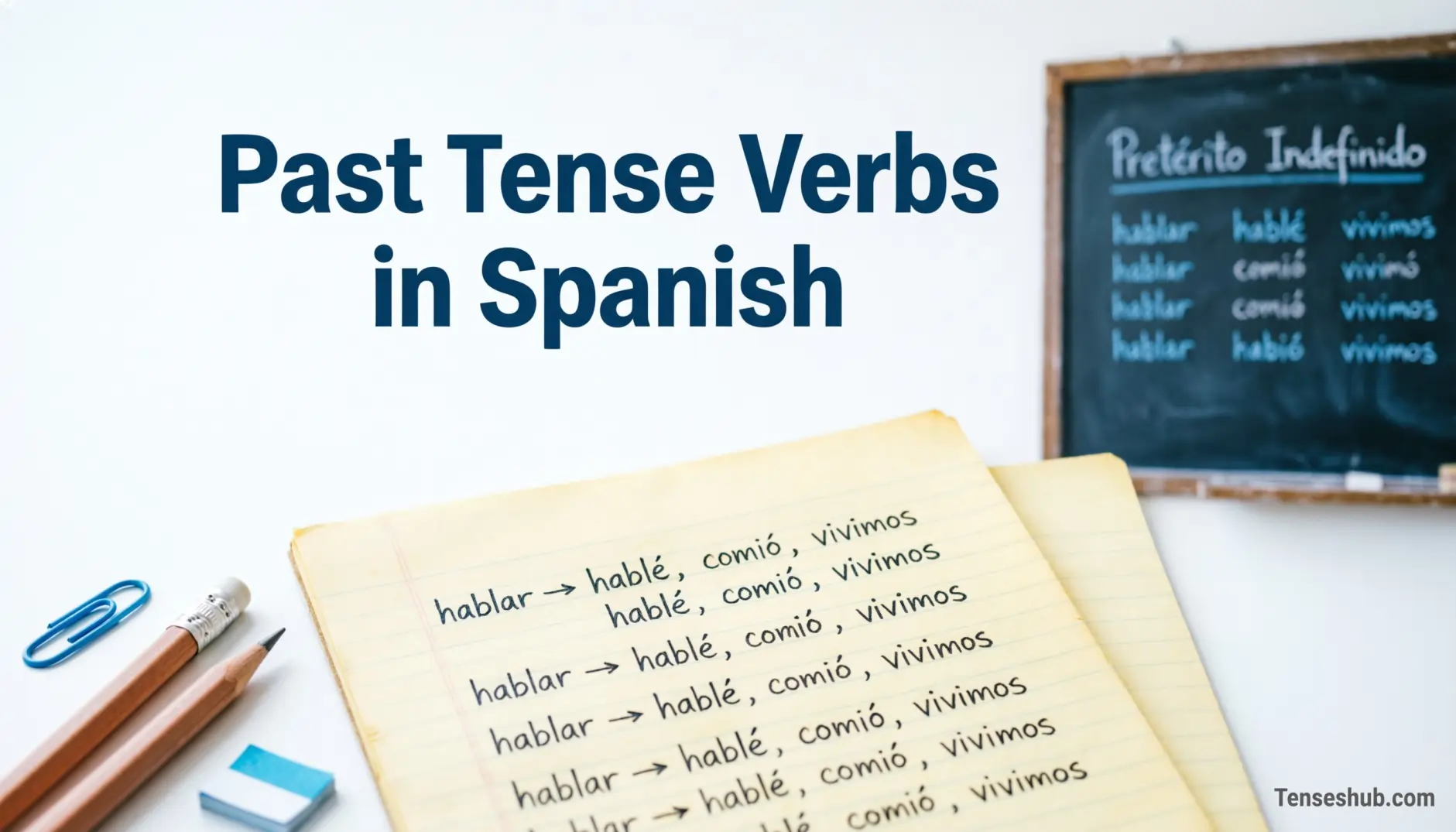
Have you ever wanted to say “I ate,” “she spoke,” or “we went” in Spanish and suddenly felt stuck? Many learners feel confident with present tense verbs, but past tense verbs in Spanish can feel confusing at first.
That confusion is normal. Spanish has more than one way to talk about the past, and choosing the right one can feel tricky. Should you use hablé or hablaba? Comió or comía?
The good news is that once you understand the basic patterns, Spanish past tense becomes much easier.
Learning Spanish past tense verbs helps you talk about yesterday, last week, childhood memories, completed actions, and stories from your life. It’s something you’ll use in conversations all the time.
In this guide, you’ll learn what past tense verbs in Spanish are, how to form them, how to use them naturally, common mistakes to avoid, and exercises to help you practice with confidence.
Quick Answer
Past tense verbs in Spanish describe actions that happened in the past.
The two most common past tenses are:
Spanish Tenses: Preterite vs Imperfect
| Spanish Tense | Main Use | Example | Meaning |
|---|---|---|---|
| Preterite | Completed action | hablé | I spoke |
| Imperfect | Ongoing or repeated past action | hablaba | I was speaking / I used to speak |
Use the imperfect for habits, background details, or actions in progress in the past.
What Are Past Tense Verbs in Spanish?
Past tense verbs in Spanish show that an action already happened.
They tell us:
- what happened yesterday
- what happened earlier today
- what someone used to do
- what was happening in the past
Examples:
- Yo comí pizza ayer. → I ate pizza yesterday.
- Ella estudió anoche. → She studied last night.
- Cuando era niño, jugaba fútbol. → When I was a child, I used to play soccer.
Spanish past tense is important because native speakers use it every day when:
- telling stories
- sharing memories
- talking about vacations
- explaining what happened
- describing childhood
Unlike English, Spanish often separates completed actions from repeated past actions with different verb forms.
That’s why learners often mix them up.
Structure of Sentences of Past Tense Verbs in Spanish
Spanish sentence order is usually simple.
Affirmative Sentences
Subject + Verb + Object
Examples:
- Yo hablé con mi amigo.
- Ella comió arroz.
- Nosotros fuimos al mercado.
Often the subject can be dropped:
- Hablé con mi amigo.
- Comimos temprano.
Spanish verbs already show who did the action.
Negative Sentences
No + Verb + Object
Examples:
- No hablé con él.
- No comimos allí.
- No fueron a la escuela.
Interrogative Sentences
Spanish often keeps the same word order and changes meaning with tone or question marks.
Examples:
- ¿Comiste?
- ¿Fuiste al trabajo?
- ¿Hablaron con María?
You can also add question words:
- ¿Cuándo llegaste?
- ¿Dónde comieron?
- ¿Por qué estudiaste español?
Formation of Past Tense Verbs in Spanish
Spanish past tense verbs are mainly formed in two ways:
- Preterite
- Imperfect
1. Preterite Formation
Used for completed actions.
AR Verbs (Preterite)
Example: hablar → to speak
| Subject | Conjugation |
|---|---|
| yo | hablé |
| tú | hablaste |
| él / ella | habló |
| nosotros / nosotras | hablamos |
| vosotros / vosotras | hablasteis |
| ellos / ellas | hablaron |
ER verbs
Example: comer
- comí
- comiste
- comió
- comimos
- comieron
IR verbs
Example: vivir
Imperfect Formation
Used for repeated actions, habits, or descriptions.
AR verbs
hablar
- hablaba
- hablabas
- hablaba
- hablábamos
- hablabais
- hablaban
ER / IR verbs
comer / vivir
- comía
- comías
- comía
- comíamos
- comían
Common Irregular Past Tense Verbs
Some verbs are irregular.
Examples:
- ser → fui / era
- ir → fui / iba
- tener → tuve
- hacer → hice
- estar → estuve
Examples:
- Fui al banco. → I went to the bank.
- Tuve tiempo. → I had time.
- Hice mi tarea. → I did my homework.
How to Use Past Tense Verbs in Spanish
Use Preterite for Finished Actions
Actions with a clear ending.
Examples:
- Ayer estudié español.
- Ella llamó por teléfono.
- Llegamos tarde.
Time markers often include:
- ayer
- anoche
- la semana pasada
- el año pasado
Use Imperfect for Habits
Things you used to do.
Examples:
- Cuando era niño, jugaba afuera.
- Siempre desayunábamos juntos.
- Mi abuelo caminaba cada mañana.
Use Imperfect for Background Description
Examples:
- Hacía frío.
- La casa era grande.
- Había mucha gente.
Use Both Together
Very common in storytelling.
Example:
Yo caminaba por el parque cuando vi un perro.
- caminaba = ongoing action
- vi = completed action
English:
“I was walking in the park when I saw a dog.”
This combination is one of the most useful patterns in Spanish.
Structure / Verb Pattern Table
| Use | Formula | Example |
|---|---|---|
| Preterite | verb stem + past ending | comí |
| Imperfect | verb stem + imperfect ending | comía |
| Negative | no + past tense verb | no fui |
| Question | ¿ + past tense verb + ? | ¿Llegaste? |
Real Life Examples
Affirmative
- Ayer terminé mi trabajo.
- Ella escribió una carta.
- Fuimos a la playa.
Negative
- No estudié ayer.
- No llegaron temprano.
- No vimos la película.
Questions
- ¿Comiste ya?
- ¿Qué hiciste ayer?
- ¿Cuándo llegaron?
Informal Conversation
- Ayer salí con amigos.
- Comimos tacos.
- Después vimos una película.
Storytelling
- Era tarde.
- Llovía mucho.
- Caminábamos rápido.
- De repente, empezó la tormenta.
Common Mistakes
Mistake 1
❌ Yo hablaba con él ayer por cinco minutos.
✅ Yo hablé con él ayer por cinco minutos.
Why: It was completed.
Mistake 2
❌ Cuando era niño fui al parque todos los días.
✅ Cuando era niño iba al parque todos los días.
Why: Repeated habit.
Mistake 3
❌ No comímos temprano.
✅ No comimos temprano.
Why: Accent mark error.
Mistake 4
❌ Yo fui cansado.
✅ Yo estaba cansado.
Why: Use estar for states like tired.
Key Grammar Rules
1. Use preterite for completed actions
- Escribí el email.
- Llegaron tarde.
2. Use imperfect for repeated actions
- Siempre leía antes de dormir.
3. Use imperfect for descriptions
- Era pequeño.
- Hacía calor.
4. Use preterite for interruptions in stories
- Dormía cuando sonó el teléfono.
5. Learn irregular verbs early
Focus on:
- ser
- ir
- tener
- hacer
- estar
These appear constantly in conversation.
Comparisons with Similar Grammar Forms
Preterite vs Imperfect
Preterite
Finished event.
- Comí pizza.
“I ate pizza.”
Imperfect
Habit or ongoing past action.
- Comía pizza cada viernes.
“I used to eat pizza every Friday.”
Spanish Past Tense vs English Past Tense
English often uses one past form:
- I ate
- I played
Spanish may choose between:
- comí
- comía
Both refer to the past, but meaning changes slightly.
That’s why translation can feel difficult at first.
Exercises
Fill in the blanks
- Ayer yo _____ al supermercado. (ir)
- Cuando era niño, _____ fútbol. (jugar)
- Nosotros _____ pizza anoche. (comer)
Sentence Correction
- Yo iba al cine ayer por la noche. (completed action)
Rewrite correctly.
- Cuando era niño, jugué afuera todos los días.
Rewrite correctly.
Multiple Choice
- Which sentence shows a habit?
A) Comí arroz ayer
B) Comía arroz cada domingo
C) Comeré arroz mañana
- Which is preterite?
A) hablaba
B) comía
C) hablé
Answer Key
- fui
- jugaba
- comimos
- Yo fui al cine ayer por la noche.
- Cuando era niño, jugaba afuera todos los días.
- B
- C
FAQs
What is the past tense in Spanish?
Spanish past tense talks about actions that already happened. The most common forms are preterite and imperfect.
What’s the difference between preterite and imperfect?
Preterite = finished action.
Imperfect = repeated, ongoing, or descriptive action in the past.
Which Spanish past tense should beginners learn first?
Start with the preterite because it’s very common in everyday conversation.
Then learn the imperfect.
Are Spanish past tense verbs hard?
They can feel difficult at first, but patterns become much easier with practice.
What are the most common irregular past tense verbs?
Very common ones include:
- ser
- ir
- tener
- hacer
- estar
- venir
- decir
Conclusion
Learning past tense verbs in Spanish can feel challenging at first, especially because Spanish uses more than one past tense. But once you understand when to use preterite and imperfect, everything becomes clearer.
Remember the simple rule:
Use the preterite for completed actions.
Use the imperfect for habits, descriptions, and ongoing past actions.
Start by practicing common verbs like hablar, comer, vivir, ir, and ser in everyday sentences.
Read simple stories, listen to native speakers, and make your own examples using things you did yesterday or things you used to do as a child.
The more you practice, the more natural Spanish past tense will feel.
Keep going every sentence you build makes your Spanish stronger.
Hi, I’m Robert Lowth, a passionate expert in English tenses and grammar. I specialize in simplifying complex tense rules to help learners understand and use English with confidence. My goal is to make grammar clear, practical, and easy for everyday communication. tenseshub.com