Picture this, you’re trying to tell a Spanish-speaking friend about your childhood, what you used to do after school, what your house looked like, or how you felt on Sunday mornings. You open your mouth and… freeze. You know the present tense. You’ve practiced the preterite. But suddenly, none of it feels quite right.
That’s the exact moment Spanish learners discover the imperfect tense and often, that’s also the moment they get confused.
The imperfect tense in Spanish is one of the two main past tenses you’ll use regularly. Unlike the preterite, which talks about finished events, the imperfect describes ongoing states, repeated habits, and background scenes in the past. It’s softer, slower,ore descriptive. Think of it as painting the background of a story rather than narrating the main events.
Once you understand how and when to use it, Spanish storytelling becomes much more natural and a lot more fun.
The Spanish imperfect tense (el pretérito imperfecto) is used to describe past habits, ongoing states, and background descriptions. It’s formed by dropping the infinitive ending and adding a specific set of endings to the verb stem.
| Use | Example |
| Past habit | Yo comía pizza cada viernes. (I used to eat pizza every Friday.) |
| Ongoing state | Ella estaba cansada. (She was tired.) |
| Background description | Llovía mucho. (It was raining a lot.) |
What Is the Imperfect Tense in Spanish?
The imperfect tense el pretérito imperfecto is a past tense used to describe actions or states that were ongoing, habitual, or incomplete at some point in the past. It doesn’t tell you when something started or ended. Instead, it gives you a sense of duration, repetition, or background detail.
Think of the difference in English between “I ate” and “I was eating” or “I used to eat.” The imperfect in Spanish covers all three of those ideas. It’s the tense you reach for when you want to describe what life was like, what someone looked like, how people felt, or what they did repeatedly.
It’s particularly important for storytelling, writing personal essays, describing memories, or setting the scene before a key event. Without the imperfect, Spanish past-tense narration feels choppy and incomplete. With it, your Spanish becomes richer and more expressive.
Formation of the Imperfect Tense
Forming the imperfect is one of the easier grammar wins in Spanish there are only three irregular verbs in the entire tense. For everything else, the pattern is consistent and predictable.
Step 1: Drop the infinitive ending (-ar, -er, or -ir)
Step 2: Add the correct imperfect ending based on the verb type
-AR Verbs
Take hablar (to speak). Drop -ar, add these endings:
| Pronoun | Ending | Full Form |
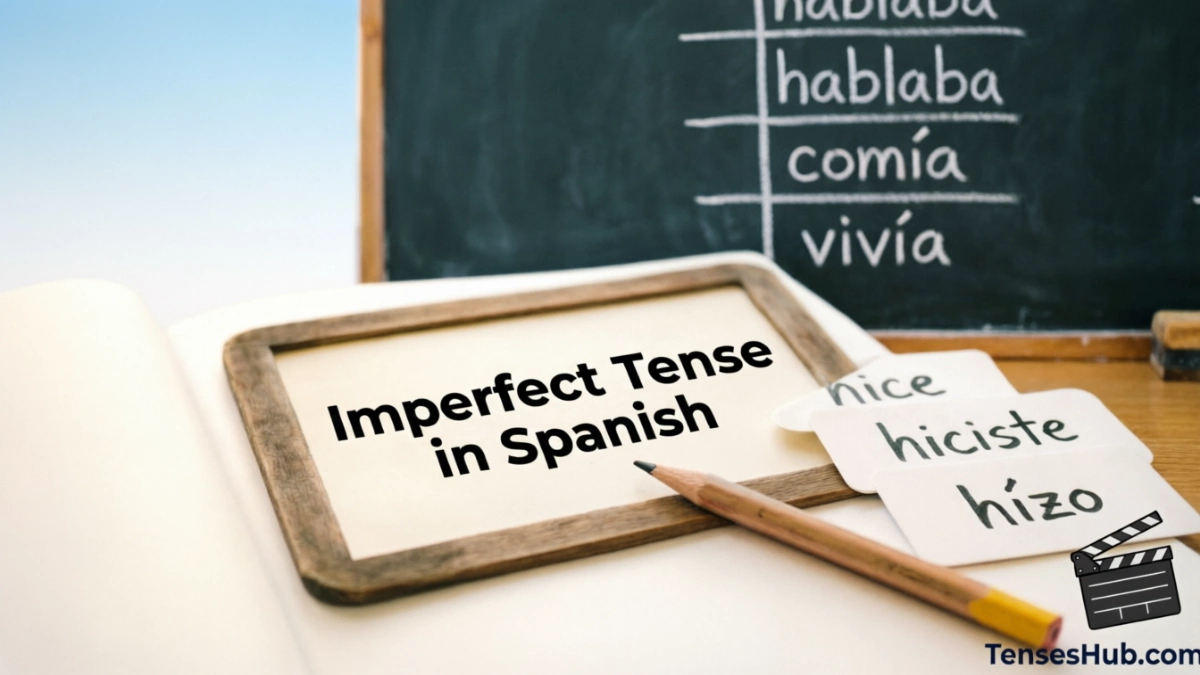
| yo | -aba | hablaba |
| tú | -abas | hablabas |
| él/ella/usted | -aba | hablaba |
| nosotros | -ábamos | hablábamos |
| vosotros | -abais | hablabais |
| ellos/ustedes | -aban | hablaban |
-ER and -IR Verbs
Both groups share the same endings. Take comer (to eat) and vivir (to live):
| Pronoun | Ending | comer | vivir |
| yo | -ía | comía | vivía |
| tú | -ías | comías | vivías |
| él/ella/usted | -ía | comía | vivía |
| nosotros | -íamos | comíamos | vivíamos |
| vosotros | -íais | comíais | vivíais |
| ellos/ustedes | -ían | comían | vivían |
The Only Three Irregular Verbs
| Verb | yo | tú | él/ella | nosotros | vosotros | ellos |
| ser (to be) | era | eras | era | éramos | erais | eran |
| ir (to go) | iba | ibas | iba | íbamos | ibais | iban |
| ver (to see) | veía | veías | veía | veíamos | veíais | veían |
Ser and ir look nothing like their infinitives in the imperfect you’ll need to memorize those two especially. Ver just keeps its e before adding the standard -er endings, which makes it easier to remember.
How to Use the Imperfect Tense
Knowing how to form the imperfect is step one. Knowing when to use it that’s where real fluency begins. The imperfect covers four main situations in Spanish.
1. Describing past habits and repeated actions
When something happened regularly in the past every day, every summer, every time you use the imperfect. English equivalents include “used to” or “would” (in the habitual sense).
- De niño, jugaba fútbol todos los días. As a child, I used to play soccer every day.
- Mis abuelos siempre tomaban café por la mañana. My grandparents always drank coffee in the morning.
2. Describing ongoing states or conditions in the past
Emotions, physical states, mental states, and ongoing situations all use the imperfect. If it’s about how something was, not what happened, the imperfect is your tense.
- Me sentía muy feliz. I felt very happy.
- El cielo estaba despejado. The sky was clear.
3. Setting the scene or providing background
Writers love the imperfect for this. It’s the tense that paints the picture before the main action starts. Why does this matter? Because without background description, a story feels like a bullet-point list of events.
- Era una noche oscura. Llovía fuerte y el viento soplaba. It was a dark night. It was raining hard and the wind was blowing.
4. Telling time, age, or dates in the past
These always use the imperfect in Spanish.
- Eran las tres de la tarde. It was three in the afternoon.
- Tenía ocho años cuando aprendí a nadar. I was eight years old when I learned to swim.
A helpful trigger: time expressions like siempre (always), a veces (sometimes), todos los días (every day), de vez en cuando (from time to time), and generalmente (generally) almost always signal the imperfect.
Structure of Sentences in the Imperfect Tense
Sentence structure in the imperfect is refreshingly simple. Spanish word order doesn’t change you follow the same subject-verb-object pattern you’d use in any other tense.
Affirmative sentences:
Subject + imperfect verb + rest of sentence
- Nosotros vivíamos en Madrid. We lived in Madrid.
Negative sentences:
Subject + no + imperfect verb + rest of sentence
- Ella no comía carne. She didn’t eat meat.
Interrogative sentences:
¿ + verb + subject + rest of sentence?
- ¿Estudiabas mucho de pequeño? Did you study a lot as a child?
One thing you’ll notice: unlike some other tenses, the imperfect doesn’t use auxiliary verbs. There’s no equivalent of “did” or “was” added in front the single conjugated verb does all the work. That’s actually one of the reasons learners find the imperfect so manageable once they get past the initial learning curve.
Real-Life Examples
Here’s what the imperfect sounds like across different everyday situations:
Talking about childhood memories:
- Cuando era niño, tenía un perro llamado Max. When I was a child, I had a dog named Max.
- No me gustaban las verduras. I didn’t like vegetables.
Describing what a place was like:
- La ciudad era muy tranquila antes. The city used to be very quiet.
- Había muchos árboles en ese parque. There used to be many trees in that park.
Expressing emotions or thoughts in the past:
- Pensaba que el examen sería fácil. I thought the exam would be easy.
- Tenía miedo de hablar en público. I used to be afraid of speaking in public.
Telling a story (background setting):
- Era domingo por la mañana. Hacía sol y los pájaros cantaban cuando de repente sonó el teléfono. It was Sunday morning. It was sunny and birds were singing when suddenly the phone rang.
Notice in that last example how the imperfect (era, hacía, cantaban) builds the scene, and then the preterite (sonó) delivers the sudden main event. That’s the imperfect and preterite working together the most important partnership in Spanish past-tense narration.
Common Mistakes
Mistake 1: Using the preterite for habitual past actions
❌ Fui al gimnasio todos los días. (went one completed event) ✅ Iba al gimnasio todos los días. (used to go repeated habit)
The preterite says it happened once or a specific number of times. If you’re describing a routine, the imperfect is correct.
Mistake 2: Forgetting the accent mark on -ER/-IR forms
❌ comia, vivia ✅ comía, vivía
The accent on the í isn’t optional it’s part of the correct spelling and changes the sound. Missing it is a grammar error, not just a typo.
Mistake 3: Treating ser and estar the same in the imperfect
Both mean “to be,” but they’re not interchangeable. Ser describes permanent or defining characteristics; estar describes temporary states or conditions.
❌ Estaba una noche oscura. ✅ Era una noche oscura. (describing a characteristic of the night)
Mistake 4: Using the imperfect for completed single events
❌ Ayer comía en ese restaurante. (if it was a one-time completed event) ✅ Ayer comí en ese restaurante.
Ayer (yesterday) signals a completed, specific time that points to the preterite, not the imperfect.
Key Grammar Rules
Rule 1: Use the imperfect for habitual or repeated past actions things you used to do or would do regularly.
Rule 2: Use the imperfect to describe ongoing past states emotions, physical conditions, mental states, and background situations.
Rule 3: There are only three irregular verbs in the imperfect: ser, ir, and ver. All other verbs follow the regular endings.
Rule 4: -ER and -IR verbs share the exact same imperfect endings. This makes learning both groups together very efficient.
Rule 5: The nosotros form of -AR verbs (hablábamos) carries a written accent. Don’t drop it.
Rule 6: The imperfect and preterite often appear in the same sentence or paragraph the imperfect provides background, while the preterite delivers completed events or interruptions.
Rule 7: Time expressions like siempre, todos los días, a veces, generalmente, and de niño are classic signals that the imperfect is the right choice.
Comparing the Imperfect with the Preterite
This is the comparison every Spanish learner needs. The imperfect and the preterite both talk about the past so what’s the difference?
The preterite
The preterite is for completed, specific actions with a clear beginning and end.
- Ayer, Juan llamó a su madre. Yesterday, Juan called his mother. (One completed call.)
The imperfect
The imperfect is for ongoing, habitual, or background situations with no defined endpoint.
- Juan siempre llamaba a su madre los domingos. Juan always used to call his mother on Sundays. (Repeated habit.)
A classic textbook example shows both tenses working together:
- Leía un libro cuando sonó el teléfono. I was reading a book (imperfect = ongoing background) when the phone rang (preterite = sudden interruption).
The imperfect sets the ongoing scene. The preterite interrupts it. Once you see that dynamic, you’ll start noticing it everywhere in Spanish texts and conversations.
The imperfect vs. the present perfect
The present perfect (he comido, has hablado) in Spanish refers to past actions that connect to the present. It’s used differently from the imperfect, which focuses on past states or habits with no present-moment link. If you’re describing what someone was doing or used to do in the past with no relevance to right now, the imperfect is your tense.
Exercises
Exercise 1: Fill in the Blank
Use the correct imperfect form of the verb in parentheses.
- De niño, yo ________ (jugar) fútbol todos los fines de semana.
- Ellos ________ (vivir) en una casa pequeña cuando eran jóvenes.
- ¿Tú ________ (tener) miedo de la oscuridad de pequeño?
- Mi abuela siempre ________ (hacer) tortillas los domingos.
- Nosotros ________ (ir) al parque cada verano.
Answers: 1. jugaba 2. vivían 3. tenías 4. hacía 5. íbamos
Exercise 2: Correct the Mistake
Find and fix the error in each sentence.
- Cuando era niña, fui al parque todos los días.
- Ayer comía en ese restaurante por primera vez.
- Ella estaba profesora durante veinte años.
Answers:
- …iba al parque todos los días. (habitual past → imperfect)
- Ayer comí en ese restaurante por primera vez. (specific completed event → preterite)
- Ella era profesora durante veinte años. (ser for professions/permanent characteristics)
Exercise 3: Multiple Choice
Choose the correct verb form.
- Cuando tenía diez años, ________ en Francia. a) viví b) vivía c) vivo
- Anoche, María ________ una película. a) veía b) vio c) ve
- Nosotros siempre ________ juntos los lunes. a) comimos b) comemos c) comíamos
Answers: 1-b, 2-b, 3-c
Exercise 4: Rewrite Using the Imperfect
Rewrite the sentence to describe a past habit instead of a one-time event.
- Hoy como pizza. → (Every Friday, as a child…)
- Ella lee libros. → (She used to…)
Sample Answers:
- De niño, comía pizza todos los viernes.
- Ella leía libros cuando era joven.
Frequently Asked Questions
What is the imperfect tense in Spanish used for?
It’s used for past habits, repeated actions, ongoing states, emotions, background descriptions, and telling time or age in the past. Think of it as the “used to” or “was doing” tense.
How many irregular verbs are in the Spanish imperfect?
Only three: ser (era), ir (iba), and ver (veía). Every other verb follows a regular pattern.
What’s the difference between the imperfect and the preterite?
The preterite is for completed, one-time events. The imperfect is for ongoing situations, repeated habits, and background states. They often appear together in the same story.
Do -ER and -IR verbs have different imperfect endings?
No they share the exact same endings (-ía, -ías, -ía, -íamos, -íais, -ían). That’s a handy shortcut to remember.
Can I use the imperfect with time expressions like ayer (yesterday)?
Generally no, unless you’re describing an ongoing state that existed yesterday (e.g., Ayer estaba muy cansado Yesterday I was very tired). For completed events yesterday, use the preterite.
Why does the imperfect feel easier than the preterite?
Because there are only three irregular verbs, and the endings are consistent. Many learners actually find the imperfect more manageable once they commit the patterns to memory.
Conclusion
The imperfect tense in Spanish might seem like one more thing to learn in an already long grammar list but it’s actually one of the most rewarding tenses to master. It’s the tense that brings your stories to life. It’s how you describe your childhood, talk about what things used to be like, and set the scene before something happened.
You’ve now seen how it’s formed (only three irregular verbs!), when to use it, how it compares to the preterite, and where beginners commonly go wrong. That’s a solid foundation.
Don’t wait for perfect understanding before you start practicing. Use it in writing. Try journaling about a memory in Spanish. Describe what your town used to look like. The more you use the imperfect in real sentences, the more naturally it’ll come and soon enough, you won’t even have to think about which past tense to reach for.